Before and After Pet Portraits That Matter
June 29, 2026
See why before and after pet portraits feel so powerful, and how the right photo, story, and style can turn a beloved pet into lasting art.
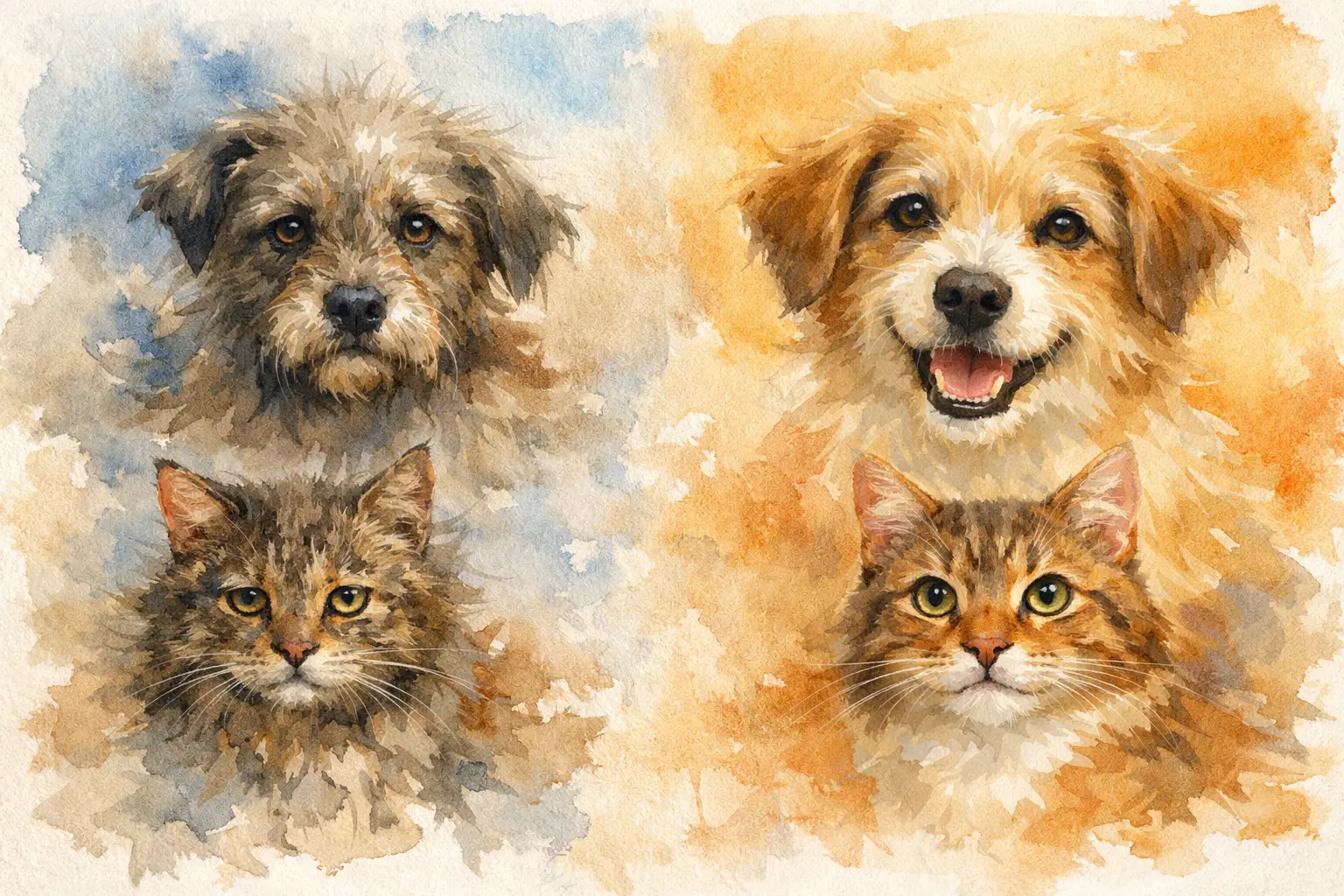
Some images show what your pet looked like. Before and after pet portraits show what they mean to you.
That difference is why these portraits resonate so deeply. A simple phone photo may capture the tilt of an ear or the bright focus in your dog’s eyes, but the finished portrait can hold something more complete - personality, memory, presence, and love. For many pet owners, the transformation is not only visual. It is emotional.
A before-and-after comparison is compelling because it reveals what art adds. The “before” is often a candid image taken in ordinary light, during an ordinary moment. The “after” becomes intentional. Color softens. Expression comes forward. Distractions fall away. What remains is the pet as you know them, not just as the camera happened to catch them.
Why before and after pet portraits feel so personal
People are drawn to transformation, but with pet portraits, the appeal goes beyond aesthetics. Pets are family. Their faces become part of daily life so completely that even a quick snapshot can carry enormous meaning. When that snapshot becomes a portrait, the result often feels like recognition.
That is especially true when the artwork reflects more than appearance. A good portrait does not flatten a pet into a generic cute image. It can bring out dignity in an older dog, mischief in a young cat, gentleness in a companion who was always close by. The strongest before and after pet portraits do not erase the original photo. They honor it by revealing what was always there.
For living pets, this can be a beautiful act of celebration. For pets being remembered in memoriam, it can be something quieter and just as significant - a way to create a lasting legacy from an image that may have felt too ordinary for such an important role.
What changes from photo to portrait
The most meaningful transformations are rarely about making a pet look dramatically different. They are about refinement, focus, and feeling.
First, the portrait removes what does not belong. Background clutter, uneven lighting, awkward cropping, and visual noise can pull attention away from your pet. In the finished piece, those distractions fade so your pet’s expression becomes the center.
Second, the portrait adds atmosphere. A watercolor style, for example, can soften harsh edges and create a museum-quality look that feels elegant rather than overly polished. That matters because pet portraits often live in intimate spaces - bedrooms, hallways, offices, memorial corners, and gallery walls. The art should feel elevated enough to belong there.
Third, the portrait becomes more faithful to memory. This may sound unusual, since memory is not literal, but most pet owners understand it immediately. The best result is not always the most photographic one. Sometimes a portrait feels right because it reflects the way you experienced your pet: soulful, playful, noble, tender, watchful, joyful.
That is the real power behind before-and-after imagery. It helps people see that the goal is not correction for its own sake. The goal is emotional truth.
Before and after pet portraits for living pets
When a pet is still by your side, creating a portrait can feel like a celebration of the present. It lets you pause and preserve a season you are still living in - the puppy years, the silver muzzle, the alert gaze from the front window, the calm companionship of everyday routines.
In this context, before and after pet portraits often feel joyful. The original photo may be casual or imperfect, but that does not make it less worthy. In fact, some of the best portraits begin with photos taken during real life, because authenticity matters more than perfection.
The finished portrait gives that everyday moment a more lasting form. It says this life, this companion, this face deserves to be seen with care. Many pet owners love this balance: the emotional weight of fine art with the ease of creating it from a photo they already have.
Before and after pet portraits in memoriam
Memorial portraits carry a different kind of importance. Often, the available photos are precious but imperfect. Maybe the lighting is dim. Maybe the image was taken years ago. Maybe it is one of the few pictures where your pet looks most like themselves.
This is where a before-and-after transformation can feel especially meaningful. It is not about altering the memory. It is about giving it a form that feels worthy of the bond you shared.
A memorial portrait can bring grace to a photo that once felt too plain for framing. It can create a sense of peace around a difficult loss. For some people, the process itself matters as much as the final image. Choosing the photo, describing their pet, and shaping the result can be deeply personal. It becomes an act of remembrance, not just a purchase.
That distinction matters. When the portrait feels guided by your own love and memory, the finished piece carries more than beauty. It carries authorship. You are not simply receiving an image. You are creating one that reflects how your pet lives on in your heart.
What makes a strong transformation
Not every dramatic before-and-after result is meaningful. Sometimes more editing creates less truth. The best portraits are the ones that remain recognizable while feeling elevated.
A strong starting photo usually shows the face clearly, with decent focus and a visible expression. But perfection is not required. What matters more is emotional clarity. If you look at the image and think, that is them, you likely have enough to begin.
The next piece is storytelling. A portrait becomes more personal when it reflects how you would describe your pet - affectionate, bold, reserved, loyal, curious, regal, funny. Those details shape the emotional tone of the final artwork. They help the portrait move beyond likeness into presence.
Style also matters. A museum-quality watercolor effect can feel timeless and soft without losing character. It tends to flatter a wide range of pets and works beautifully for both celebratory portraits and memorial pieces. Still, the right style depends on what you want to feel when you see the portrait. Bright and lively may suit one pet. Gentle and serene may suit another.
That is why instant creation with room to regenerate can be so valuable. Taste is personal. Grief is personal. Love is personal. It helps to have the freedom to keep refining the result until it feels right.
The emotional value of creating your own portrait
There is something powerful about being the one who shapes the final image. You know your pet’s expressions, habits, moods, and small details better than anyone. That insight cannot be replaced.
A guided portrait experience respects that. It gives you professional structure without taking away your role in the process. You choose the photo. You describe the pet. You decide when the result truly reflects them. That is why the process feels so different from simply ordering generic custom art.
At Pet Legacy Portraits, that idea sits at the center of the experience. For $47, you can upload your pet’s photo, answer a guided questionnaire, and instantly create a museum-quality watercolor portrait with two downloads included. You can keep regenerating until you feel satisfied, which matters because the right portrait is rarely about speed alone. It is about recognition.
This approach also makes premium portrait art more accessible. You do not need to wait through a long commission process or struggle through a blank creative starting point. You are supported by a guided studio experience, but the portrait remains yours in the fullest sense. You are the one making it.
How to look at before and after pet portraits the right way
The strongest comparisons are not a contest between the original photo and the finished art. They are a conversation between them.
The photo holds the lived moment. The portrait gives that moment permanence. The photo says, this happened. The portrait says, this mattered.
That is why so many pet owners respond so strongly to these transformations. They are not chasing perfection. They are trying to hold onto something real, whether that means celebrating a companion still curled up at their feet or honoring one whose absence is still felt every day.
A meaningful portrait does not replace memory. It gives memory a place to live, beautifully and with intention.
If you are considering one for your own pet, trust the image that already moves you. It does not have to be flawless to become something lasting. Sometimes the most ordinary photo becomes the most extraordinary portrait, simply because love was there first.