7 Best Dog Portrait Styles to Choose From
June 27, 2026
Compare the best dog portrait styles for living pets and memorial art, from watercolor to regal looks, and choose a portrait that feels personal.
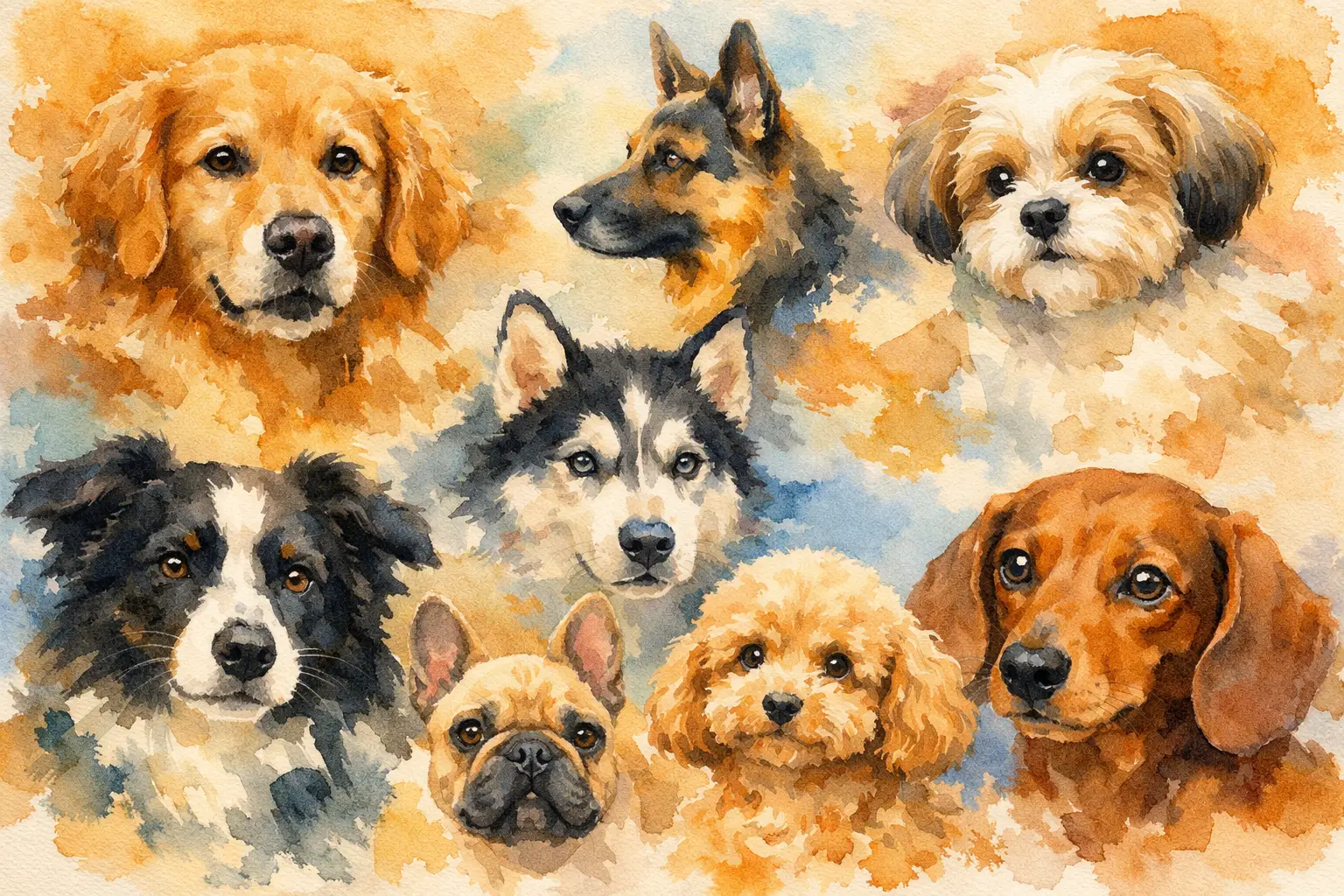
Some dogs belong in a joyful, airy watercolor. Others ask for something quieter, more formal, or more timeless. Choosing among the best dog portrait styles is less about following a trend and more about recognizing what already feels true about your dog - or true about the memory you want to preserve.
A portrait becomes meaningful when the style matches the bond. A lively rescue with a crooked grin may feel wrong in a stiff, formal composition. A beloved companion being honored in memoriam may call for softness, restraint, and calm. The right style does not just make a portrait look beautiful. It helps it feel honest.
How to choose the best dog portrait styles for your pet
Start with personality before appearance. Coat color, breed, and photo quality matter, but they are not the heart of the decision. Ask yourself what people notice first about your dog. Is it their gentleness, comic confidence, alert intelligence, or quiet loyalty? The strongest portraits usually begin there.
It also helps to think about purpose. A portrait created to celebrate a dog who is very much present in your daily life may invite more warmth, brightness, and expressive detail. A memorial portrait often feels most comforting when it carries softness and dignity rather than too much intensity. Neither approach is better. It depends on what you want to hold onto.
The setting where the artwork will live matters too. A portrait meant for a bedroom or reading nook can carry more tenderness and atmosphere. One intended for a main living space often benefits from a cleaner, more classic style that can live with you for years without feeling tied to a passing visual fad.
7 best dog portrait styles worth considering
Watercolor
Watercolor remains one of the best dog portrait styles because it balances elegance and emotion so naturally. It softens edges without losing expression, which makes it especially beautiful for dogs with soulful eyes, textured fur, or gentle features. The effect feels refined, but never cold.
This style also carries unusual versatility. For living pets, watercolor can feel bright, affectionate, and full of movement. For memorial portraits, it can become tender and reverent without appearing heavy. That range is part of what makes it so lasting. It honors personality while leaving room for feeling.
If you want a portrait that feels museum-quality and emotionally resonant, watercolor is often the most graceful choice.
Regal or Renaissance-inspired
Some dogs simply have presence. A proud posture, intelligent gaze, or striking profile can suit a regal portrait beautifully. This style leans into stature and significance. It gives a dog visual weight and creates the sense that they were never just a pet, but a central figure in the home.
The trade-off is that this look can feel more stylized and less intimate than softer approaches. For playful or scruffy dogs, it may create a charming contrast, but it can also miss the natural warmth that made them lovable in the first place. It works best when there is already something noble in the dog's expression or in the way you remember them.
Minimalist portraiture
Minimalist dog portraits strip away distraction and let the face, posture, or silhouette carry the emotional force. This can be very effective for modern interiors and for pet owners who want something clean and understated. A minimalist style often feels calm, confident, and timeless.
What it gains in restraint, it may lose in texture and atmosphere. If your favorite thing about your dog is the softness of their coat, the sparkle in their eyes, or the complexity of their coloring, a very minimal treatment may feel too spare. But if your connection to them feels simple, deep, and unmistakable, minimalism can be remarkably moving.
Classic realistic portraiture
A classic realistic style appeals to people who want a faithful visual record. It prioritizes recognizable features, accurate coloring, and a more literal likeness. For some pet owners, that precision is exactly what makes the portrait emotionally powerful. They want to see their dog as they remember them.
The question here is not whether realism is beautiful. It can be. The question is whether likeness alone is enough. A technically accurate portrait does not always carry the mood or emotional tone you may want, especially for a memorial piece. If you are choosing realism, make sure the expression and composition still feel alive.
Soft memorial style
When a portrait is being created in remembrance, softness matters. A dedicated memorial style often uses gentler color, lighter backgrounds, and a sense of quiet space around the dog. The goal is not sadness. It is peace.
This is one of the best dog portrait styles for honoring a pet with dignity because it avoids visual noise. It lets presence do the work. If your dog has passed and you want artwork that feels comforting rather than dramatic, this approach can be deeply fitting.
The key is balance. Too much softness can make a portrait feel vague. The best memorial portraits still preserve the small signs of identity - the tilt of the ears, the watchful eyes, the expression you knew instantly.
Playful expressive style
Not every meaningful portrait needs to be solemn or stately. Some dogs are best remembered through delight. A playful expressive style can use brighter color, more movement, and a livelier sense of personality. It works well for energetic dogs, comic faces, and companions whose charm was impossible to separate from their antics.
This style can be joyful, but it needs restraint to remain elegant. Too much exaggeration can make the portrait feel temporary or novelty-driven. The most successful versions keep the fun while preserving beauty and emotional sincerity.
Vintage-inspired portraiture
A vintage-inspired portrait brings a sense of heritage and keepsake value. It often feels warmer, quieter, and more storied than contemporary styles. For many pet owners, this creates the feeling of an heirloom rather than a decorative image.
This can be especially compelling if you want the portrait to feel rooted in memory, even for a living dog. It suggests continuity and legacy. The trade-off is that vintage styling can soften freshness and immediacy. If what you love most is your dog's bright, present-day energy, a more open and luminous style may feel closer.
What makes one style feel more personal than another
The answer is rarely just visual taste. Personal style choices usually come from emotional recognition. You look at one portrait approach and think, yes, that feels like them. That reaction matters more than any rule.
Expression is often the deciding factor. A style that captures your dog's alert curiosity or steady sweetness will feel more personal than one that is technically impressive but emotionally flat. Background and color also shape the feeling. Clean, airy tones can feel peaceful and elegant. Richer tones can feel weighty, formal, and lasting.
This is why guided creation matters. When you are able to describe your dog in your own words, the final portrait becomes more than an image based on a photo. It becomes a reflection of how you knew them.
The style question matters even more for memorial portraits
When a dog has passed, style becomes part of the grieving experience. The portrait is not only about likeness. It is about what kind of presence you want to keep near you. Some people want warmth and light, almost as a celebration. Others want stillness and grace. Both are valid.
What usually helps is avoiding extremes. A memorial portrait rarely needs to be overly dramatic to feel meaningful, and it does not need to erase personality to feel respectful. The strongest pieces hold both truth and tenderness at once.
That is one reason watercolor remains such a trusted choice. It can carry memory gently while still preserving character. For many families, that balance feels right.
Choosing a style with confidence
If you feel torn between two directions, ask which one you would still want to live with years from now. Trends fade quickly when the subject is someone you love. Timelessness matters more in pet portraiture because the bond itself is enduring.
It also helps to think less about what looks impressive and more about what feels emotionally accurate. A portrait should not perform affection. It should reflect it. The best choice is usually the one that lets your dog's presence come through without strain.
For pet owners who want that process to feel personal, guided, and immediate, Pet Legacy Portraits offers a way to create your own museum-quality watercolor portrait for $47, with two downloadable versions and unlimited regenerations until it feels right. You are not handing off your dog to someone else's interpretation. You are shaping a tribute that reflects your own bond.
The most lasting portraits are not chosen by category alone. They are chosen by recognition - the quiet moment when the style, the expression, and the memory all meet, and you know you have found the one.