11 Best Pet Portrait Display Ideas
May 17, 2026
Discover the best pet portrait display ideas for living companions and memorial art, with elegant ways to print, frame, and place each piece.
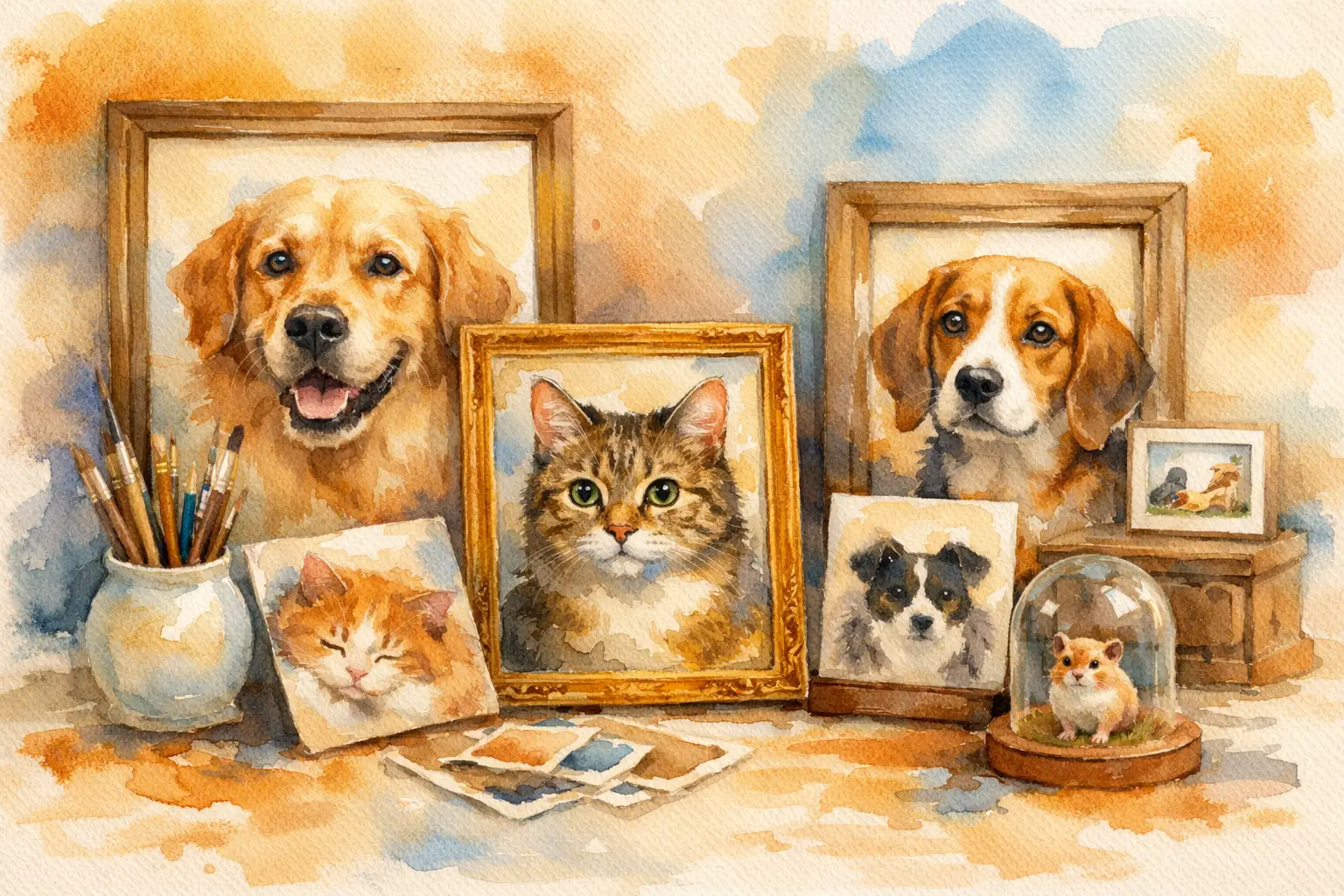
A beautiful portrait deserves more than an empty wall and a quick decision. The best pet portrait display ideas honor the role your pet holds in your life, whether you are celebrating a beloved companion still at your side or creating a lasting memorial after loss.
The right display does two things at once. It protects the artwork and gives it presence. A thoughtful placement can turn a portrait into part of your daily ritual, a quiet point of connection in the home, or a refined tribute that feels personal without feeling heavy.
How to choose among the best pet portrait display ideas
Before you choose a frame or a room, consider the feeling you want the portrait to create. Some displays are meant to be seen every day in a central living space. Others are better suited to a bedroom, office, or memorial corner where the experience is more private.
Scale matters first. A small portrait can feel intimate on a bookshelf or nightstand, while a larger print carries more weight over a mantel, console, or bed. If your artwork has soft watercolor detail, give it enough size to breathe. Fine brushwork and gentle color transitions are often lost when printed too small.
The second decision is formality. A single framed portrait with generous matting feels timeless and elevated. A grouped arrangement of smaller pieces can feel warmer and more lived-in. Neither is better. It depends on the room, the architecture, and whether the portrait is meant to stand alone or sit within a larger story of family photographs and objects.
Framed wall art for a classic, lasting presentation
For many homes, the most enduring choice is a professionally printed portrait in a quality frame. This is often the strongest option for memorial artwork because it gives the piece structure, permanence, and visual importance.
A simple wood, black, white, or brushed gold frame usually works best. The portrait should remain the focus. If the watercolor style is soft and elegant, avoid ornate framing that competes with the image. A mat can add breathing room and make even a modestly sized print feel more substantial.
Placement is just as important as framing. Over a mantel, a pet portrait can anchor the room. In a hallway, it creates a moment of pause. In a home office, it becomes a quiet source of comfort through the day. If you are displaying a portrait of a pet in memoriam, these more intentional placements often feel more fitting than a crowded gallery wall.
A gallery wall that includes your pet naturally
Some of the best pet portrait display ideas are the ones that make your pet part of the visual language of your home rather than separating them from it. A gallery wall can do this beautifully.
The key is restraint. Mix the portrait with a few family photographs, travel images, or other art pieces that share a similar palette. Keep frames coordinated so the arrangement feels curated instead of busy. If the portrait carries strong emotional meaning, give it slightly more space than the surrounding pieces so it still reads as important.
This approach works especially well for living pets because it places them where they already belong, within the life of the household. For memorial portraits, it can be a gentler option for people who want remembrance woven into everyday life rather than set apart.
A mantel or console display with layered depth
Not every portrait needs to be hung. Leaning a framed print on a mantel, console table, or built-in shelf can feel softer and more intimate than formal wall mounting.
This style works best with medium to large frames and a limited number of accompanying objects. A small vase, candle, or favorite keepsake can create balance without distracting from the art. If the portrait is a memorial piece, this kind of layered display can feel especially personal. It allows room for a collar, tag, or small object that carries meaning.
There is one trade-off. Leaning frames can look elegant, but they are less secure in homes with young children, large dogs, or high-traffic spaces. If stability is a concern, a mounted wall display may be the better choice.
Bookshelves and built-ins for a quieter presence
A bookshelf display gives a portrait a place in the rhythm of daily life without making it the focal point of the entire room. This can be ideal if you prefer understated decor or want a memorial portrait nearby in a way that feels calm and private.
Choose a frame size that stands comfortably among books and objects without disappearing. In most cases, one portrait per shelf section is enough. Let it breathe. If every surface is full, the artwork loses its presence.
Built-ins also offer flexibility. You can adjust the display seasonally, move the portrait to a new height, or pair it with objects that reflect your pet's personality. This is one of the more adaptable options if you are ordering a high-resolution digital portrait and deciding later how and where to print it.
Bedroom placement for a more personal connection
Some portraits belong in the rooms that hold the most quiet. A bedroom display often feels deeply natural, especially for a pet who slept nearby, followed you from room to room, or was part of your most private routines.
A portrait above a dresser, on a nightstand, or across from the bed can create a sense of closeness without asking for public attention. For those honoring a pet after loss, this placement can feel less performative and more comforting.
The mood matters here. Softer frame finishes, muted mats, and warmer print tones tend to suit bedroom spaces better than stark contrasts. The goal is not drama. It is presence.
Entryway placement that makes a home feel complete
For many pet lovers, the entryway is emotionally significant. It is where greetings happened, where leashes lived, and where your pet waited for you to come home. Displaying a portrait in this space can be quietly powerful.
A single framed piece over an entry console or bench is often enough. Because this area is transitional, simplicity works best. Too many objects can make the space feel cluttered, while one portrait creates an immediate sense of warmth and recognition.
This is also an elegant placement for a celebratory portrait of a living pet. It welcomes guests while reflecting what matters most in the home.
A dedicated memorial space, if that feels right
Not everyone wants a distinct remembrance area, but for some families it offers real comfort. The best memorial displays are refined and intentional. They do not need to be elaborate.
A portrait, a small candle, and one meaningful object are often enough. This might sit on a side table, shelf, or small console in a quieter part of the home. The restraint is what gives it dignity.
If you choose this route, consider printing the portrait at a size that feels substantial. Memorial art often benefits from a little more visual weight. A museum-quality digital file is especially useful here because it gives you freedom to print in the size and format that best suits the space.
Canvas, fine art paper, or acrylic - choosing the right finish
Display is not only about placement. Material changes the experience of the portrait.
Fine art paper behind glass is usually the most timeless choice. It preserves watercolor detail and feels closest to traditional artwork. Canvas can soften the image slightly and create a more casual, decorative look. Acrylic or other modern finishes can feel striking, but they are not always the best match for sentimental portraiture, especially if you want warmth over gloss.
If the portrait is emotionally significant, traditional printing methods usually age better visually. They also suit a premium home environment more easily. Modern finishes can work, but they ask for the right room and styling around them.
Printing flexibility matters more than people expect
One of the most practical advantages of a print-ready digital portrait is freedom. You are not locked into one display decision at the moment of purchase. You can print large for a living room, create a smaller framed version for a desk, or gift a second print to a family member.
That flexibility is part of what makes custom pet artwork feel both personal and useful. At Pet Legacy Portraits, the digital format is designed for exactly this kind of thoughtful choice, with museum-quality watercolor styling and a polished file that can move with your home and your needs.
Let the display reflect the relationship
The most successful display is rarely the trendiest one. It is the one that feels true to the bond. A portrait of a playful dog in the family room may suit an open, welcoming placement. A memorial portrait of a beloved cat may belong somewhere quieter, where the connection feels closer and more private.
If you are deciding between options, choose the display that gives the artwork room to be felt. Not just seen. The right portrait placement has a way of turning memory, love, and everyday presence into something lasting.