9 Best Photo Styles for Pet Portraits
June 11, 2026
Discover the best photo styles for pet portraits, from close-ups to outdoor shots, and choose images that turn your pet's personality into art.
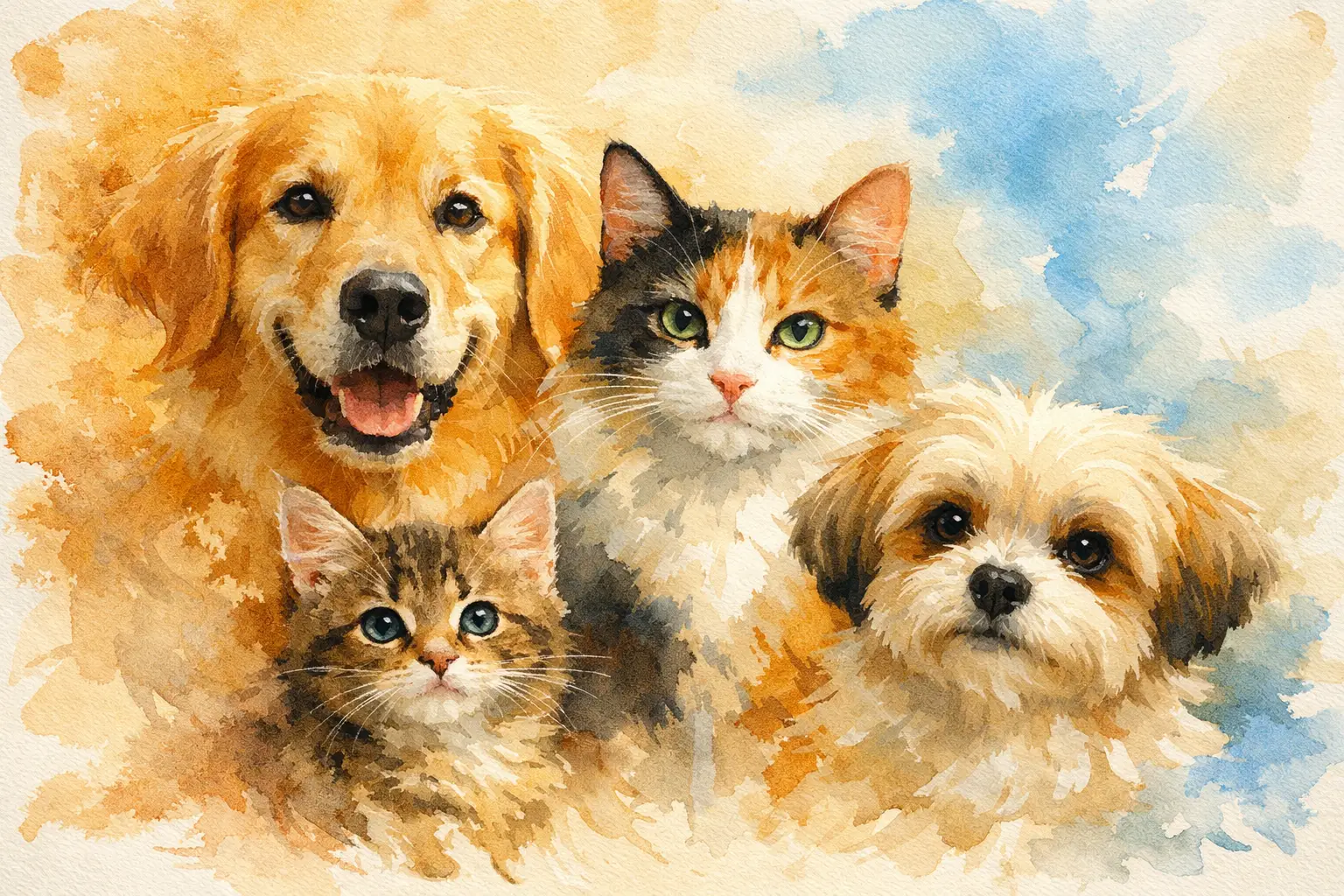
Some pet photos make you smile for a second. Others stay with you. When choosing the best photo styles for pet portraits, the difference usually comes down to one thing - whether the image captures presence, not just appearance.
A strong portrait photo does more than show fur color or eye shape. It holds expression, posture, and the small details that feel unmistakably like your pet. Whether you are commissioning artwork for a living companion or creating a memorial piece, the style of the original photo shapes the emotional depth of the final portrait.
What makes the best photo styles for pet portraits work
The most successful pet portrait photos are clear, well-lit, and emotionally specific. That does not mean they need to look formal. In fact, overly staged images can sometimes feel less personal than a quiet photo taken at home, where your dog is sitting in a familiar patch of sun or your cat is looking up with that exact expression you know by heart.
The right style depends on your goal. If you want something timeless and elegant, a centered head-and-shoulders image usually works beautifully. If you want to preserve personality, a more candid composition may be stronger. And if the portrait is intended as a memorial, many people prefer an image that feels calm, dignified, and deeply recognizable.
A few technical qualities matter almost every time. Sharp focus on the eyes is important. Natural light tends to flatter fur and soften contrast. A clean background helps your pet remain the clear focal point. Beyond that, the best choice is often the photo that feels most true.
Classic close-up portraits
A close-up is one of the most enduring photo styles for pet portraits because it gives full attention to expression. The eyes, muzzle, ears, and subtle tilt of the head all become more prominent. This style works especially well for watercolor-style artwork, where softness and detail can coexist in a refined way.
For dogs, close-ups often bring out warmth and attentiveness. For cats, they can highlight elegance and quiet intensity. This style is also especially effective for senior pets, where the face carries history and tenderness in a way a full-body image may not.
The trade-off is that close-ups leave less room for body language. If your pet's personality lives in the way they sit, stretch, lean, or hold themselves, a tighter crop may feel slightly incomplete. Still, for many families, this is the image style that feels most intimate.
Seated formal portraits
A seated portrait has a more traditional feel. Your pet is posed, visible in fuller proportion, and presented with a sense of balance. This style often translates into elegant wall art because it feels composed without being stiff.
Formal does not have to mean severe. A dog sitting alert in a garden, or a cat perched on a favorite chair, can feel both polished and personal. These portraits often work well when the final artwork is meant to have a classic, heirloom quality.
This style is ideal when you want to show markings, chest shape, tail placement, or posture. It is particularly useful for breeds or mixed-breed pets whose physical silhouette is part of what makes them so recognizable. The key is keeping the pose relaxed. If your pet looks uncomfortable or distracted, the portrait can lose some of its grace.
Gentle candid photos
Not every meaningful portrait begins with a posed image. Some of the most moving artwork comes from candid photos where a pet is simply being themselves. A dog resting with one paw forward. A cat curled on the windowsill. A rabbit mid-pause, ears lifted. These moments often carry emotional truth.
Candid images are especially valuable when the goal is remembrance. They can preserve a feeling, not just a likeness. For many people, that matters more than perfect symmetry.
The challenge with candid photos is consistency. Lighting may be uneven, angles may be less flattering, and backgrounds may be cluttered. But if the expression is unmistakably right, those issues can often matter less than expected. A beautiful portrait starts with recognition.
Outdoor natural-light photos
Natural light is generous to pets. It reveals fur texture, softens shadows, and brings out true color with very little effort. Outdoor photos, especially taken in early morning or late afternoon, often create the most flattering source images for custom artwork.
This style suits energetic dogs particularly well, but it can also be lovely for cats, horses, or other animals photographed in a calm outdoor setting. Grass, stone, and muted landscape backgrounds tend to photograph well because they feel organic without competing for attention.
There is one caution here. Busy parks, strong midday sun, and fast movement can reduce image quality. Harsh light may create blown highlights or deep shadows across the face. If you choose an outdoor image, look for one with even light and a peaceful overall composition.
Indoor window-light photos
Some of the best pet photos are taken a few feet from a window. The light is soft, directional, and naturally flattering, especially for pets with dark fur or delicate facial features that can get lost under overhead lighting.
Window-light photos often feel quiet and intimate. That makes them especially well suited to memorial portraits or artwork intended for more serene spaces in the home. They can also give watercolor-style portraits a softness that feels elevated rather than casual.
This style works best when the room itself stays visually simple. If there are many objects behind your pet, the image can feel cluttered. But when the setting is calm, indoor natural light can produce exceptionally beautiful results.
Eye-level photos
One of the easiest ways to improve a pet photo is to lower the camera to your pet's eye line. This small shift changes the emotional quality of the image immediately. Instead of looking down at your pet, you meet them.
Eye-level photos feel more personal, more respectful, and more connected. They are often among the best photo styles for pet portraits because they create a sense of relationship rather than observation. That difference matters in finished artwork.
This angle is especially effective for pets with expressive eyes or distinctive face shapes. It can also make smaller animals feel more present in the frame. The only downside is practical - getting the shot may take patience. But the result is usually worth it.
Profile and three-quarter views
Not every portrait needs direct eye contact. Profile and three-quarter views can be incredibly elegant, especially when your pet has a distinctive silhouette or a calm, noble presence. A side view can emphasize the shape of the muzzle, the line of the ears, or the curve of the neck in a very graceful way.
Three-quarter views often offer the best balance. You still see both expression and form, but with more dimension than a straight-on image. This style can feel especially painterly, which makes it a strong choice for refined portrait art.
It does depend on the pet. Some animals are most recognizable from the front, where their expression is clearest. Others have a profile that immediately feels like them. If you are deciding between angles, choose the one that captures identity fastest.
Sleeping or resting portraits
A resting image can be unexpectedly powerful. There is tenderness in a sleeping pet that reads beautifully in art, especially for families who want a portrait that feels peaceful and affectionate rather than formal.
This style is often chosen for memorial pieces because it carries gentleness without dramatizing loss. It can feel quiet, loving, and deeply personal. For living pets, it also works well when their calm nature is central to how you remember them.
The trade-off is that closed eyes create less immediate connection than an alert gaze. If the eyes are one of your pet's defining features, a resting photo may not be the strongest primary image. But for the right pet, this style can be moving in a very understated way.
Photos that reflect personality, not just appearance
The best portrait source image is not always the most technically perfect one. Sometimes it is the photo where your dog has that proud, slightly amused look they always gave you, or the one where your cat seems poised and observant in the exact way that defined them.
Personality-led photos tend to create the most meaningful finished artwork because they preserve what loved ones recognize instantly. That may be playfulness, dignity, mischief, sweetness, or stillness. Those qualities matter as much as lighting and composition.
If you are choosing among several options, ask a simple question: which image feels most like them? That answer usually leads you to the right portrait.
Choosing the right style for the artwork you want
If your goal is timeless wall art, a close-up, seated portrait, or three-quarter view will usually feel most refined. If your goal is remembrance, candid, resting, or window-light photos often carry more emotional depth. And if you want to celebrate daily companionship, an outdoor or personality-driven image may feel more alive and immediate.
At Pet Legacy Portraits, we see this often - the most successful portraits begin with photos that balance clarity with feeling. A well-chosen image gives the final artwork both beauty and truth.
The best photo style is the one that lets you recognize your pet at a glance and feel them a moment longer.