Can AI Capture Pet Personality?
June 15, 2026
Can AI capture pet personality? Yes - when your photo, memories, and choices guide the portrait. Here’s what AI can and cannot truly reveal.
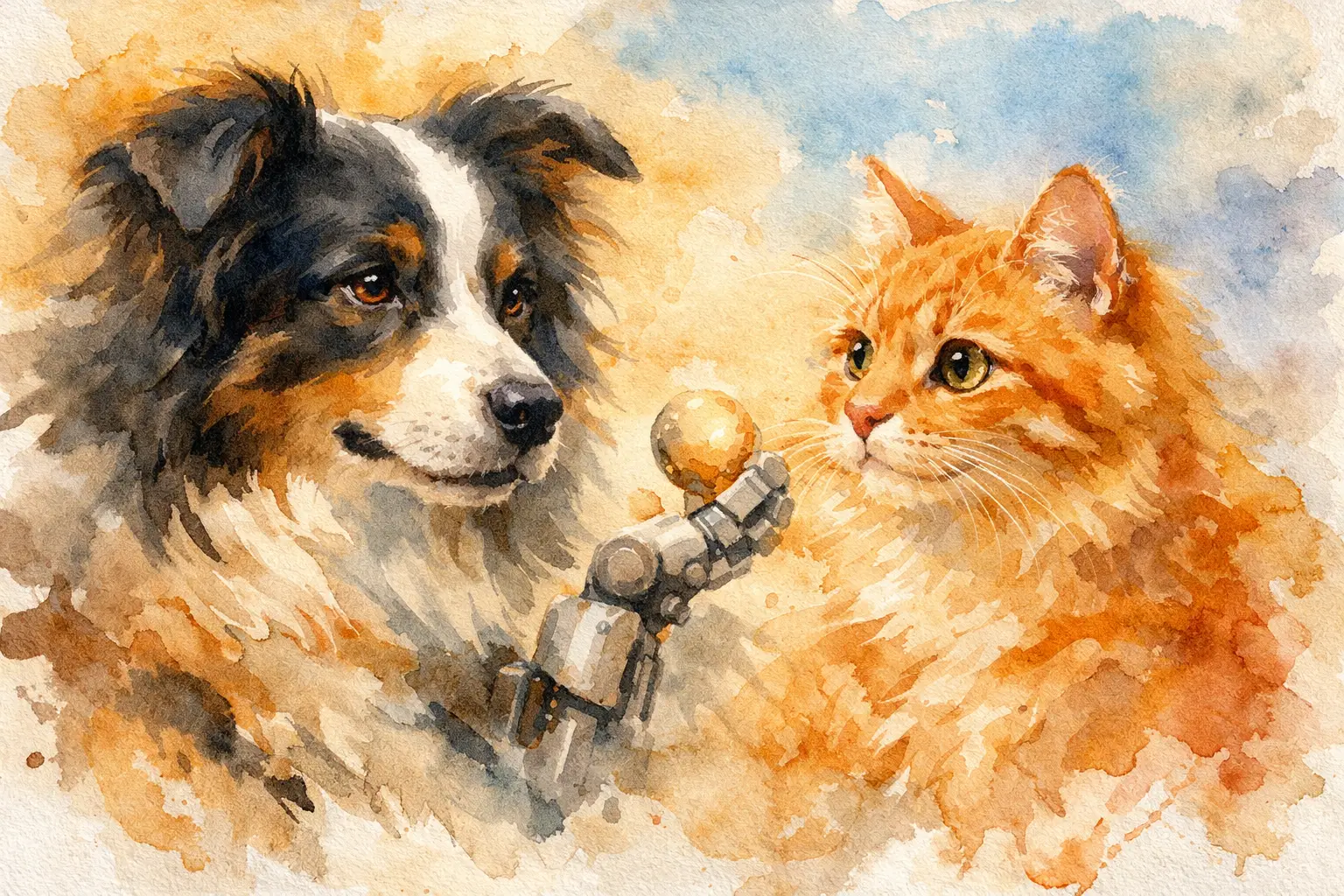
You know the difference instantly. One image looks like a dog or cat. The other feels like yours. That is the real question behind can ai capture pet personality. It is not simply whether technology can produce a handsome portrait. It is whether a portrait can hold the spark you recognize at a glance - the softness, mischief, dignity, calm, or devotion that made your pet unforgettable.
The honest answer is yes, but not by accident.
AI can capture pet personality when it is guided by the person who knows that pet best. Left on its own, it may create something attractive yet generic. Guided with care, it can become a meaningful portrait that reflects not only appearance, but presence.
Can AI Capture Pet Personality or Just Appearance?
A pet’s appearance is easy to describe. Eye color, coat pattern, ear shape, size, and markings all translate well into an image. Personality is more delicate. It lives in posture, expression, favorite moods, and the little details no stranger would ever guess.
That is why the best portraits begin with more than a photo. They begin with your understanding. Was your dog regal and steady, always watching the room like a quiet guardian? Was your cat aloof with everyone else but tender with you? Did your rabbit have a playful alertness that made every portrait feel alive? These qualities matter because personality is rarely found in a perfect pose alone.
AI can interpret visual cues, but it does not love your pet. You do. The portrait becomes more truthful when your choices shape it. The result is not a machine deciding who your pet was. It is you using a guided creative process to express who they were.
What Actually Makes a Portrait Feel Personal
When people say a portrait captured their pet, they usually mean something more emotional than accuracy. They mean it feels familiar. It holds the right mood.
A strong pet portrait often succeeds through a combination of visual likeness and emotional tone. The eyes matter, of course. So does the set of the mouth, the angle of the head, and whether the overall composition suggests energy or peace. A bright, eager dog may feel wrong in a solemn pose. A gentle senior cat may not feel right in an overly playful expression.
This is where AI can be surprisingly effective. It can help translate your descriptions into stylistic choices that support the feeling of the portrait. A watercolor treatment, for example, often softens the image just enough to let memory and beauty work together. That can be especially meaningful when you want a portrait to feel elevated, timeless, or comforting.
Still, there is a trade-off. The more artistic the portrait becomes, the more interpretation enters the process. That is not a flaw. It simply means the goal is not a clinical replica. The goal is to create something that feels true.
Why the Input Matters More Than the Technology
If you have ever looked through dozens of pet photos, you already know this: not every image reveals personality. Some are technically sharp but emotionally flat. Others are imperfect and somehow say everything.
The same principle applies here. AI responds to what you give it. A photo that shows your pet in a familiar expression will usually lead to a more resonant result than a photo chosen only for clarity. The details you provide also shape the portrait’s emotional accuracy. If your pet was gentle, spirited, noble, shy, or deeply affectionate, those qualities deserve to be named.
This is why a guided portrait experience matters. When you are invited to describe your pet, you move beyond uploading a picture and hoping for the best. You become the creative force behind the portrait. You are not handing your pet over to a tool. You are telling the truth of who they were in a form the image can honor.
For many pet owners, that process is part of the meaning. It turns portrait-making into an act of remembrance, celebration, or love.
Can AI Capture Pet Personality for Memorial Portraits?
Yes, and in some cases, this is where it feels most profound.
Memorial portraits carry a different kind of weight. You are not only trying to preserve how your pet looked. You are trying to hold onto who they were to you. The steadiness of their gaze. The comfort they brought. The silliness that made you laugh when you needed it most.
A memorial portrait does not need to mimic every hair exactly to be moving. In fact, many people want something gentler than a literal copy. They want a portrait that reflects dignity, warmth, and presence. They want something beautiful enough to live with and personal enough to matter.
AI can support that kind of image when the process centers your memories. The portrait becomes a bridge between photograph and feeling. It gives shape to what is difficult to put into words, especially when grief makes language feel thin.
There is an important nuance here. Some people want absolute visual precision in a memorial image. Others want emotional resonance above all else. Neither preference is wrong. It simply helps to know what kind of portrait you are trying to create before you begin.
Where AI Portraits Can Fall Short
The question can ai capture pet personality deserves an honest answer, which means acknowledging where AI can miss the mark.
It may over-polish a face and lose a distinctive quirk. It may soften an expression that should feel playful or sharpen one that should feel serene. If the source photo is limited, or if the pet had especially subtle features, the first result may not feel fully right.
That does not mean AI is incapable. It means personality is specific. A meaningful portrait often requires thoughtful iteration. Small changes in mood, description, and image choice can make a significant difference.
This is also why instant creation does not have to mean impersonal creation. Speed is helpful, but what matters more is the freedom to refine until the portrait feels like a recognition rather than a rough approximation.
The Best Results Happen When You Create With Intention
A beautiful portrait starts with attention. Choose a photo that feels emotionally familiar, not merely flattering. Think about what people loved first when they met your pet. Consider whether their essence was joyful, poised, curious, protective, sweet, or quietly wise.
Then let those truths guide the portrait. If you are remembering a pet who brought calm into your home, the image should carry that grace. If you are celebrating a companion who filled every room with life, the portrait should not feel reserved and distant.
This is what makes the process so personal. You are not ordering a generic product. You are shaping a legacy object. At Pet Legacy Portraits, that guided experience exists so the final artwork reflects your bond, not a one-size-fits-all idea of a pet portrait. For $47, you can upload your photo, share what made your pet unique, and generate a museum-quality watercolor portrait instantly, with unlimited regenerations until it feels right.
That last part matters. Personality is often revealed through refinement. Sometimes the first portrait is lovely. The next one is the one that truly feels like home.
So, Can AI Capture Pet Personality?
Yes - when it is treated as a creative tool, not a replacement for your knowing.
AI can render beauty. It can interpret expression. It can help transform a treasured photo into a portrait with softness, elegance, and emotional depth. But the personality in the portrait comes from your memory, your eye, and your choices. You are the one who recognizes the exact tilt of the head, the look that meant trust, the expression that always made you smile.
That is why the most meaningful AI pet portraits do not feel machine-made. They feel personally made. Because they are.
If you are wondering whether a portrait can really hold your pet’s spirit, the better question may be this: what do you want the portrait to remember for you? Start there, and the image has a far better chance of becoming something lasting.