Can AI Create Memorial Portraits?
June 28, 2026
Can AI create memorial portraits? Yes - when guided with care, it can help pet owners make beautiful, personal artwork that honors love and memory.
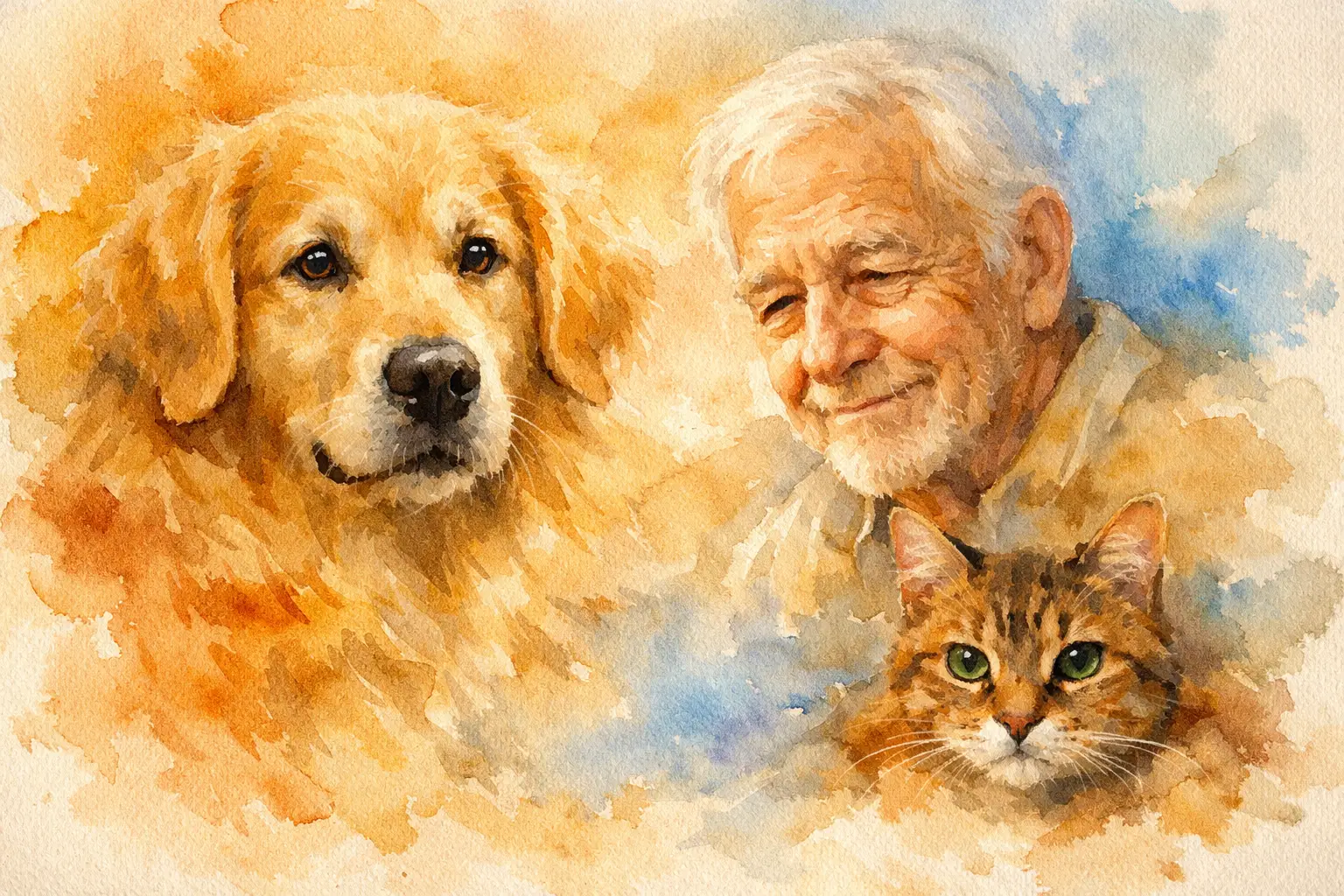
A memorial portrait is never just about getting the likeness right. It is about holding onto the gentle details that made your pet yours - the bright alert eyes, the tilt of the ears, the calm presence that changed the feeling of a room. So when people ask, can AI create memorial portraits, what they are really asking is whether something digital can still feel personal, respectful, and worthy of remembrance.
The honest answer is yes, but only when the process is guided by love, intention, and taste. AI can help you create a beautiful memorial portrait. What makes that portrait meaningful is the person behind it - the one choosing the photo, describing the spirit of their pet, and deciding what should be preserved on the page.
Can AI create memorial portraits that feel personal?
It can, and that is the part many people underestimate. A memorial portrait does not become special simply because it looks polished. It becomes special because it reflects memory. If your dog always looked soft and watchful, or your cat carried that unmistakable dignified stare, those qualities matter just as much as coat pattern or eye color.
That is where a guided AI portrait experience can feel surprisingly human. Instead of asking you to become an artist or learn complicated tools, it gives you a way to shape the final image through your own choices. You select the photo. You describe your pet. You decide what feels true. The portrait becomes a creative act of remembrance, not an impersonal file generated at random.
For many pet owners, that difference matters deeply. A memorial piece should feel considered. It should carry a sense of presence. It should look like a tribute, not an experiment.
What AI does well in memorial portrait creation
AI is especially strong at transforming a beloved photo into artwork with softness, atmosphere, and consistency. For memorial portraits, that can be a powerful advantage. A watercolor style, for example, often suits remembrance beautifully because it feels refined, gentle, and timeless without becoming heavy.
It also helps when the original photo is meaningful but not perfect. Many people do not realize their favorite picture may be slightly casual - a phone snapshot on the couch, a sunlit backyard moment, a close-up taken quickly because that expression was too sweet to miss. Traditional expectations around formal portraiture can make those images seem less usable than they really are. AI can reinterpret them into art that feels elevated while preserving the emotional truth of the moment.
Speed matters too, though not in a disposable way. When someone is grieving, waiting weeks or months can feel exhausting. Being able to create a memorial portrait instantly, and continue refining it until it feels right, gives people room to make decisions in their own time. That sense of control can be quietly comforting.
Where the answer depends
Still, not every AI memorial portrait will feel meaningful by default. This is where the answer becomes more nuanced.
If someone uploads a photo into a generic tool and accepts the first result without guidance, the image may look attractive but miss the heart of the pet. Expressions can feel flatter. Details that mattered to the family might be lost. The result may look like a nice pet image rather than a true memorial.
That is why the experience around the portrait matters as much as the technology itself. A thoughtful process helps you move from a simple picture to a keepsake. It makes space for emotional details, not just visual ones.
In other words, AI can create memorial portraits, but care creates meaningful ones.
What makes an AI memorial portrait feel worthy of remembrance
The strongest memorial portraits usually share three qualities. First, they feel accurate in spirit. Second, they are artistically cohesive. Third, they leave room for emotion rather than overworking it.
Accuracy in spirit does not mean photographic perfection. In fact, some of the most moving portraits are slightly softened. What matters is recognition. You should be able to look at it and feel, yes, that is them.
Artistic cohesion matters because memorial art should feel elevated enough to keep. A museum-quality watercolor portrait carries a quiet dignity that suits remembrance well. It does not compete with memory. It supports it.
And restraint matters. Memorial portraits do not need theatrical effects to be powerful. Often the most beautiful pieces are the ones that stay focused on the pet and let their presence speak for itself.
How to create a better memorial portrait with AI
If you are considering making one, the most important step is choosing the right photo. Look for an image that feels emotionally true, not just technically sharp. A bright expression, a familiar pose, or a moment that captures your pet's gentleness often leads to a stronger portrait than a perfectly staged shot.
Then think about what you want the portrait to say. Do you want it to feel soft and peaceful? Noble and timeless? Warm and affectionate? Those choices shape the final piece more than many people expect.
This is also why a guided portrait experience can be so valuable. When the process helps you translate memory into visual direction, the artwork becomes more personal. You are not handing your pet's story over to a machine. You are making the portrait yourself, with the right studio and structure behind you.
At Pet Legacy Portraits, that is the heart of the experience. For $47, you create your own custom watercolor portrait through a guided process built around your pet's story, with instant generation, two download files, and unlimited regenerations until it feels right. You are not buying a portrait off a shelf. You are making one that reflects your bond.
Can AI create memorial portraits for grief, not just display?
Yes, and this may be one of the most meaningful reasons people choose them. A memorial portrait is often less about decoration than about relationship. It gives love a place to land. It creates something visible from something deeply felt.
For some, the process is immediate. They want to make a portrait soon after loss because the act itself feels healing. For others, it takes time. They may return months later when they are ready to look through photos and choose the one that still feels most alive. Both responses are valid.
What matters is that the experience does not rush the emotion. A good memorial portrait process gives you agency. You can revisit, regenerate, and refine until the image feels aligned with memory. That matters because grief is rarely tidy. Remembrance should not be forced into a single first attempt.
Why many pet owners prefer AI for memorial portraits
The appeal is not only speed. It is intimacy and access. You do not need to explain your pet to a stranger and hope they interpret that bond correctly. You remain at the center of the process, shaping the result through your own memories and preferences.
That can feel especially reassuring when the portrait is meant to honor a pet who has passed. You knew their personality, their softness, their little expressions, their quiet habits. A guided AI portrait experience respects that truth by letting you lead.
There is also something meaningful about being able to create a beautiful, print-ready memorial piece without complexity. The emotional weight is already enough. The portrait process should feel gentle, not demanding.
The real question behind can AI create memorial portraits
The deeper question is not whether AI can make an image. It clearly can. The real question is whether it can help someone create a tribute that feels sincere.
When the process is thoughtful, the style is elegant, and the person who loved the pet remains the creative force, the answer is yes. AI can support remembrance in a way that is beautiful, immediate, and deeply personal.
A memorial portrait should never replace memory. It should give memory form - something you can hold onto when you want to feel close again.