Digital Portrait Versus Painting for Your Pet
August 23, 2026
Considering a digital portrait versus painting? See how style, timing, flexibility, and feeling shape a lasting tribute to the pet who holds your heart.
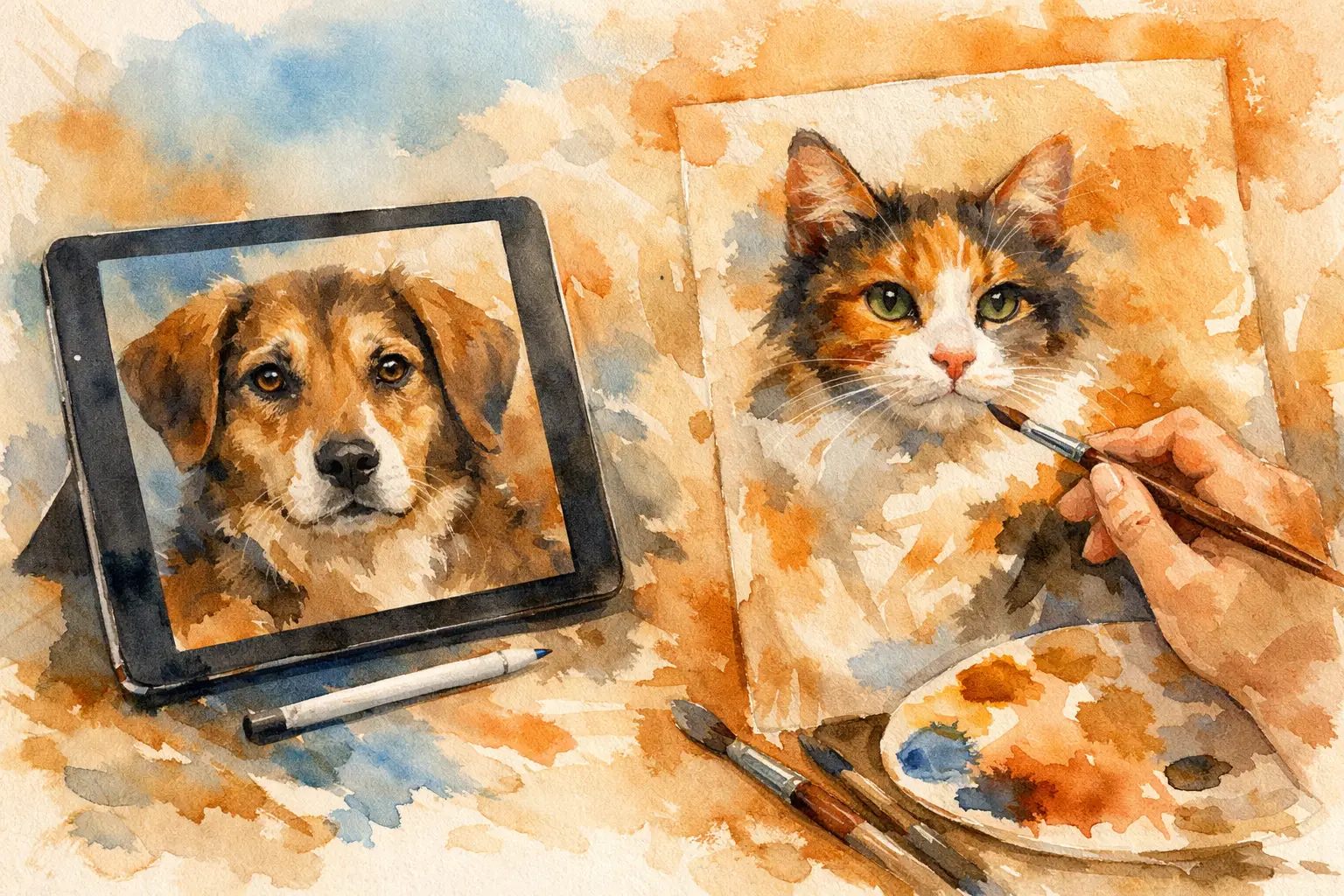
A digital portrait versus painting is not simply a choice between two art formats. It is a choice about how you want to see your pet remembered: in the warmth of a watercolor wash, in the presence of a framed print, or in a file you can keep, share, and return to whenever you need it.
For a pet who fills your everyday life or one whose absence is still felt in the quiet moments, the right portrait should feel like more than a likeness. It should carry their bright eyes, familiar expression, gentle dignity, or wonderfully mischievous spirit. The best choice depends on what matters most to you: the artistic look, the timeline, the freedom to print, or the experience of creating something personal from the memories only you hold.
Digital Portrait Versus Painting: The Meaningful Difference
A traditional painting is a physical original, created on canvas or paper. Its appeal is immediate and tactile. You can see the texture of paint, the marks of the hand, and the object itself hanging in a room. For some families, that singular, physical presence is exactly what they want.
A digital portrait begins as a high-resolution artwork file. It can still become a beautiful print for your wall, but it is not limited to one format or one location. You decide whether it belongs in a large frame above the mantel, a smaller print for your desk, a card shared with family, or several meaningful pieces throughout your home.
Neither option is inherently more loving or more legitimate. The question is whether you want one original object or an artwork with the flexibility to become part of your life in more than one way.
The artwork can be physical either way
It is easy to assume a digital portrait exists only on a screen. In reality, a print-ready high-resolution file gives you the opportunity to create a physical keepsake in the paper type, frame, and size that suits your home. A soft watercolor portrait can feel especially at home in a simple archival print with a thoughtful frame.
The difference is choice. With a painting, the size and finished presentation are generally decided from the beginning. With a digital file, you can choose later. That can be comforting when you are still deciding where a memorial should live, or when you want to give a copy to someone else who loved your pet.
Consider the Feeling You Want the Portrait to Hold
Art styles communicate emotion before they communicate detail. A highly realistic painted portrait may preserve every marking with remarkable precision. A watercolor portrait often creates a softer sense of atmosphere, allowing a familiar tilt of the head or a knowing look to take center stage.
For a living pet, you may want something joyful and polished that celebrates the companion who greets you at the door, claims your favorite chair, or keeps you company through ordinary days. For a pet being honored in memoriam, many people are drawn to an image that feels gentle without becoming distant. The portrait should make room for remembrance while still reflecting the life and personality that made your pet unmistakably theirs.
This is where your own perspective matters most. You know whether your dog was quietly noble, whether your cat had a look of complete authority, or whether your beloved companion had a playful spark no photograph quite captures on its own. Those details guide a portrait toward recognition rather than resemblance alone.
A photo records a moment. A portrait can preserve a presence.
A favorite photograph may be the starting point, but a portrait has room to express what the photo means to you. Perhaps it was taken after a long walk, during a peaceful afternoon nap, or on a day your pet seemed especially like themselves. The image carries the visual reference; your memories give it emotional direction.
That distinction is valuable in both celebration and grief. A portrait does not need to recreate every background detail to feel true. Often, a refined composition and an expressive watercolor style help the pet remain the heart of the image.
Timing Can Shape Your Decision
Traditional painted commissions can require a substantial wait, particularly when an artist has a full schedule. That may suit you if the process of anticipation feels meaningful and there is no particular date in mind.
A guided digital portrait is often a better fit when you want an elegant result without a prolonged pause. Perhaps you are preparing a gift, making space for a memorial after a recent loss, or finally creating the portrait you have meant to make for years. A shorter turnaround can help turn a deeply held intention into something you can see and keep.
At Pet Legacy Portraits, your chosen photo and the details you share about your pet shape a museum-quality watercolor portrait created for you. The experience is personal because you are the one who knows which expression, feature, and memory deserves to be honored. The finished high-resolution file is delivered within five business days, ready for the way you choose to preserve it.
Speed should never mean rushing the feeling. It simply means that a meaningful tribute can arrive while the memory, occasion, or need for comfort is close at hand.
Flexibility Matters More Than It First Appears
A physical painting is usually one finished piece. That can be beautiful in its simplicity, but it can also be limiting if you later want another size or a copy for a loved one. Reproductions may be possible, yet they add another step and may not always preserve the same quality.
A digital portrait gives you lasting control over how the art appears in your life. You can print it now, frame it later, choose a larger size when you move, or create a second print for a family member. If your pet was loved by children, grandparents, a partner, or a close friend, that flexibility can become part of the legacy.
It is also practical. A high-resolution file is protected from the everyday risks that affect a single physical original. You still want to store it carefully, but you are not relying on one object alone to hold the memory.
Choose print quality with care
Digital artwork deserves a thoughtful final presentation. A well-made print on quality paper, paired with a frame that suits the room, can give a watercolor portrait the presence people expect from fine art. Consider whether you prefer a bright, clean finish or a warmer, softly textured paper that complements watercolor tones.
There is no need to make every decision at once. The file allows you to begin with the format that feels right today and revisit the possibilities later.
When a Traditional Painting May Be the Right Choice
There are circumstances where a painted original may be your clear preference. If the visible texture of brushwork is central to what you value, if you have a particular space designed around a single large artwork, or if owning one original object feels especially significant, a traditional painting offers something distinct.
It can also make sense when your timeline is open and the process itself is part of what you wish to experience. Art is personal. There is no reason to choose a digital portrait merely because it is more flexible if a one-of-one painted piece is what your heart is asking for.
Still, do not confuse traditional with more meaningful. A tribute becomes meaningful because of the bond it represents, the care placed into the choices, and the comfort it brings when you see it.
When a Digital Portrait Is Especially Well Suited
A digital watercolor portrait may be the better choice when you want a refined keepsake that is personal, print-ready, and adaptable. It is well suited to families who want to share the image, pet parents seeking a beautiful portrait of a companion who is still by their side, and anyone honoring a pet whose memory deserves a place of tenderness rather than sadness alone.
It can also be the gentler path when choosing a memorial feels emotionally difficult. You can begin with one treasured photo and a few words about who your pet was. There is no need to know the perfect frame, wall, or final size before you start. You are simply giving a beloved companion the care of being seen.
The most lasting portraits are not chosen because one format wins every comparison. They are chosen because they make you pause, recognize your pet immediately, and feel that their place in your story has been honored beautifully.