Dog Remembrance Art Examples That Feel Personal
August 4, 2026
See thoughtful dog remembrance art examples, from watercolor portraits to quiet memorial scenes, and choose a tribute that feels true to your companion.
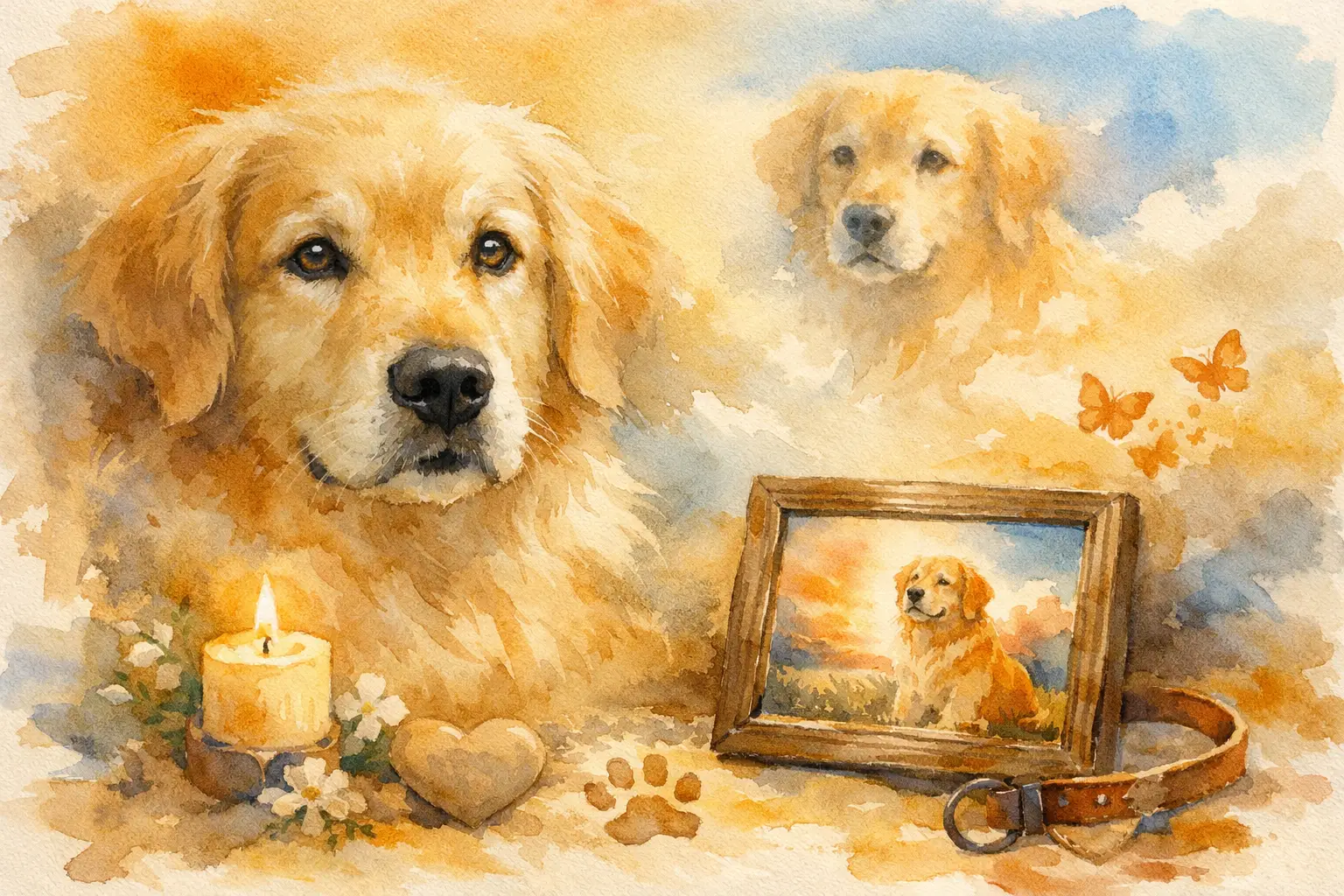
A dog’s favorite sleeping spot can remain unmistakably theirs long after the room has gone quiet. A leash by the door, the worn place on the sofa, the particular tilt of an ear in a photograph - these details are why memorial art can mean so much. The most moving dog remembrance art examples do not simply show a dog. They preserve the feeling of knowing them.
A meaningful tribute does not need to be dramatic to be lasting. It can be a portrait that captures bright, alert eyes, a peaceful scene that recalls a daily walk, or a carefully chosen image that gives a beloved companion a place of honor in the home. The right choice depends on the memories you want to hold close.
What Makes Dog Remembrance Art Feel True
Memorial art becomes personal when it reflects more than a pet’s breed or coloring. Your dog had a particular presence: perhaps gentle and watchful, mischievous and energetic, dignified, affectionate, or quietly devoted. A beautiful piece gives that presence room to remain visible.
Start with the emotional tone you want the artwork to carry. Some people want a joyful reminder of a dog at their happiest, with an open-mouthed smile and a familiar look of anticipation. Others prefer a quieter portrait that feels peaceful and reverent. Neither choice is more meaningful. The best memorial is the one that feels honest to your relationship.
The photo matters, but it does not need to be technically perfect. Often, the image that moves you most is the one where your dog looks unmistakably like themselves. A favorite expression, recognizable posture, or the light in a beloved room can offer more emotional truth than a formal pose ever could.
7 Dog Remembrance Art Examples to Consider
1. A classic watercolor portrait
A watercolor portrait is an enduring choice because it softens a photograph without losing the details that make a dog recognizable. Gentle washes of color can create a sense of warmth and light, while a carefully rendered face keeps the focus on expression.
This approach suits nearly every kind of memory. It can honor a dog who has passed or celebrate a living companion whose place in the family deserves to be preserved now. For a memorial piece, consider a calm background so the face and eyes remain the center of the portrait.
2. A portrait based on a favorite everyday photograph
Not every treasured image is a polished one. A phone photo taken during a quiet morning, a car ride, or an afternoon nap can carry the strongest sense of companionship. Turning that familiar moment into art preserves the relationship as it was lived, not as it was staged.
This choice is especially fitting if your dog had a signature expression or habit. Perhaps they always waited at the window, rested their chin on the arm of a chair, or looked up when they heard a treat bag open. Those small moments can become a powerful memorial because they belong only to your story.
3. A peaceful outdoor scene
For dogs who loved the outdoors, a memorial portrait can include the setting that made them happiest. Think of a golden field, a wooded trail, a sandy shoreline, or the backyard where they spent sunny afternoons watching the world pass by.
The setting should support the dog rather than overwhelm the image. A lightly suggested landscape can add emotional context while preserving the portrait’s elegance. This is a lovely option when one particular place instantly brings them to mind.
4. A close-up that centers the eyes
A close portrait has a quiet intimacy. It places attention on the eyes, the shape of the muzzle, the markings around the face, and all the small features you knew by heart. For many people, this is the most direct way to feel close to a beloved dog.
Choose this style when personality lived in your dog’s gaze. It is also a thoughtful choice for senior dogs, whose faces often tell a long and deeply loved story. A close-up can feel less like an image on a wall and more like a familiar presence in the room.
5. A portrait with a meaningful personal detail
A collar tag, bandana, favorite toy, blanket, or flower can add a subtle layer of remembrance. The key word is subtle. One carefully selected detail can make the work feel deeply specific; too many can distract from the dog you are honoring.
A blue bandana might recall beach days. A well-loved tennis ball could speak to a dog’s enthusiasm for play. A particular collar may be the detail that makes family members say, “That is exactly how I remember them.” These touches are not decoration. They are part of the memory.
6. A paired portrait for inseparable companions
When two dogs shared a home and a bond, a paired portrait can be a beautiful way to honor their connection. This may be especially meaningful when one dog has passed and another remains. The artwork recognizes both the loss and the love that continues in the household.
Balance is important here. Choose a photo or composition where both dogs are clear and recognizable, rather than forcing together images that do not naturally belong. The final piece should feel like a shared chapter, not simply two individual portraits placed side by side.
7. A quiet legacy portrait for a special place at home
Sometimes the most fitting memorial is the simplest: a refined portrait created to live where your dog’s memory already does. It might be displayed near a favorite chair, in a hallway passed every day, or alongside a small collection of photographs and keepsakes.
A high-resolution digital portrait gives you the freedom to select the print size and presentation that feel right for your space. A smaller print can feel intimate, while a larger piece can create a graceful focal point. There is no rule about scale. Let the space and the memory guide you.
Choosing the Right Reference Photo
The strongest reference photo is usually one that captures your dog’s character clearly. Look for an image with natural light, a visible face, and details that matter to you, such as distinctive markings or a familiar expression. If the photo is slightly imperfect but emotionally irreplaceable, that is still valuable.
Try to avoid heavily filtered images or photos where shadows hide the eyes and face. If you have several favorites, choose the one that makes you pause. Your first emotional response is often the clearest signal.
It also helps to think about what you want someone else to understand when they see the portrait. Was your dog joyful? Steady? Silly? Protective? Tender? Sharing those qualities can shape a result that feels personal rather than generic. You knew your companion better than anyone, and that knowledge is the heart of the tribute.
Words That Can Deepen a Memorial Portrait
A visual tribute can stand on its own, but a few words may add meaning when they are chosen with care. A name and dates are traditional, yet not required. Some families prefer only a name. Others choose a brief phrase that reflects their dog’s spirit, such as “Forever by our side” or “The gentlest soul.”
Keep the wording brief enough to let the portrait breathe. A memorial piece does not need to explain the whole relationship. Its purpose is to hold the feeling of it.
If you are honoring a dog who has recently passed, there is no timetable for deciding what feels right. You may choose a portrait quickly because you need something tangible, or you may return to the idea months later when the memories feel less raw. Both are valid. Remembrance has its own pace.
A Lasting Way to Honor the Love You Shared
The finest dog remembrance art examples leave room for both grief and gratitude. They acknowledge that a beloved companion is missed while keeping the joy of their life close at hand. Whether you choose a bright watercolor, a quiet close-up, or a scene from a favorite walk, choose the image that feels most like them.
A portrait cannot replace the sound of paws in the hallway or the comfort of a familiar head resting beside you. It can, however, give that love a beautiful place to live - one you can return to whenever you need to remember.