A Clear Guide to Digital Pet Printing
June 8, 2026
A clear guide to digital pet printing, from file quality and paper choices to sizing, framing, and turning a pet portrait into a lasting keepsake.
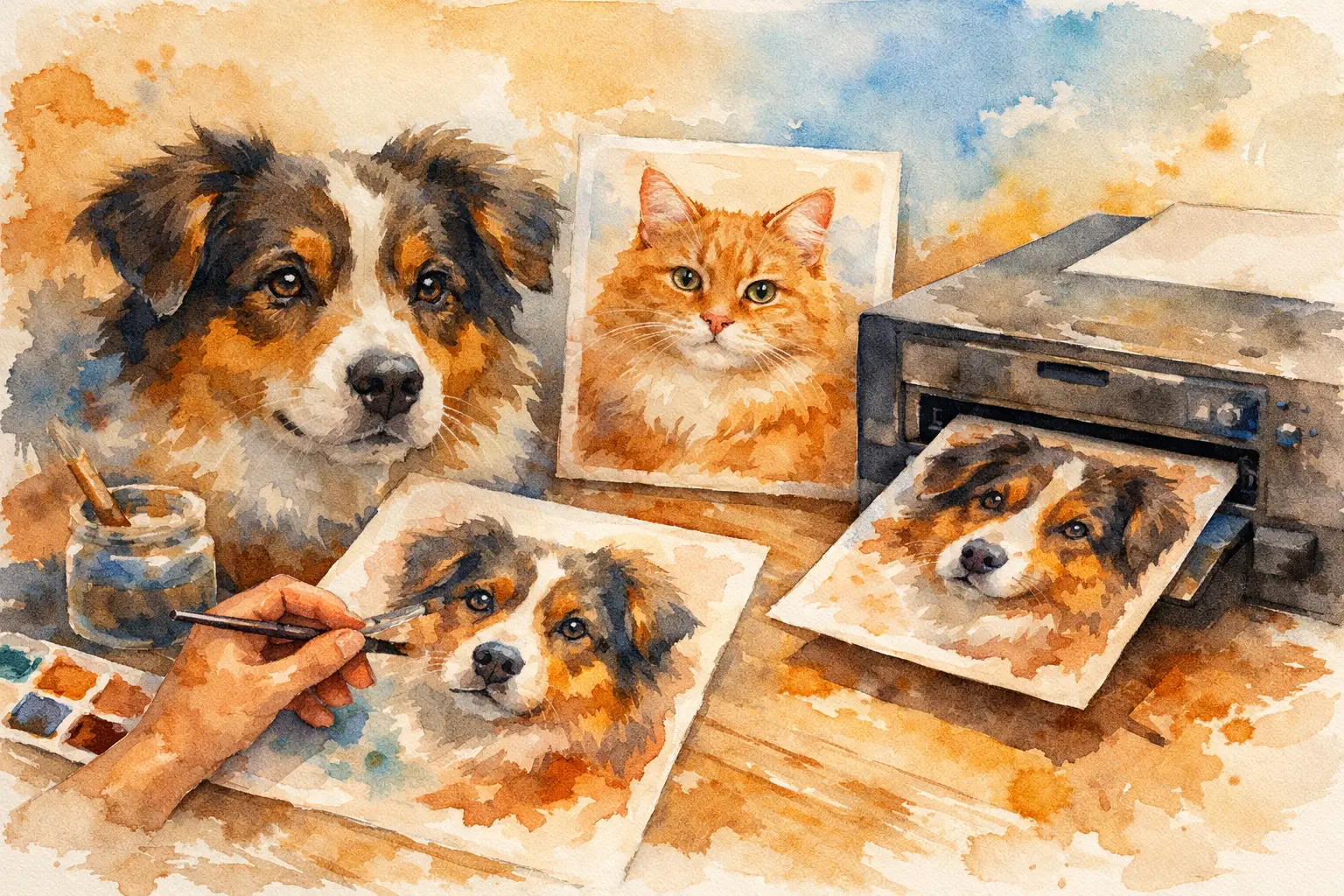
The moment your pet portrait arrives as a digital file, one question matters most: how will it live in your home? This guide to digital pet printing is designed to help you turn a meaningful image into a finished piece that feels worthy of the bond it represents.
A digital pet portrait offers something beautifully practical. You receive artwork quickly, you can print it in the size that suits your space, and you have the freedom to choose the materials and finish that feel most personal. That flexibility is part of the appeal, but it also means the final result depends on a few key choices.
Why a guide to digital pet printing matters
A lovely portrait can lose its impact if it is printed too small, placed on the wrong paper, or produced from a file that is not suited to the format. The reverse is also true. When the print method matches the artwork, even a simple frame can feel refined and deeply moving.
For many pet owners, this is not just decor. It is a celebration of a living companion, a memorial for a beloved pet, or a gift that carries real feeling. That is why printing deserves a little care. The goal is not simply to make the image bigger. It is to create a piece that feels finished, lasting, and true to the pet it honors.
Start with the right digital file
The quality of your final print begins with the file itself. A high-resolution, print-ready file gives you the most flexibility, especially if you plan to print larger than a tabletop size. If the portrait was created professionally, confirm that the file is intended for printing rather than only for screens or social sharing.
Resolution matters because printing reveals everything. Fine fur detail, soft watercolor transitions, and clean edges all rely on enough image data to hold up on paper. If a file is too small, the result may look soft or pixelated when enlarged.
Color matters too, though this is where expectations should stay realistic. A print may not look exactly the same as what you see on a bright phone screen. Screens are backlit and often more saturated. Paper is subtler. In most cases, that softer result is actually more elegant, especially for watercolor-style pet art.
If you are ordering custom artwork, it helps to choose a provider that delivers high-resolution files created specifically for professional printing. Pet Legacy Portraits, for example, centers the experience around museum-quality, print-ready digital artwork, which removes much of the guesswork from the start.
Choosing the best size for your pet portrait
Size is partly about wall space and partly about emotional presence. A small print can feel intimate on a shelf or bedside table. A larger print becomes a focal point and gives the portrait room to breathe.
For a single pet portrait, common sizes like 8 x 10, 11 x 14, and 16 x 20 tend to work well. If the artwork is meant as a memorial piece, many people prefer a size that gives it quiet significance without overwhelming the room. For entryways, living rooms, or gallery walls, larger formats often feel more intentional.
It also helps to think about viewing distance. The bigger the wall and the farther back you stand, the larger the print can be. A portrait above a console table can usually support more scale than one placed in a narrow hallway.
There is also a practical trade-off. Larger prints can be striking, but they place greater demands on file quality, paper handling, and framing. If you want a flawless result and the original file is modest in size, a medium print may be the wiser choice.
Paper types and finishes for digital pet printing
Paper changes the mood of the artwork more than many people expect. In a guide to digital pet printing, this is one of the most important decisions because it shapes both appearance and longevity.
Matte fine art paper is often the strongest choice for watercolor-style portraits. It has a soft, non-reflective finish that suits delicate color transitions and gives the piece a gallery-like presence. This tends to feel especially appropriate for memorial portraits because it is understated and elegant.
Luster or satin paper offers a slight sheen and a bit more color vibrancy. It can work beautifully if you want the image to feel slightly brighter while still avoiding the glare of a glossy surface.
Glossy paper usually brings the most punch, but it is not always the best match for refined pet portraiture. Reflections can distract from the artwork, and the finish can feel more photographic than painterly.
Textured fine art papers can be exceptional for watercolor-inspired images, though results vary by printer. A subtle texture can add depth and richness. Too much texture, however, may compete with fine details. If possible, ask for a paper sample or test print before committing to a large format.
Where to print your portrait
You generally have three options: a local print shop, an online professional lab, or home printing. Each has its place.
A good local print shop offers personal guidance, which can be reassuring if this is your first time printing custom art. You may be able to review paper samples, ask about color correction, and pick up the print without shipping risk.
Professional online labs can deliver excellent results and often provide a wide range of fine art papers and sizes. This route works well when you know what you want and are comfortable placing a detailed order.
Home printing is best reserved for smaller pieces or casual copies. Even strong consumer printers can struggle to match the depth, consistency, and permanence of a professional print. If the portrait has emotional weight, professional printing is usually worth it.
Framing choices that elevate the artwork
A strong frame does not need to be ornate. In fact, simple framing often feels more timeless. Natural wood, black, white, or soft metallic finishes tend to complement pet portraits without drawing attention away from them.
Matting can make a significant difference. A white or warm off-white mat gives the artwork visual space and creates a more finished presentation. It can also help a smaller print feel more substantial.
Glass choice matters too. Standard glass is perfectly serviceable, but non-glare or UV-protective glazing can be a thoughtful upgrade, especially if the portrait will hang in a bright room. Sunlight can fade prints over time, even high-quality ones.
If the portrait is intended as a memorial piece, placement often matters as much as framing. Some families prefer a central place in the home where the pet was part of daily life. Others choose a quieter location, such as a bedroom, study, or reading corner. There is no correct answer. The right place is the one that feels natural to the memory.
Common mistakes to avoid
The most common mistake is printing from the wrong file. If you accidentally use a screenshot, social media image, or compressed preview, the final print may look far less refined than the artwork deserves.
Another issue is choosing a paper finish based only on what looks vivid online. Brighter is not always better. For artwork with softness and emotional nuance, a matte or fine art finish often creates the more sophisticated result.
Rushing size decisions can also lead to disappointment. A print that is too small may feel incidental. One that is too large for the available resolution can lose detail. It is worth measuring your space before ordering.
Finally, do not overlook proofing. If the portrait is especially meaningful, a small test print can save you from costly mistakes in color, crop, or paper choice.
Making the portrait feel personal
Printing is technical, but the final piece should feel intimate. That can come from the size you choose, the room where it hangs, or the way you frame it alongside a collar, paw print, or a favorite photo nearby.
Some people prefer a single statement piece. Others print multiple sizes, keeping one framed at home and gifting another to a family member. Digital artwork makes that flexibility possible, which is one reason it has become such a thoughtful choice for both celebration and remembrance.
The best result is rarely the most complicated one. It is the print that respects the artwork, suits the space, and preserves the feeling you had when you first saw your pet transformed into art.
If you approach the process with care, digital pet printing becomes more than a final production step. It becomes the moment a portrait takes its place in your life, not just on your screen.