How Many Pet Photos Should You Upload for a Portrait?
August 29, 2026
Learn how many pet photos to upload for a meaningful portrait, and choose images that preserve your pet’s true character with clarity and care always.
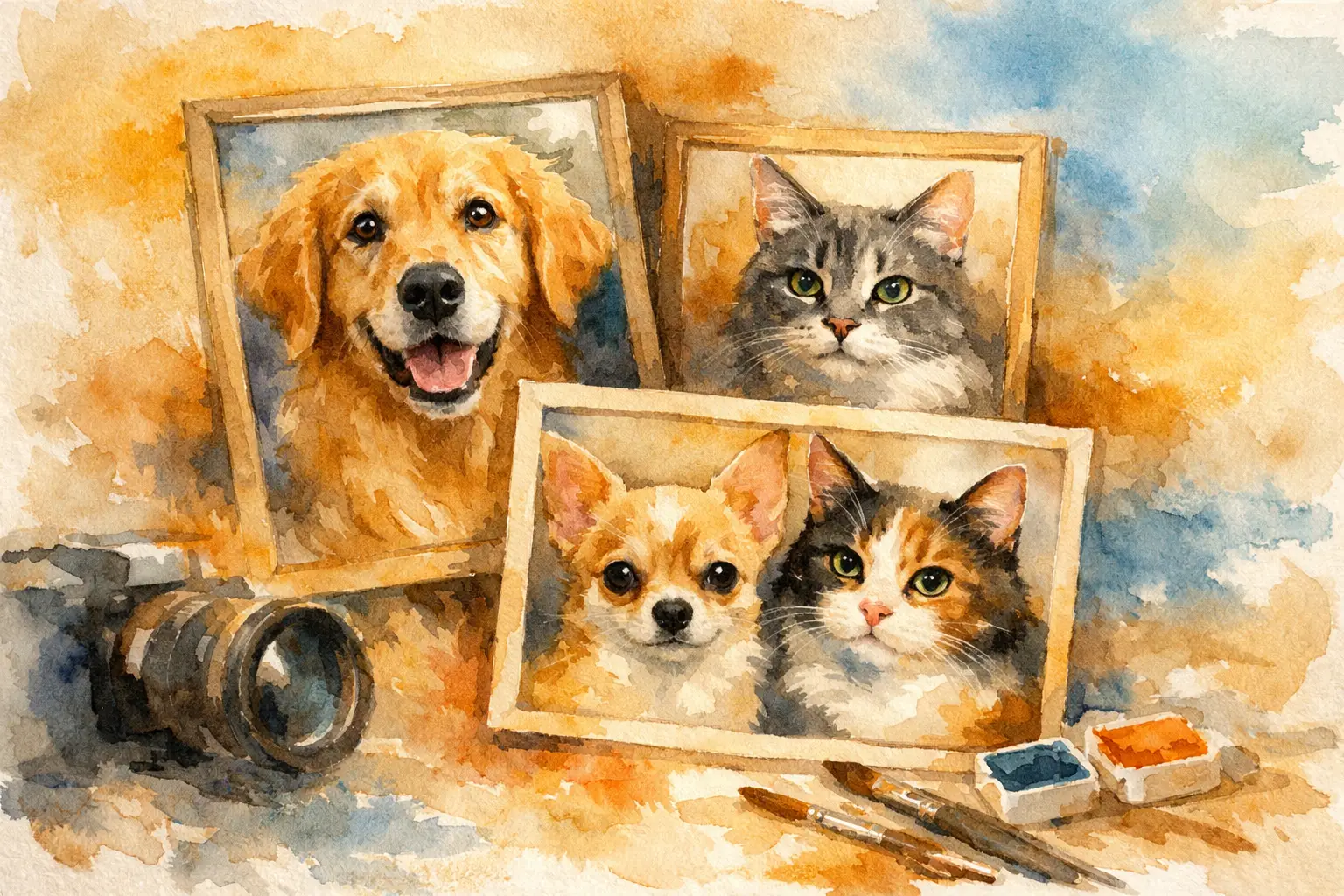
A portrait begins with a moment only you could recognize: the familiar tilt of an ear, the thoughtful look before a walk, the soft face that greeted you at the door. If you are wondering how many pet photos to upload, the reassuring answer is that you do not need an entire camera roll. One strong, heartfelt image can be enough to create a portrait that feels unmistakably like your pet.
How many pet photos should you upload?
For most custom pet portraits, start with one clear, well-lit photo that shows your pet’s face and coloring clearly. A single excellent image gives your portrait a focused visual reference and keeps the result true to the expression you love most.
If the portrait process allows additional photos, two or three can be helpful when they reveal details the main image does not capture. Perhaps one photograph shows the beautiful markings on your dog’s chest, another captures the shape of your cat’s bright green eyes, and a third shows a distinctive floppy ear. More photos are not automatically better. The goal is clarity, not quantity.
Choose the image that makes you pause for a second. The one where you think, there you are. That emotional recognition is often the best guide.
Begin with the photo that feels most like them
The strongest portrait reference is usually not the most formal photograph. It is the one that preserves your pet’s personality. A curious expression, a calm gaze, a playful head tilt, or the dignified look of an older companion can carry more meaning than a perfectly posed image.
Look for a photo where your pet’s face is visible from the front or at a gentle angle. Their eyes should be reasonably clear, their features should not be hidden by heavy shadow, and their fur color should be easy to see. Natural daylight often creates a beautiful reference because it reveals the softness, texture, and details that make your pet unique.
A close-up can be especially moving for a watercolor portrait. It gives the finished artwork room to honor the eyes, expression, and gentle details that loved ones recognize immediately. That said, a slightly wider photo can also work beautifully if it captures a beloved pose or the graceful outline of your pet.
At Pet Legacy Portraits, you remain the creative force behind the piece. Your chosen photo and the personal details you share guide a museum-quality watercolor portrait that reflects the companion you know and love.
Prioritize expression over perfection
A photo does not need to be professionally taken to become meaningful art. Phone photos often hold the most authentic memories because they were taken in the middle of ordinary life: on the couch, in a sunny patch on the floor, after a favorite game, or during a quiet afternoon together.
What matters most is whether the image communicates your pet’s presence. If a photo is a little imperfect but captures the look that feels most familiar, it may be a better choice than a technically polished image with less emotional connection.
Still, try to avoid photos that are very dark, heavily filtered, blurry, or taken from far away. These can obscure the details that help preserve a faithful likeness. When choosing between two similar favorites, select the one with clearer eyes and more natural color.
When extra photos are worth uploading
Additional photos are useful when your pet has features that may not be fully visible in one image. This is common for pets with intricate markings, multicolored coats, unusual eye colors, or a signature feature that deserves careful attention.
For example, your main photo may have the perfect expression, but your pet’s white-tipped tail is out of frame. A second photo can provide that missing detail. Or perhaps a treasured image was taken later in your pet’s life, when their face had become lighter around the muzzle. Including another clear photo can help preserve that tender, recognizable change.
Keep supporting photos consistent with your primary choice. If one image shows a black coat in deep shade and another shows it in bright sun, the color may appear different between them. Choose the photo that best reflects what your pet looked like in person, then use the others only to clarify details.
Three carefully chosen images are generally more useful than ten near-duplicates. Too many similar photos can make it harder to identify which expression, coloring, or stage of life matters most to you.
If your pet has passed away
For a memorial portrait, you may feel tempted to upload every photograph you have. That feeling is deeply understandable. Each image may hold a different chapter of your life together.
Begin with the photo that brings the strongest sense of closeness. It might be a recent image that reflects the pet you said goodbye to, or it may be a photograph from their younger years, full of the spirit you first fell in love with. There is no wrong choice. The portrait can honor the version of your companion that lives most vividly in your heart.
If you have only one suitable photo, that is enough. A single image can carry years of devotion. If you have several, use them with intention: one for the expression you cherish, another for coat details, and perhaps one that confirms a meaningful feature such as a small spot, a bent ear, or a distinctive collar marking.
Check these details before you upload
Before making your final selection, take a quiet look at the image on a larger screen if possible. Make sure your pet’s eyes, nose, ears, and coat are visible enough to recognize. A photo should feel true to their natural coloring rather than altered by a strong filter or unusual lighting.
It also helps to consider whether the photo reflects the age you want remembered. Some pet parents want to celebrate the lively puppy or kitten years. Others choose the gentle face of a senior companion because it represents the long life and deep bond they shared. Both choices are beautiful. This is your portrait, and your relationship gives it meaning.
If your pet is photographed with another animal or person, a crop or a different image may be preferable unless the shared moment is central to what you want to preserve. A focused portrait gives your companion the space to be seen fully.
You do not need a perfect photo
Many beloved pets were camera-shy, constantly in motion, or happiest in dimly lit corners of the house. Do not let the absence of a flawless image stop you from creating something lasting. A clear-enough photo with a recognizable expression can still become a deeply personal portrait.
Choose the best image you have, not the image you wish you had taken. The details you provide alongside it can add the context no photograph can hold on its own: the name they answered to, the gentle habits that made you smile, and the place they still hold in your family.
The right number of photos is ultimately the number that helps you say, with confidence, this is my pet. One meaningful image may be all it takes to preserve a presence that deserves to be remembered beautifully.