How to Frame Pet Portraits Beautifully
July 10, 2026
Learn how to frame pet portrait artwork with the right size, mat, frame color, and placement so your piece feels personal, elegant, and lasting.
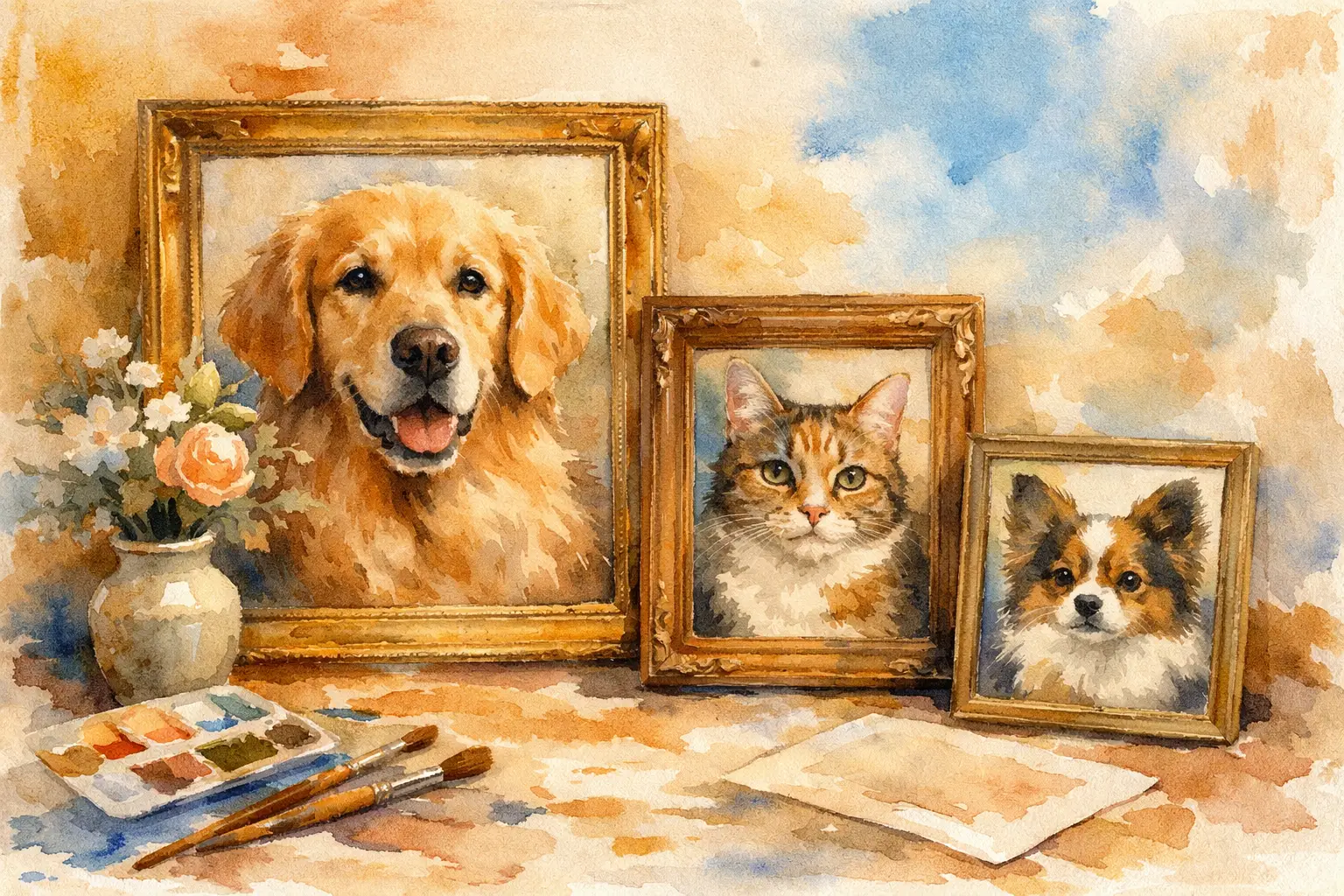
A pet portrait can change the feeling of a room in a single glance. It is not just art on a wall. It is a familiar expression, a posture you know by heart, a presence you want to keep close. If you are wondering how to frame pet portrait artwork in a way that feels worthy of that bond, the answer is part visual and part emotional.
The right frame does more than finish the piece. It gives the portrait weight, context, and permanence. A beautiful portrait deserves to look intentional from every angle, whether it celebrates a dog currently stretched across your sofa or honors a cat whose absence still changes the shape of the day.
How to frame pet portrait art with intention
Start with the portrait itself. Before you think about frame color or wall placement, spend a moment looking at the image as a whole. Notice the mood, the background, the pet's expression, and the style of the artwork. A soft watercolor portrait asks for something different than a bold, graphic print. The framing should support the feeling of the piece, not compete with it.
This is where many people go wrong. They choose a frame based only on what matches the room, then wonder why the portrait feels flat. Decor matters, but the artwork comes first. If the portrait has a gentle, refined quality, a loud or overly ornate frame can pull attention away from the very reason you created it.
A quieter approach is often stronger. Clean lines, thoughtful spacing, and balanced color let the portrait hold the room with grace.
Start with the print size and proportions
Framing always becomes easier once you know the final print size. If you are printing a digital pet portrait, decide first where it will live. A bedside table, hallway wall, office shelf, or mantel each calls for a different scale.
Smaller portraits feel intimate. They work well in personal spaces where the viewer is close to the piece. Larger portraits create more presence and are often better suited to memorial displays, entryways, or living areas where you want the artwork to feel anchored.
Proportion matters just as much as size. A close-up portrait with strong eye contact often looks striking in a simple, balanced frame with generous breathing room around it. A full-body portrait may need a different shape to avoid feeling cramped. If the artwork already feels composed and spacious, an oversized mat can elevate it. If the portrait is emotionally intense, too much empty space can make it feel distant. It depends on the image.
Choose a frame that supports the portrait
When people ask how to frame pet portrait prints well, they are usually asking a color question. Should the frame be black, white, wood, gold, or something softer? The answer depends on both the artwork and the atmosphere you want.
Black frames feel classic and grounded. They suit portraits with strong contrast and can give a museum-like finish to watercolor art when paired with a white mat. White frames feel light and refined, especially in bright interiors or when the artwork has an airy palette. Natural wood brings warmth and tends to feel especially fitting for portraits rooted in tenderness and memory. Gold or brass-toned frames can be beautiful, but only when used with restraint. If the portrait is already delicate and emotional, too much shine can tip the balance.
The safest choice is not always the best one. A black frame may feel elegant in one room and too severe in another. A pale oak frame may soften a memorial portrait beautifully, yet feel too casual for a formal gallery wall. What matters is that the frame looks like it belongs to the portrait, not just the furniture around it.
Why mats make such a difference
A mat creates visual breathing room between the portrait and the frame. That space can make the artwork feel more elevated, more deliberate, and more finished.
For pet portraits, mats are often worth choosing. They give softer artwork room to settle and help smaller prints feel more substantial. A bright white mat is timeless and crisp. An off-white or warm ivory mat can feel gentler and more organic, especially with watercolor tones.
There is a trade-off. If the portrait is small and detailed, too wide a mat can make the pet feel visually distant. If the artwork is rich and painterly, a narrow mat may preserve intimacy better. Again, it comes back to the emotional read of the piece.
Glass, finish, and what makes the piece feel premium
The frame itself matters, but so does what sits over the print. Standard glass is common and perfectly workable, but reflections can interfere with softer portrait details, especially around the eyes. If your portrait will hang opposite a window or near direct light, a less reflective finish can help the image remain visible throughout the day.
The print quality also shapes the final effect. A museum-quality portrait deserves to be printed clearly and framed cleanly, without rippling paper, uneven borders, or a backing that bends over time. Even the most meaningful image can lose some of its impact when the finishing choices feel temporary.
This matters even more for memorial portraits. When a piece is meant to hold memory, the presentation should feel steady and lasting. Not extravagant. Just considered.
Frame placement changes how the portrait is felt
Where you place the portrait influences the kind of presence it has in your home. Some pieces belong in shared spaces where they become part of daily life. Others feel more powerful in quieter locations, where the moment of seeing them is more personal.
A portrait of a living pet often works beautifully in the rhythm of the home - above a console, in a hallway, near a reading chair, or as part of a curated wall. It becomes part of the ongoing story.
A memorial portrait may call for a different kind of placement. Some people want it in full view, integrated into the home with warmth and pride. Others prefer a quieter setting, such as a bedroom, study, or a shelf with a few meaningful objects nearby. Neither choice is more correct. The question is simple: do you want the portrait to greet you publicly or meet you privately?
Should you hang it alone or with other artwork?
A single framed pet portrait can carry extraordinary presence on its own. This is often the strongest choice when the image is emotionally significant or visually soft. Giving it space allows the portrait to speak clearly.
That said, a pet portrait can also sit beautifully within a larger arrangement if the surrounding pieces share a similar restraint. If everything on the wall is loud, the portrait can lose its center. If the grouping is thoughtful, the pet's image becomes part of a larger story of home, love, and belonging.
A note on creating the portrait before you frame it
The frame can only elevate what is already there. That is why the portrait itself matters so much. The expression, the posture, the tone, the sense of personality - these are what make the finished piece feel lasting.
When you create your own portrait, you are shaping more than an image. You are deciding how your pet will be remembered, celebrated, or simply seen. That personal authorship is part of what gives the framed piece its emotional force. With Pet Legacy Portraits, you are not commissioning someone else's interpretation. For $47, you create a museum-quality watercolor portrait yourself through a guided experience, with instant delivery, print-ready files, and the freedom to regenerate until it feels right.
That matters because framing is not just about presentation. It is about honoring a choice you made with love.
How to frame pet portrait pieces for a lasting result
If you want the final piece to feel elegant for years, keep the overall effect simple. Choose a frame that respects the artwork's tone, a mat that gives it room if needed, and a placement that matches the role the portrait plays in your life. Try not to force a trend onto a piece that is deeply personal.
The most beautiful framed pet portraits tend to have one thing in common: they feel true. True to the pet, true to the memory, and true to the home they live in. That kind of result rarely comes from choosing the boldest frame in the room. It comes from choosing the one that lets the portrait keep its heart.
When the framing is right, the piece does something quietly powerful. It stops feeling like a file you printed or a purchase you made. It becomes part of the home, and part of the way love stays visible.