How to Print Digital Portraits That Feel Timeless
July 11, 2026
Learn how to print digital portrait art with the right size, paper, color, and framing choices, so your pet’s presence feels beautifully preserved at home.
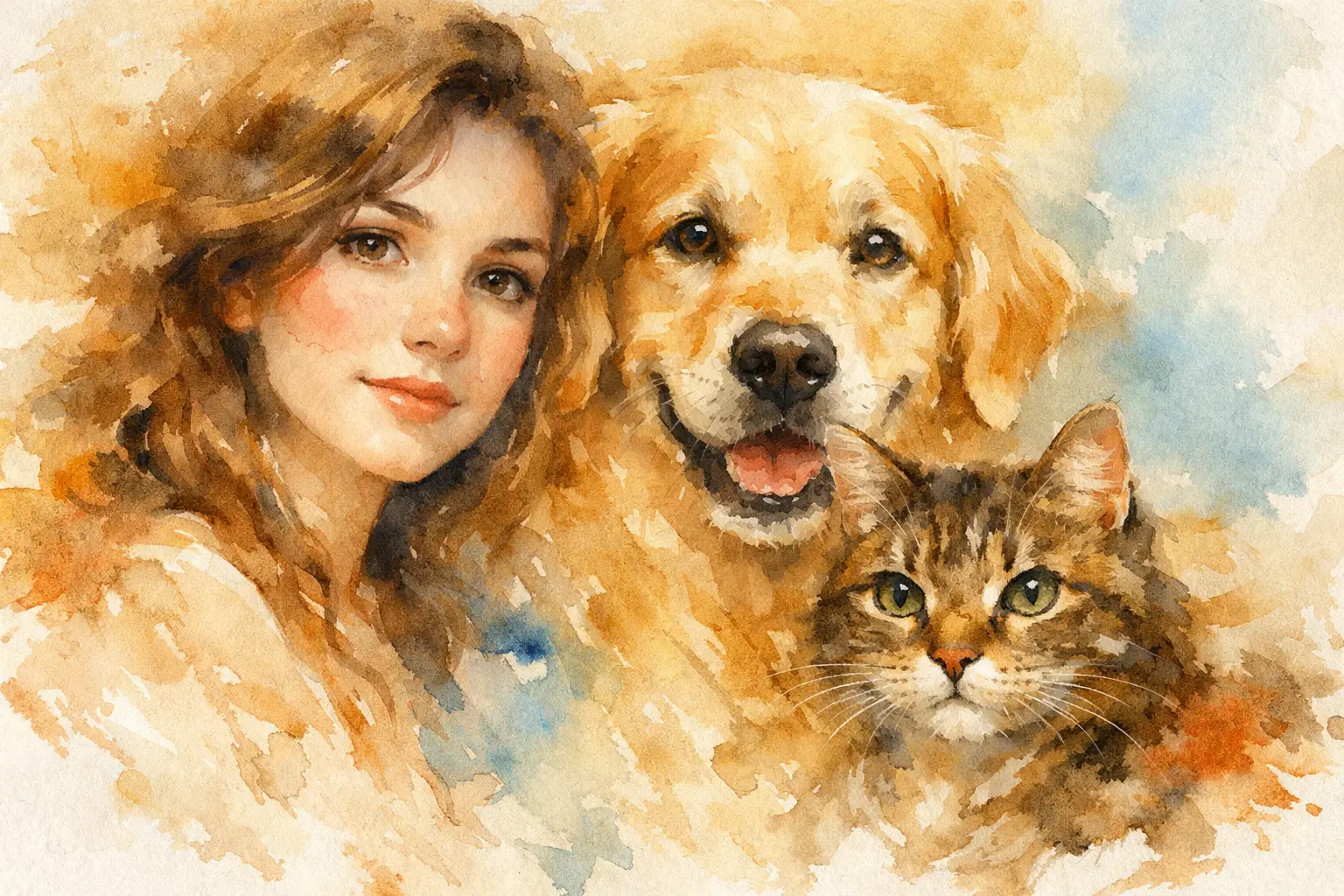
A portrait can arrive as a digital file, but its meaning often deepens when it becomes part of the room where you live, remember, and love. Knowing how to print digital portrait art thoughtfully helps preserve the softness of a watercolor style, the character in your pet’s expression, and the feeling that made you choose the image in the first place.
Whether you are celebrating a beloved companion who still curls up beside you or honoring one whose presence is carried in memory, printing is not an afterthought. It is the moment your creation takes its place in your home.
How to Print Digital Portrait Art Beautifully
Begin with the original high-resolution download. Avoid screenshots, social-media copies, or files that have been repeatedly saved and compressed. Those versions may look fine on a phone, but a larger print can reveal softness, uneven color, or unwanted grain.
Use the portrait file exactly as you downloaded it whenever possible. If you need to crop it, make small adjustments and keep the pet’s face, ears, and meaningful details comfortably within the frame. A little breathing room around the portrait gives watercolor artwork an elegant, gallery-like presence.
Before ordering, check the print lab’s size recommendations against your file. A quality portrait download is designed to be printed, but very large formats ask more of every image. If you are unsure, choose a moderate size rather than stretching a file beyond what it can gracefully support. A well-printed 8-by-10 or 11-by-14 piece often feels more intimate and refined than an oversized print with compromised detail.
Choose a size that suits the place and the feeling
The right size depends on where the portrait will live. For a bedside table, bookshelf, or quiet memorial corner, a 5-by-7 or 8-by-10 print can feel personal without asking for attention. These smaller formats are also lovely when paired with a paw print, collar tag, or handwritten note nearby.
An 11-by-14 portrait offers more visual presence while remaining easy to frame and place in most rooms. It is often a beautiful choice for a living room, entryway, or a wall shared with family photographs. For a single, meaningful focal point above a console or mantel, a larger print may be appropriate, provided the surrounding wall has enough open space.
Consider the pet’s pose as well. A close-up portrait with expressive eyes can hold a room at a smaller size. A full-body composition, a portrait with a detailed background, or artwork created to include a favorite setting may benefit from a little more room.
Select Paper That Honors Watercolor Detail
Paper changes the character of the finished art. Glossy photo paper produces vivid color and a reflective surface, but it can feel too shiny for a watercolor portrait and may show glare near windows or lamps. It is usually not the first choice for this style.
Matte or fine-art paper is often more fitting. Its nonreflective surface lets gentle washes of color, delicate edges, and subtle texture remain calm and visible from different angles. A heavyweight matte paper has a clean, contemporary finish, while textured fine-art paper can bring a tactile quality that feels especially suited to a watercolor-inspired piece.
There is a trade-off. Textured paper can soften tiny details slightly, while smooth matte paper tends to preserve crispness. If your portrait includes fine whiskers, a detailed collar, or a particularly expressive gaze, smooth matte or archival fine-art paper may be the better balance. Ask your chosen printer for a sample pack if you want to compare surfaces in person.
For a portrait intended as a memorial piece, archival paper and fade-resistant inks are worth considering. They are designed to help the colors remain true over time, especially when the artwork will be displayed for years. Keep any print away from direct, prolonged sunlight, regardless of the paper you choose.
Let the original colors lead
A screen emits light, while a print reflects it. This means a printed portrait can look a little quieter than it does on your phone or computer. That is normal, and in watercolor art it can be part of the charm.
Before sending the file to print, avoid heavy editing. Increasing saturation or contrast too much can turn gentle color transitions into something harsher than intended. If your printer offers automatic “photo enhancement,” review what it does before selecting it. Those settings are often designed for everyday snapshots, not nuanced portrait artwork.
If you have adjusted your screen’s brightness very high, lower it to a comfortable level before judging the image. You may find that the print’s softer appearance is closer to the true balance of the artwork than you expected.
Decide Where to Print Your Portrait
A local print shop can be a thoughtful option when you want to see paper samples, speak with someone about sizing, or collect the finished piece quickly. It is especially helpful if you are creating a display for a meaningful date, such as an adoption anniversary or a pet’s birthday.
A professional online print lab may offer a broader selection of fine-art papers, larger formats, and archival options. Look for clear guidance on file upload, paper type, color handling, and proofing. The best choice is not always the one with the most options. It is the one that gives you confidence that the portrait will be handled with care.
Home printing can work well for smaller pieces, thank-you cards, or a portrait you want to place in a temporary frame right away. Use a quality inkjet printer and substantial matte paper rather than ordinary office paper. Still, for a central display piece or a remembrance portrait you hope to keep for decades, professional printing usually provides more consistent color and longevity.
Frame the Portrait Without Overpowering It
A frame should support the artwork, not compete with your pet’s presence. For most watercolor portraits, simple wood, soft white, warm oak, black, or muted gold frames create a timeless result. The choice can reflect your home, but it can also reflect your pet: a warm wood frame may suit a sunlit portrait of a golden companion, while a slim black frame can give a gentle, modern portrait more definition.
A mat is often worth adding, particularly for an 8-by-10 or 11-by-14 print. It creates space between the artwork and the frame, makes the finished piece feel more intentional, and protects the surface from touching the glass. Choose white, ivory, or a quiet neutral pulled from the portrait rather than a bold color that distracts from the face.
For a more traditional look, use glass or acrylic with UV protection. If glare is a concern, museum-style non-glare glazing can be a beautiful investment. It is especially useful for artwork displayed opposite a window or beneath overhead lighting.
Place it where you will truly see it
The most meaningful placement is not necessarily the most prominent wall. A portrait beside the chair where your pet used to rest, in an entryway that recalls a daily greeting, or near family photographs can feel deeply right. For a pet being remembered, many people find comfort in choosing a place that invites a quiet moment rather than turning remembrance into a formal display.
If you are creating a collection, keep visual consistency through frame color, mat style, or print size. You do not need every piece to match exactly. A thoughtful grouping should feel like a family story, not a showroom arrangement.
Create a Print You Will Want to Keep
When you make a portrait through Pet Legacy Portraits, you bring the details that no one else could know: the tilt of a head, the gentleness behind the eyes, the color that never quite showed correctly in photographs, the spirit that made your pet unforgettable. Printing gives those choices a lasting physical form.
Take your time with the final decisions. Choose a size that belongs in your space, paper that respects the artwork’s softness, and a frame that lets your pet remain at the center. The finished print does not need to be grand to be meaningful. It simply needs to feel true to the bond it carries.