How to Write a Pet Portrait Description That Lasts
August 20, 2026
Learn how to write pet portrait description details that capture your companion’s spirit, whether you are celebrating a life or honoring a memory in art.
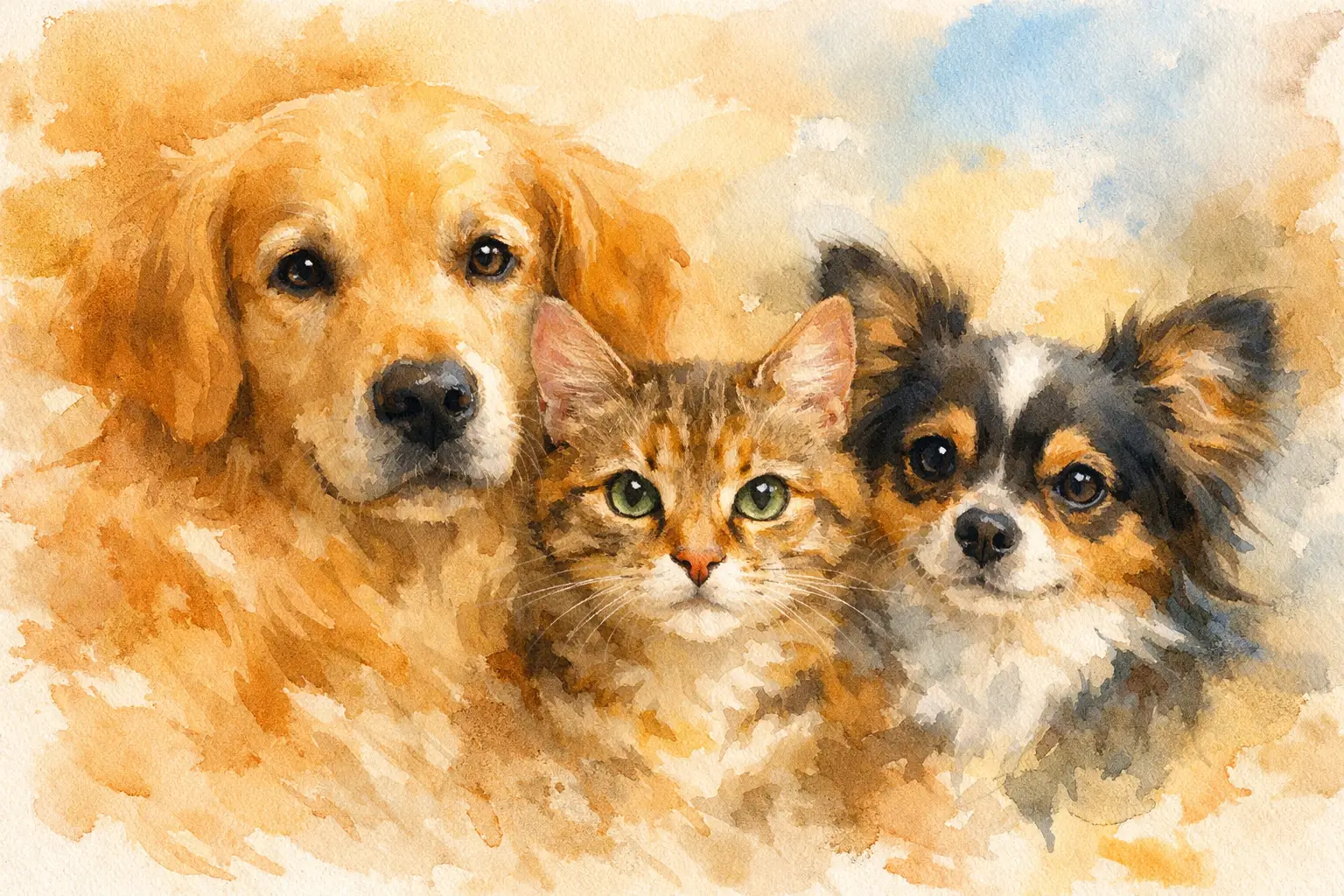
A portrait begins long before the final watercolor takes shape. It begins with the small things only you would know: the way your dog waited at the window, your cat’s watchful green eyes, the favorite toy that never left their side. When you write a pet portrait description, you give those details a place to live. You are not simply identifying a breed or choosing a color. You are preserving the feeling of knowing them.
A meaningful description helps turn a beloved pet’s photograph into a personal work of art. For a companion still by your side, it can celebrate the character that fills your home each day. For a pet being remembered, it can gently hold the details that remain precious: their expression, their rituals, their unmistakable presence.
What to Include in a Pet Portrait Description
The most helpful descriptions balance what your pet looked like with who they were. Begin with the visible details that matter most to you. Their coat markings, eye color, ear shape, and distinctive features all help create a faithful portrait. A small white patch on the chest, one folded ear, a freckled nose, or a silvering muzzle may be the very detail that makes the image feel immediately familiar.
Then move beyond appearance. Consider the expression you associate with your pet most strongly. Were they bright-eyed and curious? Serene, regal, mischievous, or quietly devoted? The emotional tone you choose can guide the portrait toward the version of them that feels truest in your heart.
You do not need to write a long biography. A few carefully chosen observations often say more than a page of general praise. Instead of writing, “She was a good dog,” describe what made her goodness visible: “She greeted every visitor with a toy in her mouth and slept beside the front door until everyone was home.”
How to Write a Pet Portrait Description With Heart
Start with one clear thought: what do you most want to recognize when you see this portrait? The answer may be a physical trait, a favorite memory, or simply the feeling your pet brought into a room. Let that answer become the center of your description.
A simple structure can make the process feel more natural. First, name the features that should be captured. Next, describe their personality in a few honest words. Finally, add one meaningful detail or memory that reveals your bond. This gives the portrait a strong visual foundation while keeping the story personal.
For example, a description might read: “Milo was a small black-and-tan dachshund with soft, velvety ears and warm brown eyes. He was alert and affectionate, always tilting his head when he heard his name. Please capture his gentle, curious expression and the feeling of a dog who believed every walk was an occasion.”
Notice that the description is specific without trying to say everything. It gives shape to Milo’s appearance, personality, and spirit. That combination is far more powerful than a list of generic qualities.
Choose Details You Would Miss Most
If you are writing about a pet in memoriam, this question can be especially helpful: What detail would I recognize anywhere? Perhaps it is the little curl of fur between their eyes, the pink spot on their nose, or the way they looked up at you from the end of the bed. These details are not minor. They are often the doorway back to a cherished relationship.
For living pets, think about the moments you hope to remember years from now. Your description might include the confident stance of a young dog, the dramatic gaze of a cat who rules the household, or the joyful energy of a puppy caught just before a run. A portrait can honor the present as beautifully as it honors the past.
Let the Photo and Description Work Together
Your photo provides an essential visual reference, but your words provide context that a camera cannot always show. A photograph may capture your pet looking serious when they were usually playful, or alert when their truest nature was calm and tender. Your description gives that image its emotional direction.
If the photo does not show a meaningful marking clearly, say so. If your pet’s eyes were a remarkable shade of amber in daylight, include it. If their personality was more peaceful than the selected image suggests, mention that too. The goal is not to correct the photograph. It is to make sure the portrait reflects the pet you knew.
Descriptions for Celebration and Remembrance
The words you choose may shift depending on why you are creating the portrait. A celebration portrait can lean into joy, humor, and everyday companionship. You might describe a pet as “the self-appointed keeper of the couch” or “the first to greet us every morning.” These details bring warmth and life to the finished piece.
A memorial description may be quieter, but it does not need to be sorrowful. Many people find comfort in focusing on the qualities that made their pet irreplaceable: their steady loyalty, their soft presence, their love of sunny windows or afternoon walks. You can honor a loss without reducing a beautiful life to its ending.
Consider these two approaches:
“Poppy was a cream-colored golden retriever with a soft feathered coat and kind, dark eyes. She was gentle with children and happiest carrying a tennis ball through the garden. Please capture her warm, peaceful nature.”
“Oliver was a gray tabby with a white chin, golden eyes, and a tiny nick in his left ear. He had a quiet, thoughtful way of sitting beside me during difficult days. I would love the portrait to feel calm, loving, and close.”
Both are concise, but each gives the creator something deeply personal to hold onto.
What to Avoid When You Write a Pet Portrait Description
Try not to worry about sounding poetic or polished. The strongest descriptions sound like love, not a formal character reference. Plain, sincere language is enough. If “his ears made everyone laugh” is the truth, it belongs in the description.
It also helps to avoid relying only on broad labels such as sweet, loyal, playful, or beautiful. Those words can be a useful starting point, but they become more meaningful when paired with proof. “Loyal” becomes vivid when you write, “He followed me from room to room and waited outside the bathroom door.” “Playful” becomes memorable when you write, “She brought a crinkled paper ball to bed every night.”
Do not feel pressure to include every favorite memory, either. A portrait description is a focused tribute, not a complete record of a life. Choose the details that carry the most recognition and let those speak clearly.
A Gentle Prompt If You Are Not Sure Where to Begin
If the words feel difficult, especially after a loss, begin with this sentence and finish it in your own way: “When I look at this portrait, I want to feel…” You may answer with comfort, laughter, companionship, gratitude, or the warmth of being loved without condition.
Then ask yourself what your pet looked like in that feeling. Were their eyes soft? Was their posture proud? Did they have a habit that made your family smile? Your answers will lead you naturally toward a description that feels true.
Every pet leaves behind a distinct impression. Give yourself permission to name it with tenderness, in your own words. The details you choose are not too small. They are the legacy only you can create.