Is AI Pet Art Accurate? What a Portrait Needs
July 14, 2026
Is AI pet art accurate enough to honor your companion? Learn what shapes likeness, how photos matter, and how to create a watercolor portrait with heart.
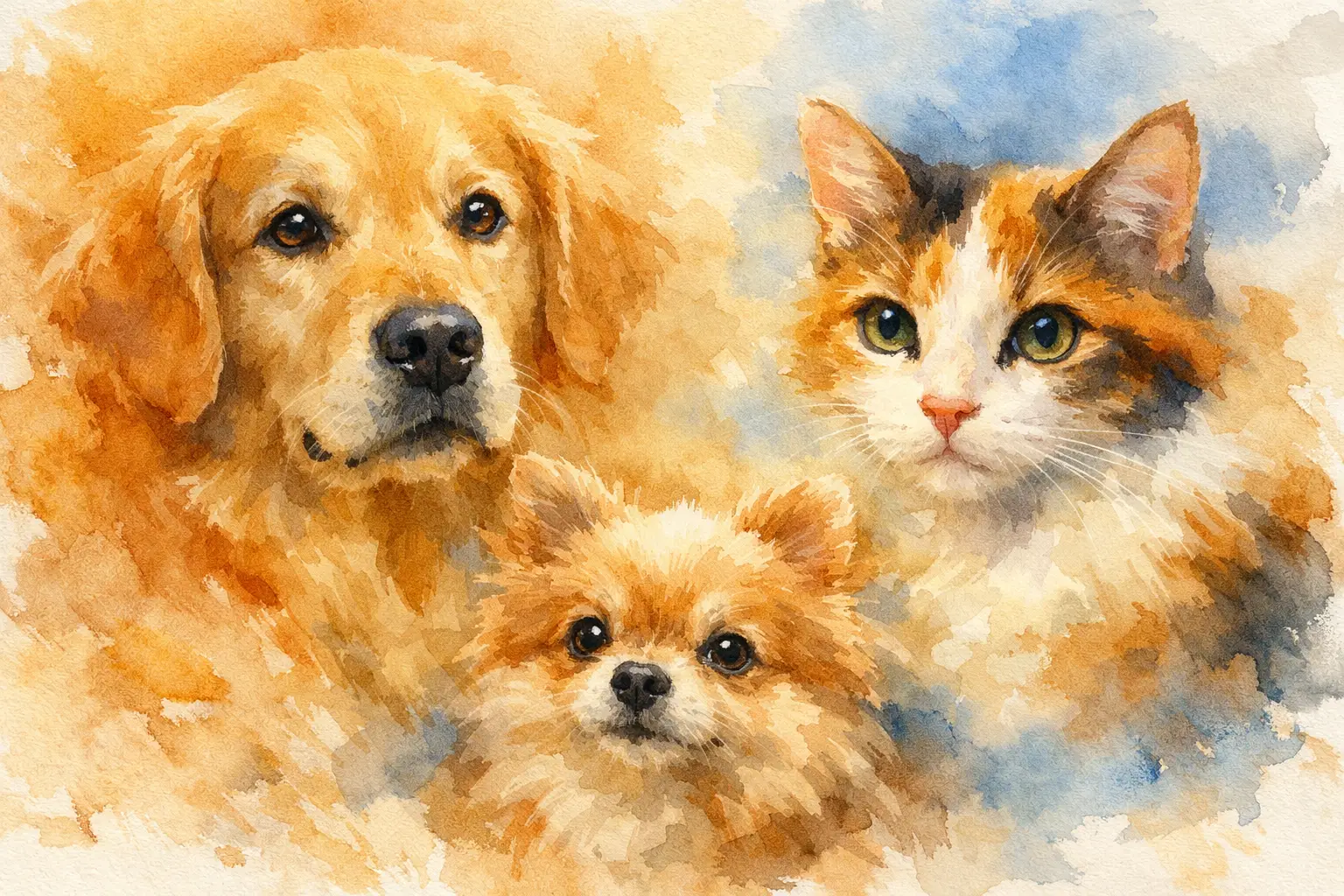
A portrait can capture the tilt of a beloved ear, the thoughtful gaze before dinner, or the white whiskers that arrived with age. But when the image is made with AI, a natural question follows: is AI pet art accurate enough to feel like your pet?
The honest answer is that it can be remarkably true to a pet's character, though it is not a photograph. A watercolor portrait is an interpretation. Its success is measured not only by whether every marking appears in precisely the right place, but by whether you recognize the companion you love in the expression, coloring, posture, and feeling of the finished piece.
For a living pet, that recognition can turn an everyday photo into a lasting celebration. For a pet being remembered, it can offer a gentle way to hold close the details that memory refuses to let go.
Is AI Pet Art Accurate in the Ways That Matter?
Accuracy has more than one meaning. There is visual accuracy: coat color, eye color, facial markings, breed traits, and the shape of the ears or muzzle. Then there is emotional accuracy: the alert sweetness of a young dog, a cat's composed stare, the slightly lopsided smile that made a pet instantly recognizable.
A beautiful AI watercolor portrait can preserve both, especially when it begins with a clear photo and the person who knows the pet best guides the result. You know whether your dog had a broad chest and delicate paws, whether your cat's green eyes leaned gold in sunlight, or whether a tiny dark spot beside the nose belonged in every image. Those observations make a meaningful difference.
Still, AI pet art should not be expected to reproduce every hair or create an exact duplicate of a snapshot. Watercolor naturally softens edges, blends color, and gives the portrait an artistic sense of light. That is part of its grace. The goal is a faithful likeness shaped into art, not a clinical copy of a photo.
What Determines How Closely a Portrait Resembles Your Pet
The starting photo has the greatest influence on the final portrait. A clear, well-lit image gives the portrait process more to work with, particularly around the face. The eyes, nose, ears, and distinctive markings are where recognition lives.
Choose a photo where your pet is facing the camera or turned only slightly. Natural daylight is especially helpful because it reveals true fur color without harsh shadows. A photo taken at your pet's eye level often feels more intimate than one taken from above, and it makes facial proportions easier to see.
The image does not need to be professionally taken. In fact, many of the most moving portraits begin with an ordinary photo: a dog on a favorite chair, a cat resting near a window, a senior companion looking up with familiar patience. What matters is that the face is visible and the photo reflects the pet you want to remember.
Your descriptions matter, too. If your pet's coat was a warm chestnut rather than red, if one ear folded differently from the other, or if their expression was gentle rather than playful, those details help shape a portrait with greater personal truth. This is why a guided experience feels different from simply receiving a generic result. The portrait becomes more closely connected to the animal behind the image.
Distinctive details are worth naming
Some features deserve special attention because they are easy to recognize and deeply personal. A white blaze down the forehead, a speckled muzzle, a single darker paw, floppy ears, or an unusually pale eye can be central to a pet's likeness.
Think also about the details that would make you pause when looking at a portrait and say, “Yes, that is them.” Perhaps it is the soft curve of a Cavalier's ears, a tabby's proud chin, or the way an older dog's face had begun to silver. Naming these features helps keep the result grounded in your pet rather than a general idea of their breed.
Why Watercolor Accuracy Feels Different From Photo Accuracy
A photo records a moment. Watercolor distills one.
That distinction matters when choosing AI pet art. A watercolor portrait may simplify the background, soften individual strands of fur, or make the eyes feel a little more luminous. These are artistic choices, not necessarily mistakes. When handled with care, they bring attention to the pet's presence rather than the distractions around them.
For many pet owners, this is exactly why watercolor feels right. It preserves a likeness while allowing room for warmth, memory, and tenderness. A portrait of a cherished companion does not have to show every detail of the room where the photo was taken. It can focus instead on the face that greeted you at the door, slept beside you, or kept you company through quiet years.
There is a trade-off. If you need scientific precision for a show record or want every feature rendered exactly as it appears in a specific photograph, a traditional photo may be the better choice. If you want an elegant, print-ready artwork that honors the pet's recognizable spirit, AI watercolor can be a deeply satisfying medium.
How to Create a More Faithful AI Pet Portrait
The most accurate result usually comes from taking a moment before generating. Begin with your strongest reference photo, then look at it as someone who has never met your pet would. Can they clearly see the eyes? Are the coat colors visible? Does the pose show the features you love most?
Next, describe what makes your pet unmistakable. Keep the focus on visible traits and personality. “Bright amber eyes, a white chest, one ear that tips forward, and a calm, watchful expression” gives a much clearer sense of the subject than a broad description alone.
Then give yourself permission to refine. A meaningful portrait should not feel rushed. If the first version captures the coloring but misses the expression, regenerate and adjust the details. If the eyes are right but the markings need attention, return to the features that matter most. The act of choosing and shaping the image is part of the tribute.
At Pet Legacy Portraits, you can upload a photo, share your pet's distinctive details, and create your own museum-quality watercolor portrait for $47. You receive two portrait downloads and can regenerate until the artwork feels right. You remain the creative force throughout, because no one understands the small, beloved truths of your pet better than you do.
For memorial portraits, choose the image with feeling
When a pet has passed, the “best” photo is not always the sharpest one. It may be the image that carries their familiar expression, their favorite resting place, or the look they gave only to you. If it is clear enough to show their face and markings, that emotional connection can make it the right choice.
Memorial art is not about replacing what has been lost. It is a way to give love a visible place to rest. A faithful portrait can bring forward the gentleness, mischief, dignity, or devotion that defined a life shared together.
When a Result Does Not Feel Quite Right
Sometimes the portrait is technically lovely but does not immediately feel like your pet. Trust that instinct. It may mean the coat shade is too cool, the eyes need to be softer, the ears are not quite their shape, or the expression feels more serious than the companion you knew.
Use that reaction as guidance rather than disappointment. Return to the traits that make recognition instant. A better reference photo, a clearer note about markings, or a more precise description of personality can shift the result significantly.
The most meaningful pet portraits are not created by asking art to guess who mattered to you. They are created when your memories, your eye for detail, and your love guide every choice. Let the final image be one you can look at and recognize not just as a beautiful animal, but as your own companion, held in color and remembered with care.