Pet Memorial Portrait Examples That Feel Personal
July 27, 2026
Explore pet memorial portrait examples that honor a beloved companion, with ideas for photos, details, and watercolor style that preserve their spirit.
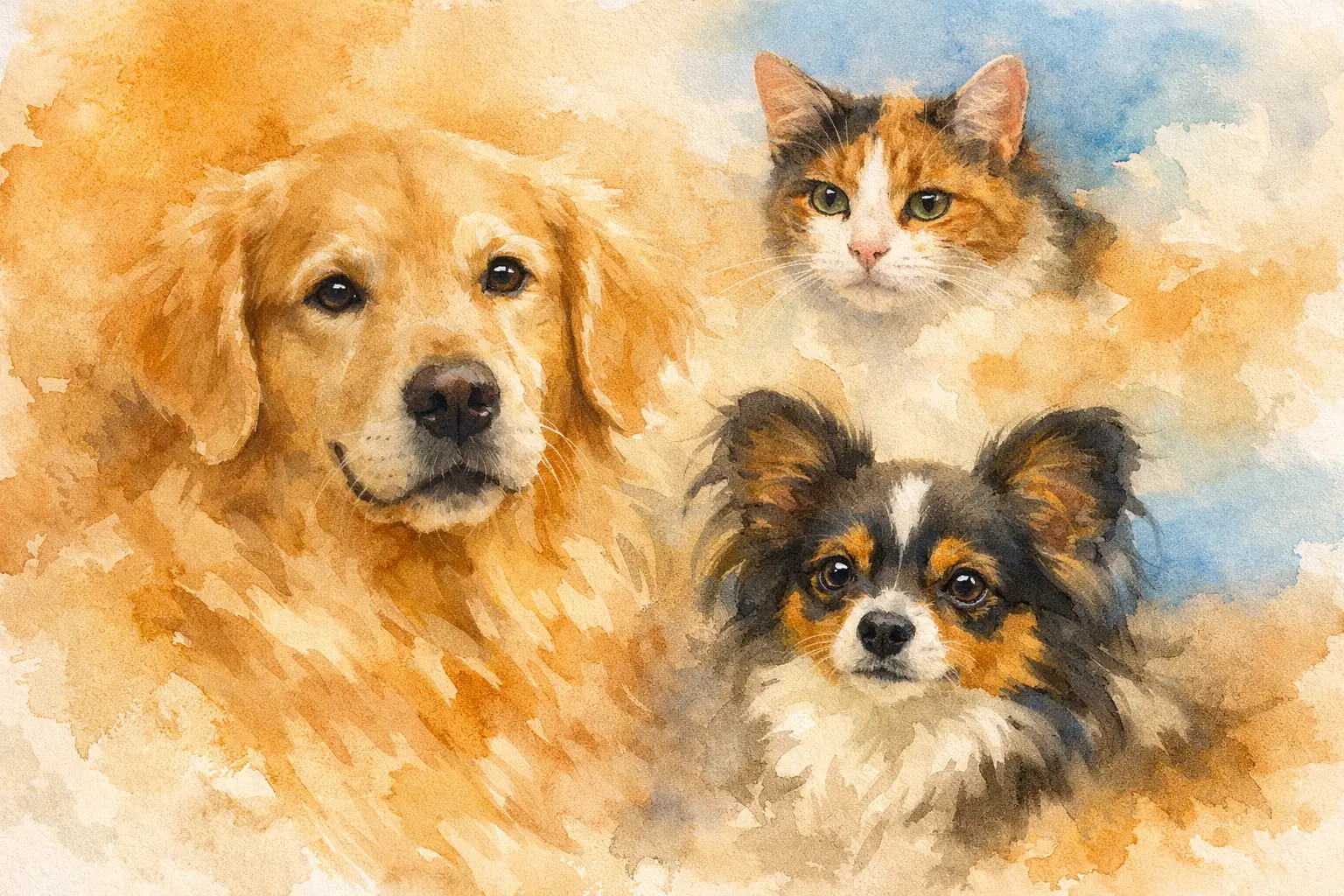
A memorial portrait can hold the small things a photograph sometimes leaves unsaid: the way your dog tilted her head when she heard your voice, the soft blaze on your cat’s nose, the favorite blue collar worn thin with years of walks. The most meaningful pet memorial portrait examples do not try to make grief disappear. They give love a place to rest - visible, beautiful, and made in your pet’s likeness.
For some families, the portrait becomes a quiet presence in a bedroom or reading corner. For others, creating it is a gentle way to revisit treasured photos and remember the details that made one companion unlike any other. There is no single right approach. The best choice is the one that feels true to the life you shared.
Pet memorial portrait examples to inspire your tribute
A classic head-and-shoulders portrait
A close, front-facing portrait is often the most timeless memorial choice. It keeps attention on the eyes, expression, and markings that immediately say, “That is them.” This style works especially well when you have one clear favorite photo: a relaxed face, natural daylight, and a look that feels familiar.
A watercolor treatment gives this composition a quiet sense of softness while preserving character. Consider a light, uncluttered background in a shade that supports your pet’s coat color rather than competing with it. Cream, pale blue, warm gray, and gentle botanical tones can all feel elegant without drawing focus away from the subject.
The favorite outdoor memory
Some pets are inseparable from a place. It may be the trail where your dog raced ahead, a sunny garden chair claimed by your cat, or a beach where paw prints always led toward the water. A portrait inspired by that setting can honor not only your pet, but the rhythm of life you shared together.
The setting should be suggestive rather than crowded. A wash of green behind a beloved hiking companion or a soft horizon behind a water-loving dog can evoke the memory beautifully. This approach is especially meaningful when a plain background would leave out something essential to who they were.
A portrait with a meaningful object
A single personal detail can make a memorial portrait feel deeply intimate. A red bandana, a worn tennis ball, a favorite blanket, or a small tag on a collar can carry a surprising amount of emotional weight. These details work best when they were genuinely part of your pet’s everyday life, not simply decorative additions.
Choose one or two elements rather than asking the image to hold every memory at once. The portrait remains strongest when your pet’s face and presence are still at the center. A familiar object then becomes a quiet recognition for the people who knew them best.
A joyful expression, not a solemn one
Memorial art does not have to look sad to be meaningful. In fact, many of the most moving portraits show a bright-eyed dog mid-smile, a cat watching from a favorite perch, or a rabbit with ears lifted in curiosity. Choosing joy can be a way of honoring the happiness your pet brought into the home.
This is an especially fitting direction when your memories are full of playfulness and personality. A portrait may reflect the way they lived rather than the fact that they are gone. Both choices are valid, and neither diminishes the depth of remembrance.
A pair or family portrait
When two animals shared a home, they often shared a story as well. A portrait of bonded pets can be a comforting tribute, whether one has passed or both are being remembered. It can also honor the particular relationship between a pet and the person who loved them.
For a paired portrait, select photos with similar angles and lighting when possible. The goal is not photographic perfection. It is a composition in which both personalities feel present and balanced. If one pet was calm and observant while the other was exuberant, that contrast deserves to remain visible.
Choosing a photo that feels like them
The photo you begin with shapes every part of the finished portrait. Technical perfection matters less than recognition. The right image is usually the one that makes you pause because it captures your companion exactly as you remember them.
Look for clear eyes, visible facial markings, and natural light. If your pet had a distinctive ear fold, whisker pattern, patch of fur, or expression, make sure it can be seen. A close crop is often ideal for a memorial portrait, particularly if the image will be printed and displayed at home.
Older photos can still be full of meaning, even if they are not perfectly sharp. In those cases, it helps to use your description to preserve what the photo cannot fully show. You know whether your dog’s eyes were more amber than brown, whether your cat’s fur had silver at the edges, and whether a favorite collar was always close by. Those details are part of the portrait because they are part of the memory.
Let personality guide the artistic choices
The most personal memorial portraits are not built from a checklist. They are guided by character. Ask yourself what people noticed first about your pet. Was she dignified and gentle? Was he mischievous, affectionate, watchful, or endlessly enthusiastic? The answer can guide the color, pose, and mood.
A calm, reserved pet may suit a soft neutral palette and a composed pose. A lively companion may feel more recognizable with brighter color and an alert expression. Watercolor is particularly well suited to this kind of emotional nuance because it can feel refined and expressive without becoming overstated.
You may also wish to include a name or a short phrase. This depends on the role the portrait will play. A name can make the piece feel like a formal tribute, while an image without text may feel more timeless and open. If you add words, keep them simple. A name, dates, or a brief sentiment is often enough.
Memorial portraits for pets who are still with you
There is no need to wait for loss to create a legacy portrait. Many pet parents choose to make one while their companion is still beside them, when the quirks and routines of daily life are easy to see and celebrate. The resulting artwork can become even more precious over time.
Creating a portrait now is not an invitation to sadness. It is a way to notice what is here: the gray beginning around a muzzle, the afternoon nap spot, the expression reserved for the sound of a treat bag. Love does not need a reason to be preserved.
This can also make future remembrance gentler. You will already have created something that reflects your pet as you knew them, with care and intention, rather than feeling pressured to make decisions during a difficult moment.
Creating a portrait at your own pace
A memorial portrait should never feel rushed. Give yourself permission to review photos, change your mind about the background, or choose a different expression after sitting with it for a day. The process is personal because the relationship was personal.
With Pet Legacy Portraits, you remain the creative force throughout the experience. You choose the photo, describe the details that matter, and shape a museum-quality watercolor portrait in a guided studio created to help you make something worthy of your companion. You receive two portrait downloads and can regenerate until the result feels right.
The value is not simply in having an image to print. It is in seeing the memories you carry become a lasting work of art, made in your own time and according to your own sense of what honors them best.
When you are ready, begin with the photo that brings them closest. Trust the details you remember, choose the feeling you want to hold onto, and let the finished portrait be a tender reminder of a life that remains part of yours.