Pet Personality in Watercolor That Feels Like Them
September 2, 2026
Capture pet personality in watercolor with a portrait shaped by the details you cherish - a graceful keepsake for celebration, remembrance, and your home.
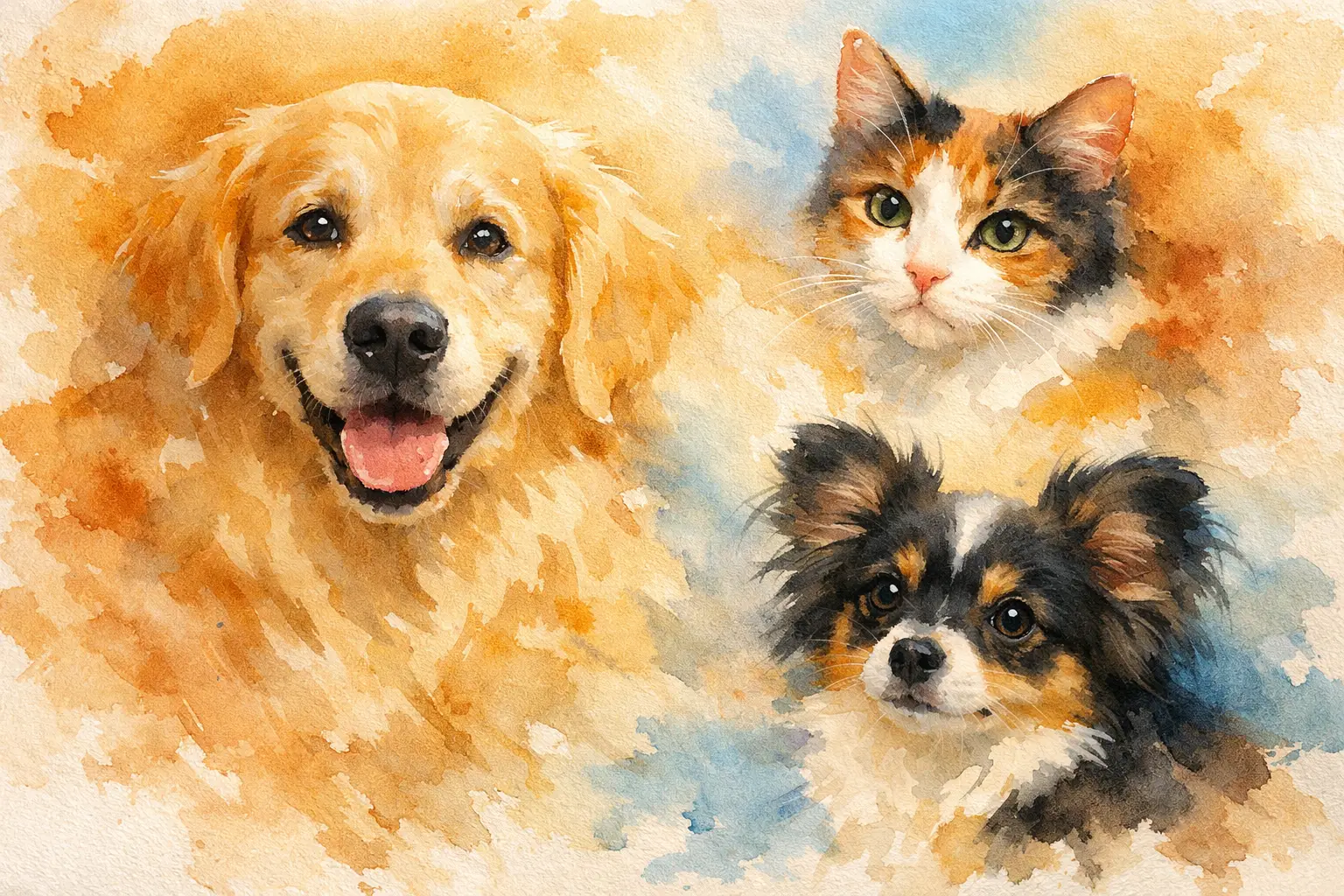
A tilted head at the sound of a treat jar. The quiet dignity of an older dog resting in a favorite chair. A cat who seemed to own every sunlit corner of the house. Pet personality in watercolor is about preserving these recognizable truths, not simply matching fur color or eye shape. When a portrait holds the expression, presence, and spirit you know by heart, it becomes a beautiful way to celebrate a companion or keep their memory close.
Why Pet Personality in Watercolor Feels So Personal
Watercolor has a softness that gives memory room to breathe. Its layered washes, gentle edges, and luminous color can suggest more than a photograph alone: the warmth in a familiar gaze, the alertness in a pair of ears, the sweetness behind a slightly crooked smile. It does not need to reproduce every hair to feel remarkably true.
That is why the most meaningful portraits begin with personality rather than appearance alone. Two golden retrievers may share a coat color, but one may be all joyful motion while the other carries a calm, watchful gentleness. A watercolor portrait becomes more recognizable when it reflects that distinction.
The goal is not to make a pet look posed or polished beyond recognition. It is to honor the version of them that lives most vividly in your mind. Perhaps that is their proud posture, their mischievous eyes, or the way their face softened when they felt safe beside you.
Begin With the Details Only You Know
You know your pet better than anyone. That knowledge is the heart of a portrait with emotional depth. A clear photo gives the portrait its visual foundation, but the details you share give it meaning.
Consider the qualities people noticed first. Was your dog gentle with children but fearless near the front door? Did your cat greet every visitor from a distance, then quietly curl up beside the person who stayed longest? Was your pet playful, elegant, stubborn, curious, protective, or wonderfully dramatic?
These are not small details. They guide the mood of the finished piece. A beloved companion remembered for boundless energy may suit a brighter, more expressive composition. A pet whose presence brought calm may feel most at home in softer tones and a quieter background. There is no single correct interpretation because every bond has its own character.
Choose a Photo That Feels Familiar
The best reference photo is rarely the most formal one. Look for an image where your pet's face is clear and their expression feels unmistakably like them. Natural light often reveals coat color and eye detail beautifully, but emotional recognition matters just as much.
A close-up can be ideal for highlighting a distinctive gaze or facial marking. A photo with more of the body may be the better choice if posture tells part of the story, such as a dog sitting proudly upright or a cat tucked into a signature curl. If you are choosing from several images, ask a simple question: if someone who loved this pet saw the portrait, would they immediately say, “That is them”?
For a memorial portrait, it can be especially meaningful to select a photo from a peaceful, happy moment rather than the last photo taken. There is no rule here. Some people want to remember a favorite season of life; others want the image that feels closest to the goodbye. Both choices can be deeply right.
Share the Story Behind the Expression
A few sincere words can shape a portrait more than a long description. Think of the phrases you use when telling someone about your pet. “He was brave, even when he was scared.” “She made every room feel softer.” “He had the serious face of a professor and the soul of a clown.”
This kind of language helps preserve the emotional truth behind the image. It also gives you a quiet opportunity to name what your pet meant to you. For living pets, that can be a joyful act of celebration. For a pet who has passed, it can be a gentle form of remembrance - a way to hold onto the qualities that made your relationship singular.
Let Watercolor Support the Mood
Color carries feeling. Warm creams, honeyed golds, and blush tones can make a portrait feel sunlit and affectionate. Cooler blues, sage greens, and soft grays often create a restful, reflective mood. Richer shades can suit a pet with a bold presence or dramatic markings.
A restrained palette is often powerful because it keeps attention on the pet. At the same time, a touch of meaningful color can add personal resonance. A soft green may recall a beloved backyard. A blue wash may bring to mind a favorite blanket, a lakeside walk, or the quiet peace of morning.
Background choices deserve the same thought. A clean, airy setting gives the face and expression room to lead. A subtle suggestion of place can be lovely when that place is part of the memory. The trade-off is focus: too much scenery can pull attention away from the pet, while too little context may miss something central to their story. The best choice depends on what you most want to feel when you see the portrait.
A Portrait for Celebration or Remembrance
A living pet does not need a milestone to deserve a portrait. Commissioning one can mark the ordinary blessings that become precious over time: the daily greeting at the door, the companionship of a quiet evening, the personality that makes a house feel like home. It is a way of saying, “I see you exactly as you are, and I want to remember this season.”
For a pet being honored in memoriam, watercolor offers a graceful balance of presence and tenderness. The portrait is not meant to replace what has been lost. Nothing can do that. It can, however, give love a visible place to rest. A familiar face, rendered with care, may become a comforting reminder that the bond remains part of your life.
People grieve differently, and there is no timetable for creating memorial art. Some feel ready soon after a loss, while others return to photographs months or years later. A meaningful portrait meets you where you are. You decide which image, details, and feeling deserve to be carried forward.
Give the Finished Portrait a Lasting Place
A high-resolution digital watercolor portrait gives you freedom to choose how it will live with you. You may print it for a favorite room, include it in a remembrance space, or keep the file safely stored for future use. Select a print size that allows the expression to remain clear and intimate rather than overly distant.
For a museum-quality result, thoughtful printing matters. A fine art paper with a soft texture can complement watercolor's gentle character, while a simple frame keeps the attention on your pet. Consider where you naturally pause during the day. A portrait placed there can become less like an object on display and more like a familiar, welcome presence.
Pet Legacy Portraits offers a guided way to turn your photo and personal memories into a high-resolution digital watercolor portrait, delivered within five business days. The process keeps you at the center: your chosen image, your words, and your love shape what is preserved.
The most lasting portraits do not ask you to explain why your pet mattered. They make the answer visible in a look, a posture, a wash of color, and the quiet certainty that this was a life worth remembering beautifully.