12 Pet Photo to Watercolor Examples
May 15, 2026
See 12 pet photo to watercolor examples, from bright portraits to memorial art, and learn what makes a reference photo translate beautifully.
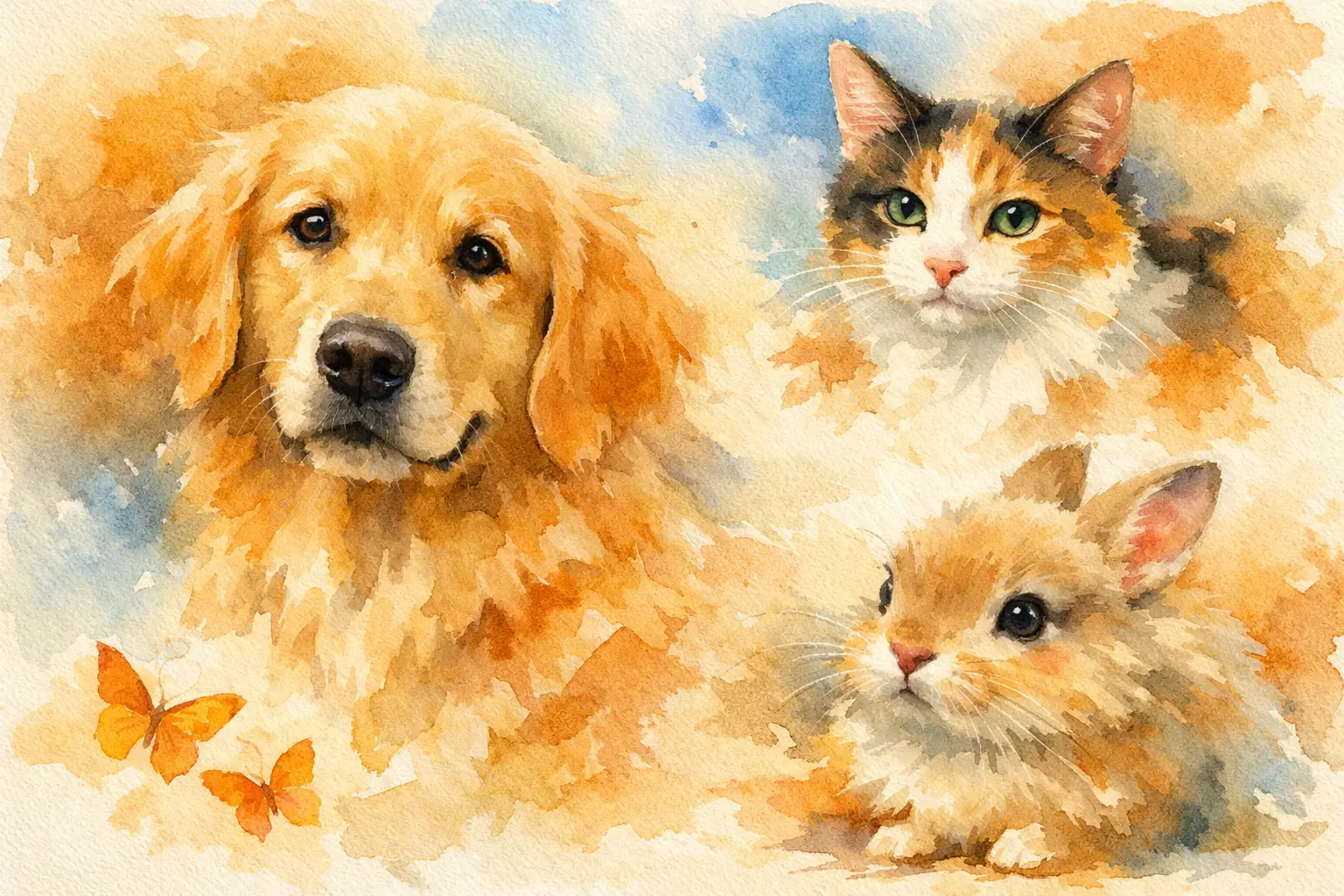
A great pet portrait rarely begins with the art style. It begins with the photo. When people search for pet photo to watercolor examples, they are usually trying to answer a more personal question: What will my dog, cat, or beloved companion actually look like as finished artwork?
The answer depends on expression, lighting, pose, and the feeling you want the portrait to carry. Watercolor can soften a busy snapshot, refine everyday moments, and turn a familiar face into something worthy of display. It can feel joyful, dignified, playful, or quietly commemorative - all from the same medium, with very different results.
What pet photo to watercolor examples really show
Examples are useful because they help you see translation, not just style. A strong watercolor portrait does not copy every detail in a literal way. It selects what matters most - the eyes, the shape of the ears, the texture around the muzzle, the posture that feels unmistakably like your pet - and lets the rest breathe.
That is why two source photos of the same dog can produce very different portraits. A close-up with direct eye contact tends to feel intimate and classic. A side profile in soft window light often feels more elegant. A playful outdoor image may preserve more movement and personality, even if it includes less facial detail.
If you are evaluating examples before ordering, look beyond whether the artwork is attractive. Ask whether the finished portrait still feels emotionally true to the animal in the original photo. The best watercolor portraits do more than stylize. They preserve presence.
12 pet photo to watercolor examples worth understanding
1. The close-up headshot
This is the most timeless format. A centered image of your pet looking toward the camera usually creates a strong watercolor portrait because the features are clear and the expression is easy to read.
It works especially well for dogs with soulful eyes, cats with striking markings, and senior pets whose faces carry gentle character. The finished result often feels formal enough for framing, but still warm.
2. The three-quarter pose
A slightly turned head creates depth and softness. In watercolor, this pose often looks more refined than a straight-on snapshot because it gives shape to the face and lets the artist emphasize highlights along the nose, brow, and fur.
This format suits pets with elegant profiles or distinctive ears. It is also a good choice if your pet rarely sits perfectly still for a full front-facing photo.
3. The seated full-body portrait
Some pets are defined as much by posture as expression. A seated full-body image can capture the dignified stance of a retriever, the compact poise of a French bulldog, or the delicate silhouette of a cat curled neatly in place.
The trade-off is detail. Full-body portraits show more of the pet, but the face may appear smaller unless the source photo is high resolution. If expression matters most, a tighter crop is usually stronger.
4. The playful outdoor shot
A lively image taken in the yard, at the beach, or on a favorite trail can translate beautifully when the composition is simple. Watercolor is especially forgiving with natural backgrounds because foliage, sky, and grass can be softened into suggestion rather than rendered literally.
This kind of example often feels celebratory. It suits pets remembered for energy, curiosity, and joy. The key is clarity - motion blur can weaken the final result.
5. The sleeping or resting portrait
Not every meaningful portrait needs alert eye contact. A resting image can feel tender and deeply personal, especially for memorial artwork. A sleeping cat in a patch of sunlight or an older dog lying peacefully on a blanket can become a portrait with unusual quiet.
This is one of the most emotionally nuanced options. It depends on the customer. Some people want bright, animated remembrance. Others want calm.
6. The puppy or kitten portrait
Young pets often photograph beautifully because their features are soft and expressive. In watercolor, that softness becomes part of the appeal. Floppy ears, oversized paws, and downy fur take on a light, airy quality that feels sweet without becoming childish.
These examples often work best with a clean crop and a simple background. Too much visual clutter can compete with the natural charm of the subject.
7. The senior pet portrait
Watercolor can be especially moving for older pets. White fur around the muzzle, softened eyes, and age-marked features tend to gain grace in this style. Rather than emphasizing decline, a well-made portrait highlights devotion, familiarity, and a life well loved.
For memorial purposes, senior pet examples often resonate most because they feel honest. They do not erase age. They honor it.
8. The black pet portrait
Black dogs and black cats can be harder to photograph, which makes examples in this category particularly useful. The best source photos have directional light that reveals shape in the coat without blowing out highlights.
When done well, watercolor gives dark fur subtle variation and richness. When the original photo is too dim, the portrait can lose definition around the face. This is one area where photo quality matters more than people expect.
9. The white or light-coated pet portrait
Very light fur presents the opposite challenge. Without contrast, faces can appear flat in a photo. Watercolor examples of white cats, cream retrievers, or pale doodles tend to look strongest when there is enough shadow around the eyes, ears, and nose to define structure.
The finished effect can be exceptionally elegant. Light-coated pets often suit watercolor because the medium handles softness so naturally.
10. The multi-pet portrait
A combined portrait of two or more pets can be beautiful, but it requires balance. Good examples show each animal clearly without crowding the composition. Similar lighting and image quality across the source photos help a great deal.
This format is often chosen for household companions or remembrance pieces that honor a bond between animals. It can be deeply meaningful, though more complex than a single-subject portrait.
11. The memorial portrait from an older phone photo
Many memorial orders begin with imperfect images. Sometimes the best or only photo is an older phone snapshot with average resolution, indoor lighting, or a casual composition. That does not automatically rule it out.
Watercolor can be very forgiving when the pet's face is still readable and the emotional expression is present. Fine detail may be reduced, but the result can still feel graceful and true. This is where style becomes especially valuable - it can elevate a memory that was never captured professionally.
12. The formal portrait with a plain background
If you want the most polished, museum-quality result, a clear photo with a simple background is often the strongest choice. This gives the artwork room to focus on the pet alone, with no distractions competing for attention.
These examples tend to feel premium and display-ready. They are ideal for gift-giving, framed home decor, and tribute pieces meant to hold a permanent place in the home.
What makes a photo translate beautifully into watercolor
The best source images share a few qualities. The face is visible. The lighting is soft enough to show detail. The expression feels specific to the pet. You do not need a professional studio image, but you do need a photo that preserves character.
Natural light usually works best. Window light, shade outdoors, or gentle daylight near a doorway tends to flatter fur and reveal the eyes. Flash can create harsh reflections and flatten texture, especially on dark coats.
Resolution matters, but not in an abstract technical sense. It matters because crisp detail gives the portrait more to work with around the eyes, nose, whiskers, and fur lines. If you zoom in and the face stays clear, that is usually a good sign.
Background matters less than many people assume. A cluttered background is not ideal, but it can often be softened or minimized in watercolor. What cannot be invented as easily is expression.
Choosing examples for celebration or remembrance
If the portrait is meant to celebrate a living pet, many people prefer bright, alert examples with open eyes and a sense of personality. A playful smile, perked ears, or a favorite seated pose often creates a portrait that feels joyful and current.
If the portrait is meant as a memorial, the preference can shift. Some customers still want brightness because that is how they want to remember their companion. Others choose softer examples with a more reverent mood. Neither is more correct. It depends on the memory you want the artwork to hold.
That is one reason watercolor remains such a fitting choice. It can carry warmth without feeling casual and emotion without feeling heavy. The style leaves room for both celebration and remembrance.
What to look for before you order
As you review examples, pay attention to consistency. Does the finished artwork preserve recognizable markings? Does it keep the pet looking like itself rather than a generic version of the breed? Does the style feel elevated enough to display in your home for years?
Practical details matter too. A beautiful portrait should also be delivered in a format that is easy to print, frame, and keep. For many customers, a high-resolution digital file offers the most flexibility because it can be used for a single framed piece or printed in multiple sizes over time.
At Pet Legacy Portraits, that balance matters. The goal is not just to create something attractive, but to produce a refined watercolor portrait that feels worthy of the bond it represents and simple to order when timing matters.
The right example should give you confidence, not just inspiration. When you see a portrait that still feels like the pet in the photo - only quieter, more elegant, and more lasting - you are looking at the kind of transformation watercolor does best.
A well-chosen photo already holds the memory. The portrait simply gives it a place to stay.