Pet Portrait From an Old Photo Example That Feels True
August 14, 2026
See how a pet portrait from an old photo example can preserve the familiar details, spirit, and story of a beloved companion with lasting grace, beautifully.
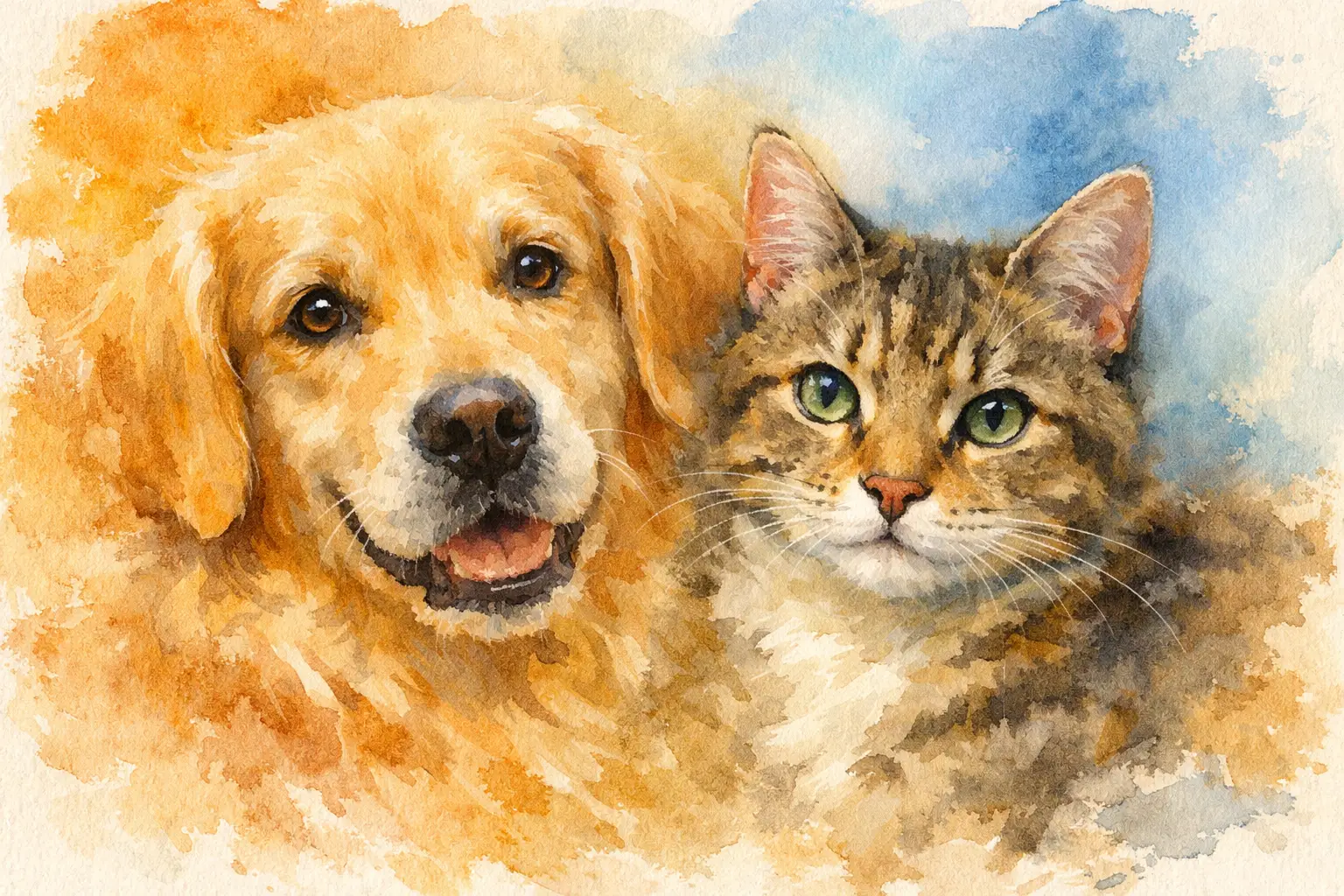
A worn snapshot can hold more than an image. It may be the only frame that shows the tilt of your dog's ears, the bright patch on your cat's chest, or the calm expression you still recognize immediately. When people search for a pet portrait from old photo example, they are often asking a more personal question: can a treasured but imperfect photograph become art that still feels like them?
The answer is often yes. An older photo does not need to be flawless to become a meaningful watercolor portrait. What matters most is whether it carries the details and feeling you want to remember. A portrait is not simply a record of fur color or eye shape. It is an opportunity to preserve the presence that made your pet family.
What a Pet Portrait From an Old Photo Can Preserve
An old photograph may be faded, softly focused, or printed on paper that has yellowed at the edges. Those limitations do not erase its value. Sometimes they make the photograph more significant, because it is tied to a particular season of life: a first apartment, a childhood home, a favorite chair, or an afternoon you did not know would become precious.
The strongest portrait references usually reveal a few essential things. You can see your pet's face clearly enough to recognize their markings, their posture feels familiar, and there is some sense of personality in the expression. A dog with one ear always slightly lifted, a cat with a watchful gaze, or a rabbit whose delicate profile you knew by heart can still be represented beautifully.
Watercolor is especially well suited to this kind of remembrance. Its gentle texture can honor an old image without pretending it was taken yesterday. Rather than calling attention to every imperfection in the source photo, the finished portrait can bring forward the details that carry emotional weight: warm eyes, a beloved muzzle, the color of a collar, or the dignified angle of a head.
This is just as meaningful for a pet who is still beside you as it is for one being remembered in memoriam. For a living companion, an old photo can capture their younger self and the beginning of your shared story. For a pet who has passed, it may be the image that feels most like home.
A Pet Portrait From an Old Photo Example: What Makes It Work
Imagine a small, slightly faded photograph of a golden retriever sitting on a porch. The image is not high definition. Part of the porch is in shadow, and the dog's coat looks lighter than it did in person. But the photograph captures three unmistakable traits: a feathered tail resting to one side, a gentle brown-eyed expression, and a red bandana the family remembers from every summer trip.
That is enough to create a portrait with meaning. The portrait can center the retriever's face and posture, clarify the warmth of the coat, and retain the red bandana as a personal touch. The goal is not to reproduce the porch boards or every blurry edge. It is to honor the dog the family knew.
Now consider a different example: a scanned photograph of a senior tuxedo cat curled in a sunlit window. The picture has a crease through one corner and the whiskers are not perfectly sharp. Yet the white blaze beneath the chin, the pale green eyes, and the tucked front paws are all visible. Those details establish identity. The quiet window scene also says something about character: this was a cat who found her place in the light.
In both cases, the old photo becomes a starting point, not a constraint. You remain the person who knows what matters most. Your memories can guide the portrait toward the expression, coloring, and sense of presence that feel true.
Choose the Photo That Holds the Most Recognition
The best old photo is not always the technically best one. A clear photo is helpful, but emotional recognition matters more. If you have several images, choose the one that makes you say, without hesitation, “That is them.”
Look first at the face. Can you identify the eye color, nose shape, muzzle markings, and distinctive fur patterns? A front-facing image is often ideal, but a side profile can be equally moving when it captures a signature silhouette. If a photo is dim, a little grainy, or taken from a distance, it may still work well if these features remain visible.
Then consider the moment. A formal pose can create an elegant portrait, while a candid image may reveal more personality. There is no universal right choice. A dignified sitting pose may suit the pet who always seemed quietly observant. A joyful image with a lolling tongue may be more faithful for the companion whose enthusiasm filled every room.
If a feature is missing or unclear in your favorite photograph, your own knowledge can provide context. Perhaps your pet's eyes were a deeper amber than the old print shows. Perhaps the black fur along their back had a silver sheen in sunlight. These are not minor corrections. They are part of the story only you can tell.
Let the Details Carry the Story
A meaningful portrait does not need a crowded background to feel personal. Often, one or two carefully chosen details can make it unmistakably yours. A blue collar, a tag, a familiar bandana, or a small patch of white fur can bring back a rush of recognition.
Thoughtful choices work best when they are rooted in memory rather than added for decoration. If your dog wore a yellow raincoat on every walk, that detail may belong in the portrait. If your cat was known for curling up beside a particular blanket, a gentle suggestion of its color may feel right. If you are creating a memorial portrait, restraint can be powerful. A clean, softly painted setting gives your pet's likeness room to be felt.
It also helps to decide what you want the portrait to hold emotionally. You may want celebration: the bright-eyed puppyhood of a dog now grown gray around the muzzle. You may want comfort: a familiar face rendered with calm, tenderness, and dignity. Or you may simply want a beautiful visual reminder of a bond that continues to matter. Each intention is valid, and each can shape the final result.
When an Old Photo Needs a Little More Context
Some photographs are deeply loved but genuinely limited. The face may be partly turned away, one eye may be hidden, or the image may be so faded that the original colors are uncertain. This does not automatically rule it out. It simply means that the personal details you provide become even more valuable.
Share what you remember clearly. Describe the coloring that the photograph has lost, the expression that was typical, or the feature friends always noticed first. If you have another photo that confirms a marking or eye color, it can help provide clarity while your chosen image remains the emotional reference.
There are cases where a different photo may be the wiser choice. If the face cannot be seen at all, or if important markings are completely obscured, a clearer image will usually create a more recognizable likeness. Choosing a usable photo is not a betrayal of the first one. You can still carry its memory into the portrait through the details, mood, and story you choose.
Create a Portrait With Confidence
You do not have to translate an old photograph into art alone. A guided portrait experience gives your memories a place alongside the image, so the result can feel personal rather than generic. At Pet Legacy Portraits, you choose the photo and share the details that define your pet, then receive a museum-quality, high-resolution watercolor portrait file within five business days.
The value is not in making an old photo look new. It is in giving a beloved companion a lasting place in your home and heart. The portrait can be printed at the size that suits your space, shared with family, or kept close as a private remembrance.
Your pet's story was never contained in one perfect photograph. It lives in the way you remember their eyes, their habits, their happiness, and the quiet comfort of having them near. Let the photo that still moves you become the beginning of something beautiful.