Pet Portrait From Photo Guide for Meaningful Art
September 5, 2026
A pet portrait from photo guide for choosing a clear, expressive image that preserves your companion’s character in elegant watercolor art for many years.
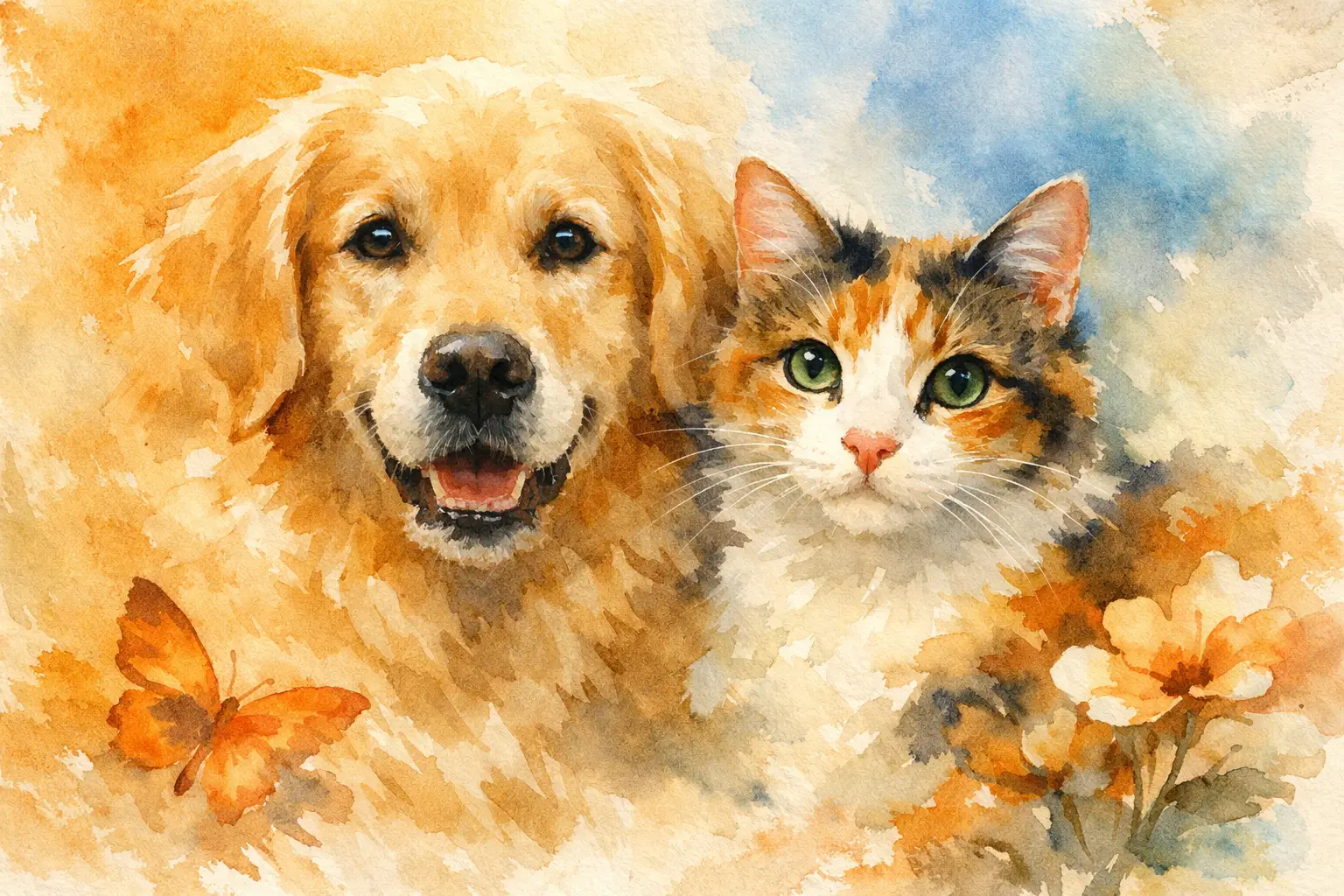
The photograph you choose carries more than your pet’s markings. It holds the familiar tilt of an ear, a watchful expression, the softness around the eyes, and the quiet details that made them unmistakably yours. This pet portrait from photo guide will help you select an image that gives your portrait the emotional presence it deserves, whether you are celebrating the companion beside you or honoring one you carry in your heart.
A beautiful portrait does not require a perfect, formal photograph. It requires a photo that feels true. The best choice is often the one that instantly makes you say, “That is them.”
Start With the Photo That Feels Like Your Pet
Before looking at lighting or image quality, think about personality. Is your dog happiest with a tennis ball in sight, ears lifted and ready for the next adventure? Does your cat have a calm, discerning gaze from their favorite windowsill? Was your horse known for a particular alert, gentle expression?
Choose a photo that brings that recognition forward. A portrait can preserve physical features, but its deeper purpose is to hold onto presence. The image does not need to show every part of your pet’s life. It simply needs to reveal something essential: their confidence, tenderness, curiosity, mischief, or peacefulness.
For a memorial portrait, this decision can feel especially tender. There is no rule that says you must choose the final photo you took. Many people find greater comfort in selecting an earlier image, one from a beloved season of life or a moment when their pet looked especially content. Let your own memory lead. The right photograph is the one that honors how you want to remember them.
A Pet Portrait From Photo Guide to Clarity and Detail
Once you have found a photo with the right feeling, look closely at how clearly it shows your pet. Fine details help preserve the features that matter most, including eye color, distinctive markings, coat texture, and the shape of the face.
A strong source photo usually shows your pet’s face in focus, with enough light to see their eyes and coloring. Natural daylight often creates a gentle, flattering result, though an indoor photo can work beautifully when the face is clear. If you can easily see the details that make your pet recognizable, the image is likely a good candidate.
Try to avoid photos that are very dark, heavily filtered, blurry, or taken from far away. A small pet in the distance may be a treasured memory, but it leaves less visual detail to preserve in a portrait. Likewise, a photo with bright sunlight washing across the face can hide the expression you love.
This does not mean an imperfect photo has no value. For pets remembered in memoriam, the available photographs may be older, lower resolution, or captured in a fleeting moment. What matters is being honest about the trade-off. A clearer image offers more detail, while a meaningful image may offer a stronger emotional connection. When possible, choose the photo that gives you both.
Let the Eyes Be Visible
The eyes are often where a portrait begins to feel personal. They carry alertness, affection, patience, and all the small moods you knew so well. Select a photo where both eyes are visible if possible, with no deep shadow, glare, or object blocking them.
A side profile can still be striking, particularly if it is your pet’s most recognizable pose. Yet a three-quarter view or a forward-facing image generally offers more of the facial character people remember. For long-haired pets, make sure the eyes are not entirely hidden by fur unless that charming, shaggy look is part of their signature appearance.
Keep Their Markings in View
A white blaze, a dark patch over one eye, graying around the muzzle, a freckled nose, or the unique pattern of a tabby coat can be central to your pet’s likeness. Look for a photograph where those details are easy to see.
If your pet wore a collar, bandana, tag, or bow that feels inseparable from their story, include it in the chosen photo or share that detail as part of the portrait experience. The goal is not to recreate a generic animal. It is to preserve your companion as you knew them.
Choose a Pose With Room to Breathe
A relaxed pose tends to translate beautifully into elegant watercolor art. Sitting, standing, or resting photographs often give a portrait a composed, timeless feel. A close-up can be especially moving because it centers your pet’s face and expression.
Action photos have their own joy, but they can introduce challenges. A running dog may be wonderfully alive in the original picture, while motion blur can soften the features that make a finished portrait feel precise. If a playful action shot is the truest reflection of your pet, it may still be the right choice. Just favor the clearest frame from that moment.
Pay attention to cropping, too. Avoid images where the top of the ears, chin, or muzzle is accidentally cut off unless the close crop is intentional and you love its intimacy. A little space around the head and body gives the composition room to feel balanced. You do not need a studio backdrop. A simple setting, or even a busy one, can fade into the background when your pet remains clearly visible.
Use Personal Details to Shape the Feeling
The photograph is the foundation, but your words add the meaning only you can provide. A portrait becomes more personal when you share the small truths that cannot be seen in a single image: the way your pet greeted every visitor, their favorite sleeping place, the expression they made before dinner, or the calm they brought to your home.
For a living pet, these details can turn a portrait into a celebration of the relationship you are still building every day. For a pet who has passed, they can make the creative process a gentle act of remembrance. There is no need to write perfectly. A few sincere sentences are enough to guide the feeling you want the finished piece to hold.
This is also your opportunity to consider what you want the artwork to represent. Some people want a bright, joyful keepsake that reflects a pet’s playful spirit. Others prefer a quieter, more contemplative portrait for a memorial space. Neither choice is more meaningful. Your relationship sets the tone.
When You Have Several Good Photos
It is common to narrow your choices to two or three photographs that each show a different side of your pet. Instead of asking which image is objectively best, ask which one you would want to see every day. The answer is often immediate.
If one photo is sharper but another captures a more familiar expression, weigh what matters most to you. Detail supports a faithful likeness. Expression supports recognition of the heart. For many pet parents, the best image is where those two qualities meet.
You may also consider where you plan to display or print your high-resolution file. A close portrait can create a powerful focal point in a smaller frame, while a fuller pose may suit a larger print with more visual space. The image does not have to fit a rigid formula. It should feel right for the place it will hold in your life.
Create a Legacy That Feels True
Your pet’s portrait begins with a photograph, but it becomes a legacy through your choice. You know which look was their look, which markings were uniquely theirs, and which moment still makes you smile or pause. That knowledge is the most important part of the process.
With Pet Legacy Portraits, your selected photo and personal reflections help shape a museum-quality watercolor portrait delivered as a high-resolution, print-ready file within five business days. The result is not simply an image of a pet. It is a meaningful piece of art created from the love, memory, and attention only you can bring.
Choose the photograph that lets you feel their presence again. That feeling is worth preserving beautifully.