Choosing a Portrait Keepsake After Pet Loss
August 25, 2026
Choose a portrait keepsake after pet loss that reflects your companion’s spirit, offers quiet comfort, and becomes a beautiful, lasting remembrance daily.
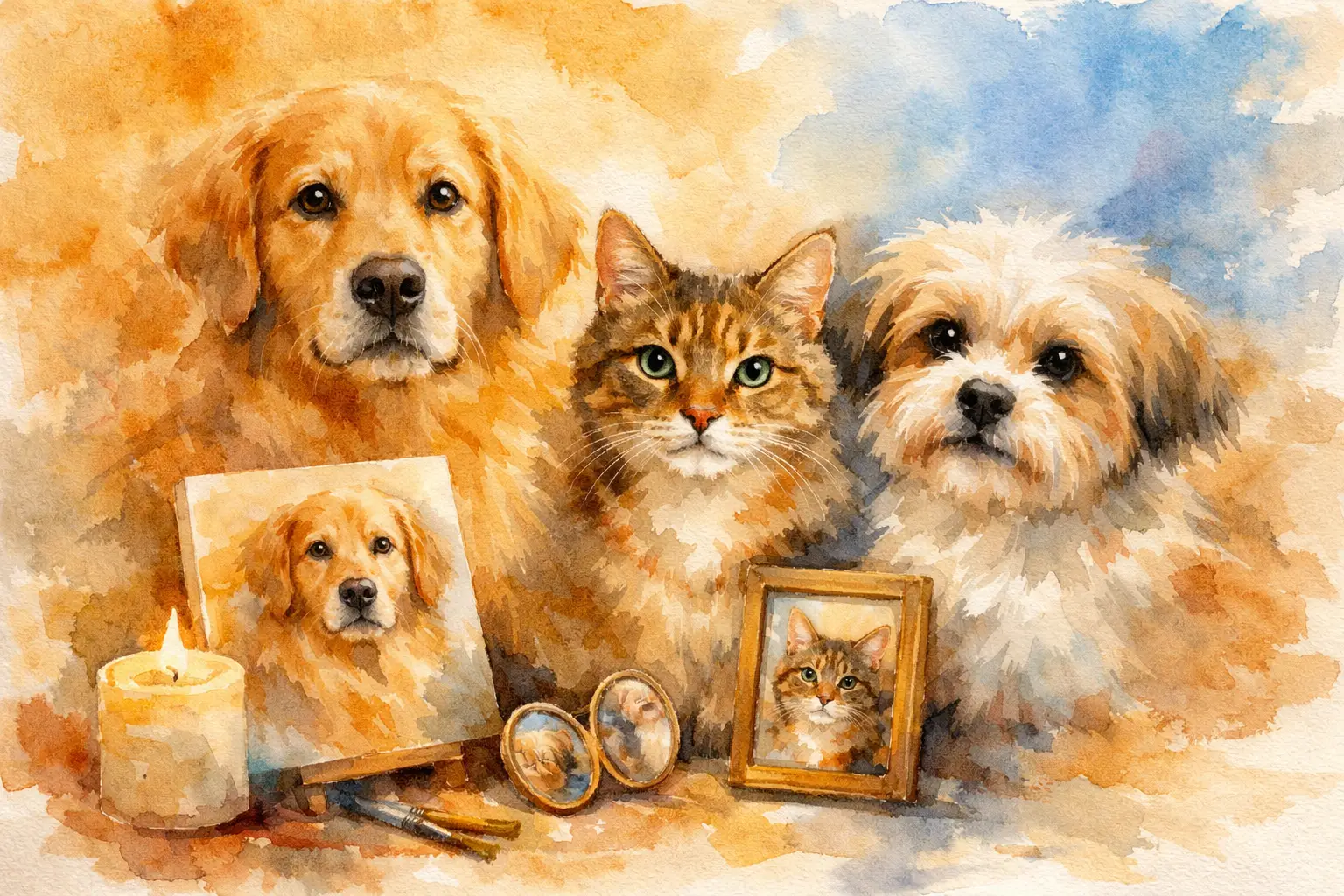
Some absences change the shape of a home. The quiet by the door, the empty corner of the sofa, the familiar sound that no longer arrives. A portrait keepsake after pet loss cannot remove that grief, nor should it try to. It can give love a place to rest: a beautiful, personal image that recalls the companion who made ordinary days feel fuller.
For many pet parents, choosing memorial art is not about looking backward. It is a way of recognizing that a pet’s life mattered, that their personality was singular, and that the bond remains part of the family story. The right portrait feels less like an object and more like a faithful presence in the rooms where they were loved.
What a Portrait Keepsake After Pet Loss Can Hold
A memorial portrait can carry details that photographs do not always bring forward. Perhaps it is the thoughtful tilt of your dog’s head, the white patch beneath your cat’s chin, or the bright, watchful expression that appeared whenever they heard your voice. These are small details, but they are often the ones that make a remembrance feel true.
Watercolor is especially suited to this kind of tribute. Its softness allows the image to feel refined without becoming distant. Color can hold warmth, while the gentle movement of the style leaves room for memory and emotion. A museum-quality watercolor portrait can honor a pet with dignity, whether it is displayed prominently or kept in a more private space.
There is no correct timeline for creating one. Some people want a portrait soon after a loss, while details feel vivid and the need to do something loving is immediate. Others wait until the sharpest part of grief has settled. Both choices are valid. A keepsake should meet you where you are, not ask you to feel differently than you do.
Begin With the Pet You Knew
The strongest memorial portrait begins with your own perspective. You knew your companion better than anyone: the expression that meant they were about to ask for dinner, the posture that revealed their confidence, the gaze that made visitors instantly understand their charm. Those memories are the creative center of the portrait.
Choose a photo that feels emotionally recognizable, not simply technically perfect. A clear, well-lit image is helpful, particularly when it shows the eyes, markings, and shape of the face. Yet the best choice is often the photograph that makes you say, “That is them.” It may show a familiar ear position, an unmistakable smile, or the calm dignity they carried into every room.
If you are deciding among several photos, return to the feeling each one brings up. One may capture their beauty. Another may capture their spirit. For a memorial piece, spirit often matters more. A portrait is most meaningful when it reflects the animal you loved rather than presenting a polished but generic likeness.
Let Personal Details Guide the Result
A few thoughtful details can make the portrait deeply personal. Consider the qualities you would want someone to understand about your pet if they had never met them. Were they gentle and observant? Playful, regal, mischievous, devoted? Did they love sunny windows, long walks, quiet afternoons, or greeting every person at the door?
These details give emotional direction to the artwork. They help shape a result that feels like a tribute to an individual life, rather than an image of a breed or species. Your pet’s story is not an extra. It is the reason the portrait matters.
At Pet Legacy Portraits, you remain the creator of that story. The guided portrait experience helps transform your chosen photo and memories into a high-resolution watercolor artwork that is ready to preserve, print, and share in the way that feels right to you.
Choose a Style That Feels Like Remembrance
Memorial art does not need to be somber to be sincere. Many people are drawn to soft, luminous color because it reflects the love and joy their pet brought into their lives. Others prefer a quieter palette that feels peaceful and timeless. Neither approach is more meaningful. The question is whether the finished piece feels emotionally honest.
Watercolor can offer a graceful middle ground. It has enough detail to preserve distinctive features, yet it avoids the heaviness that can come with a literal reproduction. The result can feel elevated and enduring, suitable for a framed print, a place of honor on a shelf, or a meaningful gift for someone who shared the loss.
It also helps to consider where the portrait will live. A larger print in a living room may feel like a daily celebration of a beloved companion. A smaller framed piece beside an urn, collar, or favorite toy can create a private place of remembrance. A digital file offers flexibility, allowing you to choose the size, paper, and frame that best suit your home and your memories.
Give Yourself Permission to Feel More Than One Thing
Grief after pet loss is rarely one emotion. You may feel heartbroken and grateful, lonely and proud, peaceful one moment and undone the next. Creating or receiving a portrait can bring those feelings close to the surface. That is not a sign you chose too soon or waited too long. It is a sign that the relationship was real.
A keepsake may become easier to look at over time. In the first weeks, it might prompt tears. Months later, it may bring a smile when you notice the familiar face in passing. Years later, it can become part of the family’s visual history, a reminder for children, friends, and future pets of the companion who came before.
This is why a portrait can be a meaningful gesture for another grieving pet parent as well. It says, without needing many words, “I see that this was family.” Still, personal timing matters. If you are giving a memorial portrait, choose a moment and presentation that allow the recipient room to respond in their own way. Quiet thoughtfulness is usually more valuable than a grand gesture.
Look for Lasting Quality, Not Just a Fast Image
When a portrait is meant to honor a life, the difference is in the care behind it. A meaningful result should preserve recognizable features while conveying personality and warmth. It should feel polished enough to print beautifully, but personal enough that it could belong to no other pet.
A high-resolution digital portrait gives you control over how the remembrance takes shape. You can select a frame that complements your home, create copies for family members, or keep the image close in a private album until you are ready to display it. This flexibility matters because remembrance changes over time. What feels right today may evolve, and your keepsake can evolve with you.
The most lasting choice is not necessarily the most elaborate one. It is the one that gives you a sense of recognition. When you see the portrait, you should be able to feel the particular love that existed between you and your pet: not an abstract idea of loss, but the memory of a real companion with a real place in your life.
A Beautiful Way to Keep the Bond Visible
Honoring a pet does not mean holding on to pain. It means making room for love to remain visible. A portrait can mark the significance of a companion who was there for ordinary mornings, difficult seasons, celebrations, and the small rituals that made a house feel like home.
When you are ready, choose the photograph and memories that feel most like them. Let the portrait be gentle evidence of a bond that deserves to be remembered beautifully.