Rainbow Bridge Dog Poem Meaning and Comfort
May 16, 2026
The rainbow bridge dog poem offers comfort after loss. Learn its meaning, why it endures, and how to honor your dog's memory with care.
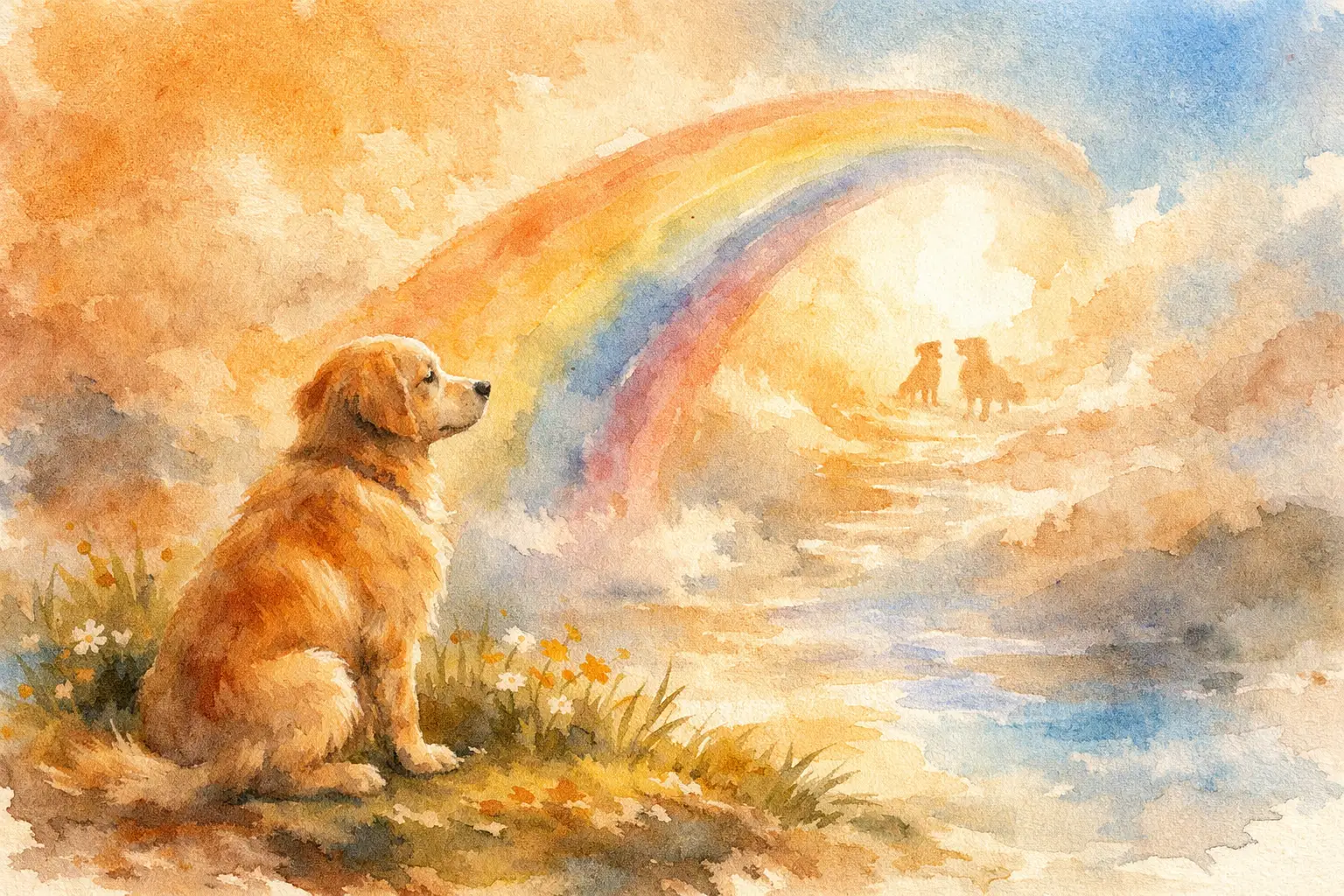
Few pieces of pet loss writing stay with people the way the rainbow bridge dog poem does. It is often shared in the first raw days after a goodbye, copied into sympathy cards, read aloud at memorials, or saved quietly on a phone for the moment it is needed most.
Its staying power comes from something simple. The poem gives grief a gentler setting. Instead of ending at absence, it imagines a place where beloved dogs are whole again, waiting in peace until they are reunited with the people who loved them.
Why the rainbow bridge dog poem means so much
For many dog lovers, grief is not abstract. It is the empty space by the door, the quiet at feeding time, the missing sound of paws in the hallway. The rainbow bridge dog poem speaks to that very specific kind of loss. It does not try to minimize it. It gives it shape.
That matters because pet grief is still too often treated as smaller than other forms of mourning. Anyone who has loved a dog knows otherwise. A dog is part of the rhythm of a home, part of daily comfort, part of family identity. When that bond is broken, people are not just missing a pet. They are missing presence, routine, companionship, and a kind of devotion that is beautifully uncomplicated.
The poem offers a response that feels dignified rather than clinical. It suggests that love continues, even when a life does not. For some readers, that idea aligns with personal faith. For others, it works more as a tender metaphor. Either way, the comfort is real.
What is the Rainbow Bridge poem about?
At its heart, the poem describes a peaceful meadow just this side of heaven where animals who have died are restored to health and youth. They run, play, and rest together. Then, when their person arrives, there is a moment of recognition and reunion. They cross the bridge together.
The exact wording people know can vary. That is because the Rainbow Bridge poem has been shared in several versions over the years, and many readers remember the feeling of it more than a single official text. Some versions are brief and devotional. Others are more narrative. The emotional center stays the same - separation is temporary, and love is not lost.
That flexibility is part of why it endures. People can return to it whether they want spiritual reassurance, symbolic comfort, or simply language that honors a beloved dog with tenderness.
Why it continues to be shared after a dog dies
Some writing about grief asks people to be strong too soon. This poem does not. It allows sorrow and hope to exist side by side.
That balance is especially meaningful after the loss of a dog because the relationship is built on daily closeness. Dogs are woven into ordinary life in thousands of small ways. They wait by the window. They follow from room to room. They know the sound of a favorite drawer opening. When they are gone, grief can feel constant because reminders are constant too.
The Rainbow Bridge poem gives grieving owners language when their own words are hard to find. It can be shared by a friend who wants to say something thoughtful. It can be included with ashes, a framed photo, or a memorial gift. It can also be read privately, which is often where its comfort lands most deeply.
There is also a reason many people return to it years later. Grief changes form, but it rarely disappears completely. A poem that once helped with shock may later help with remembrance.
The poem's meaning is personal, not fixed
One of the reasons the poem resonates so widely is that it leaves room for individual belief. Some readers take it literally as a vision of the afterlife. Others see it as a graceful story that expresses what they hope is true. Some simply love the image of a healthy, joyful dog no longer in pain.
That distinction matters. Not everyone finds comfort in the same language after loss. For some, the idea of reunion is deeply healing. For others, the most meaningful part is the picture of their dog restored to ease and freedom.
There is no single correct way to receive it. If a certain line brings peace, that is enough. If the poem feels too tender to read right away, that is understandable too. Grief has its own pace.
When to share a rainbow bridge dog poem
Timing matters with any memorial gesture. Right after a loss, emotions are often sharp and disorienting. A poem can be comforting, but only if it feels respectful to the moment.
It is often most appropriate in a sympathy card, a memorial frame, a keepsake box, or as part of a tribute shared with family. It can also be read during a private remembrance at home. Some people include a passage with a photo display or beside a favorite collar and tag.
If you are sharing it with someone else, it helps to keep the gesture simple. The poem should feel like an offering, not an explanation. A quiet note such as, "I thought of your dog when I read this" is often enough.
If you are choosing it for yourself, think about what form will feel most lasting. A saved screenshot may help in the first days. A printed copy, framed with intention, often becomes something more enduring.
A poem is comforting. A tribute makes it tangible.
Words can hold memory, but physical objects often help grief settle into something gentler. That is why many people pair a meaningful poem with a visual tribute. A portrait, in particular, gives remembrance a place to live.
This is where memorial art can matter in a lasting way. A well-made dog portrait does not replace loss, and it should not try to. What it can do is preserve expression, presence, and personality with dignity. It turns memory into something visible, something beautifully kept.
For some families, that means displaying a portrait near an urn or memorial shelf. For others, it means creating artwork while a dog is still here, as a celebration rather than a response to grief. Both choices carry value. The best memorial pieces are not only about mourning. They are about continuing the bond in a form that feels worthy of it.
A refined watercolor portrait is especially suited to that purpose. It softens the image without losing identity. It feels elevated, personal, and timeless. At Pet Legacy Portraits, that idea guides the work - museum-quality digital watercolor pet portraits created to honor both beloved companions still beside you and those being remembered in memoriam.
Choosing words and art that feel true to your dog
Not every dog was the same, and not every tribute should be either. Some people want something traditional and serene. Others want a memorial that reflects warmth, playfulness, or a very distinct personality.
The poem itself is universal, but the way you pair it with photographs, artwork, or keepsakes can be more personal. A formal studio-style portrait may feel right for one family. A softer, candid image may feel more authentic for another. The same is true of the poem. A full printed version may be perfect in one setting, while a single line may be more fitting in another.
The question is not what is most elaborate. It is what feels most honest. The most meaningful memorials are usually the ones that resemble the dog being honored.
If the poem does not fully comfort you
That is normal. A widely loved poem can still feel incomplete when the loss is your own.
Sometimes grief needs silence more than language. Sometimes a familiar photo, a paw print, a collar, or a portrait carries more comfort than any written tribute. Sometimes the poem becomes meaningful later, after the first intensity has passed.
It also helps to remember that no single gesture is meant to carry the whole weight of loss. The poem can be one part of remembrance, not the entire answer. Memory is built from many things - routines once shared, stories repeated, images preserved, and the quiet certainty that love leaves a mark.
The rainbow bridge dog poem endures because it gives people a gentle place to set their grief for a moment. And when that grief asks for something you can see and keep, a beautiful tribute can help love remain present in the home it shaped.