A Senior Dog Portrait Transformation That Feels True
August 31, 2026
Create a senior dog portrait transformation that preserves the gentle details, familiar expressions, and lasting bond you share with your companion.
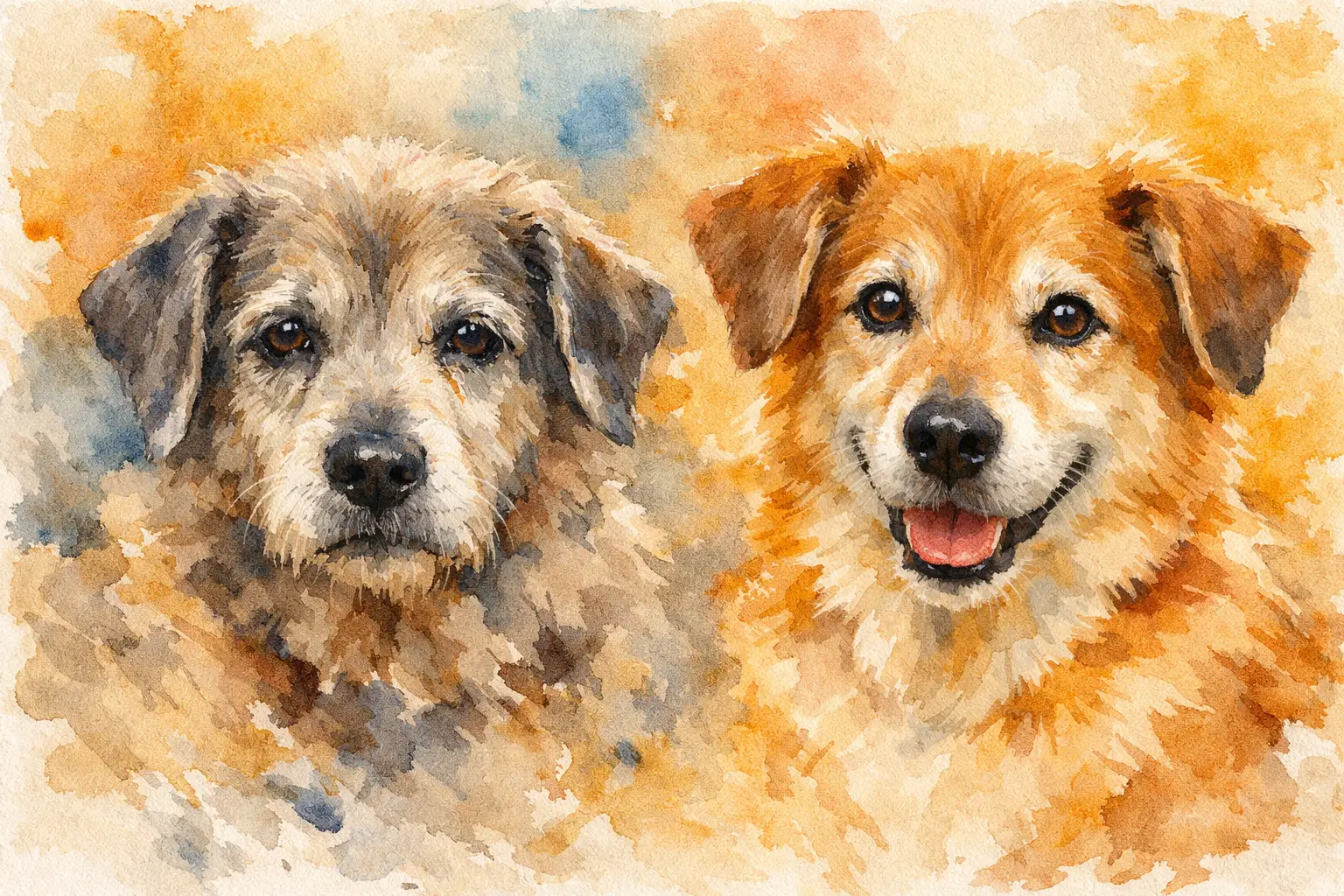
The silver around the muzzle. The softer focus in the eyes. The familiar way one ear still tips forward when your dog is listening. A senior dog portrait transformation is not about making an older pet look younger. It is about preserving the details that make this season of their life so recognizable, dignified, and deeply loved.
For many pet parents, the later years bring a quieter kind of beauty. A beloved dog may move more slowly, sleep more deeply, or carry the marks of a full life across their face. Those changes are not details to hide. In a thoughtfully created portrait, they become part of the story you choose to keep.
Why a Senior Dog Portrait Transformation Matters
A portrait of a senior dog can hold something a snapshot often cannot: intention. Photos capture a moment, sometimes with a cluttered background, dim light, or an expression that passed in an instant. A watercolor portrait gives you room to center what matters most - your companion's presence, personality, and place in your family.
For a living pet, this can be a beautiful way to celebrate them now, while you still know the daily rhythms that make them themselves. The sound of paws in the hallway, the expectant glance at dinner, the spot on the sofa that is unquestionably theirs. Creating a portrait before it becomes a memorial can feel especially meaningful because it is an act of recognition, not only remembrance.
For a dog who has passed, the same portrait can become a gentle place to return to. It does not replace them, and it does not ask you to move through grief on anyone else's timeline. It simply gives love a visible form: a lasting image made with the care their life deserves.
The transformation matters because it invites you to choose what you want the portrait to say. Perhaps your dog was calm and stately in their later years. Perhaps they remained mischievous despite their gray face. Perhaps the expression you want to preserve is the one that always made you feel understood. You are the person who knows that distinction, and your choices are what make the finished piece personal.
Choosing a Photo That Honors Their Age
The best source photo is rarely the most polished one. It is the one that feels most like your dog. Look for a clear image where their face is visible and their eyes are naturally open or expressive. Natural light can help reveal coat texture and the subtle color variations that often become more pronounced with age, but the emotional truth of the image matters more than perfection.
A front-facing photo can create a classic, intimate portrait. A three-quarter view may better capture a distinctive profile, long ears, or a thoughtful gaze. If your dog had a favorite seated pose or a way of tilting their head, that can be just as valuable as a perfectly centered image. The goal is not to meet a technical standard. The goal is to begin with a moment that already feels familiar.
Consider whether the photo reflects your dog as you wish to remember them. An image taken during a sunny afternoon in the yard may feel right for a dog who loved the outdoors. A close-up from the couch may be more fitting for the companion who stayed by your side through every quiet evening. A portrait can be visually elegant while still rooted in an ordinary moment that meant everything.
There are practical trade-offs. A photo that is very dark, blurry, or heavily filtered may make fine markings harder to preserve. If your favorite image has a tender expression but imperfect lighting, it can still be worth sharing alongside a clearer reference photo. Together, they can communicate both appearance and feeling.
Let the Details Tell the Story
Senior dogs often have features that reveal a lifetime of character. The pale hairs around the nose, cloudy edges in expressive eyes, worn whiskers, and small shifts in posture can all be part of the portrait's emotional honesty. These are not flaws. They are evidence of a life fully lived beside you.
When you share personal details, be specific about what you notice. Instead of saying only that your dog was sweet, you might describe how they greeted every visitor as though they were expected, or how they carried a favorite toy long after playtime had become gentler. A few sincere details can guide the portrait toward a feeling that a photograph alone may not convey.
You might also think about the qualities that remained unchanged. Your senior dog may have grown slower but still held the same bright curiosity. They may have become more reserved but continued to lean into your hand in exactly the same way. The most moving portraits often honor this balance: time changed them, yet their essential self remained unmistakable.
Creating a Portrait With Presence, Not Perfection
There can be an urge to edit away the signs of age, especially when you miss the younger version of your dog. That choice is personal, and there is no single right approach. Some pet parents want a portrait based on a beloved photo from earlier years. Others feel most comforted by the face their dog had most recently, complete with every silver hair.
A senior dog portrait transformation can honor either choice when it is made with care. What matters is that the image feels emotionally true to your relationship. A portrait should not feel like a generic likeness or a version of your dog shaped by someone else's idea of beauty. It should feel like recognition.
Watercolor is especially well suited to this kind of remembrance. Its soft transitions can preserve the warmth of a gentle gaze, while refined detail gives the portrait clarity and character. The result can feel elevated enough to display as art, yet intimate enough to make a room feel more like home.
At Pet Legacy Portraits, you remain the creative force behind the piece. Your chosen photo and the personal details you share establish the heart of the portrait. The guided process helps turn those meaningful choices into a museum-quality, high-resolution digital artwork that is ready to print and keep, with delivery within five business days.
The Right Time Is Often Now
Many people wait to create a portrait because they assume there will be a better photo, a calmer week, or more emotional certainty later. Sometimes later arrives differently than expected. Choosing to honor a senior dog while they are still beside you can be one of the most loving things you do for yourself.
This is not about anticipating loss. It is about paying attention. A portrait created now can celebrate the dog who is still waiting at the door, still finding the warm patch of floor, still making an ordinary day feel held together. It can become part of the life you share rather than something made only after it has changed.
If your dog has already passed, there is no deadline there, either. You may feel ready immediately, or you may return to their photos months or years later. Grief has its own pace. When the moment feels right, selecting an image and putting their story into words can be a quiet way to acknowledge that their place in your life remains real.
Give Yourself Permission to Be Specific
The most lasting portrait choices are often the most personal ones. Think beyond breed, coat color, and age. Remember the tiny scar on their nose, their dignified expression when they wanted a treat, or the funny seriousness they brought to every car ride. These details may seem small to anyone else. To you, they are the difference between a picture of a dog and a portrait of your dog.
A beautiful legacy does not need to make time stand still. It can let you see the years with tenderness - the bright beginnings, the gentle later days, and the love that made every version of them feel like home.