A Single Photo Memorial Portrait Example That Feels True
September 7, 2026
A single photo memorial portrait example shows how one clear image can preserve a pet’s spirit in graceful, print-ready watercolor art for years at home.
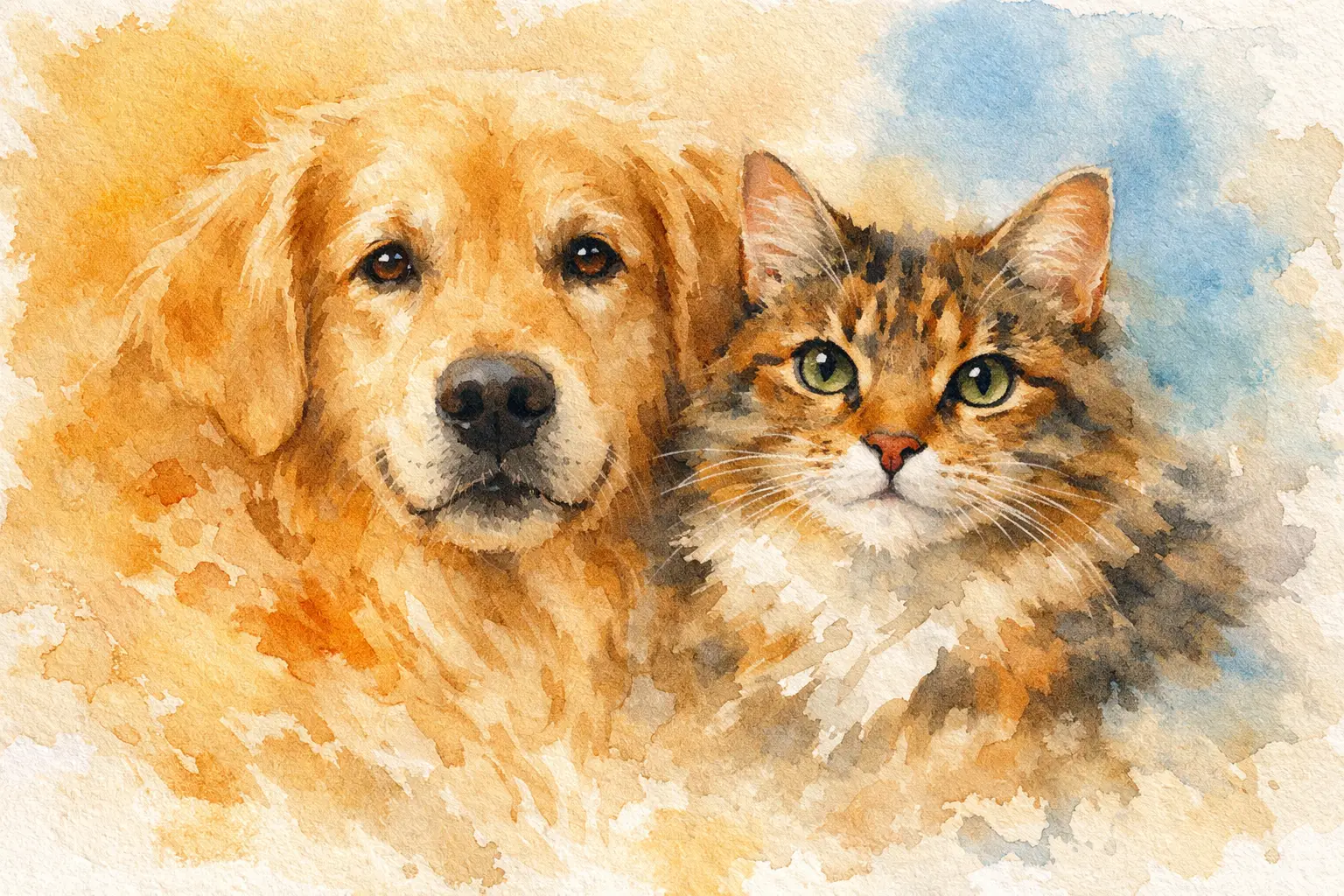
One photograph can hold far more than a pet's appearance. A single photo memorial portrait example can preserve the alert tilt of a dog's ears, the soft wisdom in an older cat's eyes, or the familiar patch of fur a hand once reached for without thinking. When chosen with care, one image becomes a deeply personal starting point for artwork that honors a beloved companion with grace.
For many pet parents, the worry is not whether they have enough photos. It is whether the one they choose will feel like them. The answer is often yes, especially when the image is clear and the story behind it is allowed to guide the portrait.
What a Single Photo Memorial Portrait Can Hold
Imagine a golden retriever named Mae. Her family has thousands of pictures, but the photograph they return to was taken on a quiet morning by the kitchen window. Mae is sitting patiently, her head slightly turned, with the gentle, knowing expression that made everyone who met her feel at ease.
The image is not a studio portrait. There is a chair in the background and a little uneven light across the floor. Yet it captures the details that matter: her warm amber eyes, the pale fur around her muzzle, the red collar she wore for years, and the calm presence that defined her.
A memorial watercolor portrait based on this one photo does not need to reproduce every object in the room to feel true. It can bring Mae forward in a refined, museum-quality composition, preserving her expression and distinctive coloring while allowing the background to fall away. The result is not simply an image of a dog. It is a visual remembrance of Mae as her family knew her.
That distinction matters. A beautiful memorial portrait is not about making loss look smaller. It gives love a place to rest - a piece that can be printed, framed, displayed, or kept close in the private moments when a familiar face brings comfort.
Choosing the Right Single Photo Memorial Portrait Example
The strongest reference photo is rarely the most technically perfect one. A polished image can be wonderful, but personality is the real standard. The right photo lets you recognize your pet instantly, even before you notice the details.
Look first at the eyes and posture. Does your pet look engaged, peaceful, mischievous, dignified, or wonderfully themselves? A close-up where their face is visible often creates the most emotionally resonant portrait. Natural light can reveal fur color and eye color beautifully, though a beloved indoor snapshot may still be exactly right if it captures the expression you remember.
A few practical qualities help the final artwork feel more precise. Choose an image that is reasonably sharp, well lit, and large enough that facial features are visible. Avoid photos where a pet is heavily shadowed, turned completely away from the camera, or obscured by a leash, furniture, or another animal.
Still, there is room for tenderness and judgment. If the only photograph that truly feels like your pet is slightly imperfect, it may be the better choice. The image of Mae by the window matters because it carries her character. A technically cleaner photo of her looking away at the park might not hold the same emotional truth.
When One Photo Is More Than Enough
One clear photograph is enough when it reveals the features that make your pet unmistakable: their face, coloring, markings, and expression. Personal details you provide can add further meaning, whether that is a favorite nickname, a description of their temperament, or a note about the small habit that made them unforgettable.
This is where you remain the creative force. You knew the difference between your cat's curious stare and her judgmental one. You know whether your dog carried himself like a noble old soul or a joyful hurricane. Those insights shape the feeling of the portrait as much as the reference image does.
There are situations where a different photo may serve you better. If your pet's most distinctive marking is hidden, their eyes are closed, or the photo is very blurry, selecting another image can make a meaningful difference. The goal is not perfection. It is a faithful, beautiful sense of presence.
From Beloved Snapshot to Lasting Artwork
A memorial portrait should feel intentional, not like a photo placed behind a decorative filter. Watercolor is especially suited to remembrance because it can hold softness, light, and elegance without losing the individuality of the pet at its center.
The composition can honor a beloved companion without becoming overly somber. A clean background keeps attention on their face. Gentle color can echo the warmth of a sunlit coat or the striking green of a cat's eyes. A poised, simple presentation gives the finished piece room to breathe.
For grieving families, this approach can be quietly cathartic. Choosing the image invites you to pause with the memory rather than rush past it. You decide what deserves to be carried forward: the expression, the collar, the gaze, the spirit of the animal who made home feel fuller.
The same care applies to living pets. A portrait created now can celebrate a companion in the present while becoming part of the legacy you will always share. Love does not need to wait for loss to become worthy of art.
Details That Make a Memorial Feel Personal
A single image becomes more meaningful when it is paired with the details only you can provide. Rather than trying to include every memory, choose the few that reveal your pet's essence.
Perhaps Mae was gentle with children, slept beside the garden door, and never missed the sound of a treat jar opening. Maybe her red collar was so familiar that seeing it still brings a catch to the throat. These details do not need to crowd the artwork. They guide the choices that help it feel like a tribute rather than a generic likeness.
Consider how you hope to live with the finished piece, too. A high-resolution digital file gives you the freedom to print at a size that suits your space, from a small bedside frame to a more prominent place in the home. A carefully chosen paper and frame can make the portrait feel even more enduring, but the emotional value begins long before it is printed.
Pet Legacy Portraits offers a guided way to turn your chosen photo and personal memories into a refined, print-ready watercolor portrait. Your role is not to become an artist or explain every visual detail. It is simply to bring forward the pet you loved and the photograph that still feels alive with them.
A Gentle Way to Make the Choice
If you are torn between several photos, set aside the question of which one looks best for a moment. Ask instead: Which image would I want to see on a difficult day? Which one makes me say their name without hesitation? Which face feels most like coming home?
Often, the answer arrives quickly. It may be an imperfect snapshot from an ordinary afternoon, because ordinary afternoons were where your bond lived. The most fitting memorial image does not have to explain your love to everyone else. It only needs to reflect it honestly for you.
Choose the photograph that lets you feel your pet's presence most clearly. From that single moment, a lasting portrait can carry their warmth forward with dignity, color, and care.