How to Turn a Pet Photo Into Watercolor Art
August 7, 2026
Learn how to turn a pet photo into watercolor art that holds onto expression, memory, and character, with your path from image to print-ready portrait.
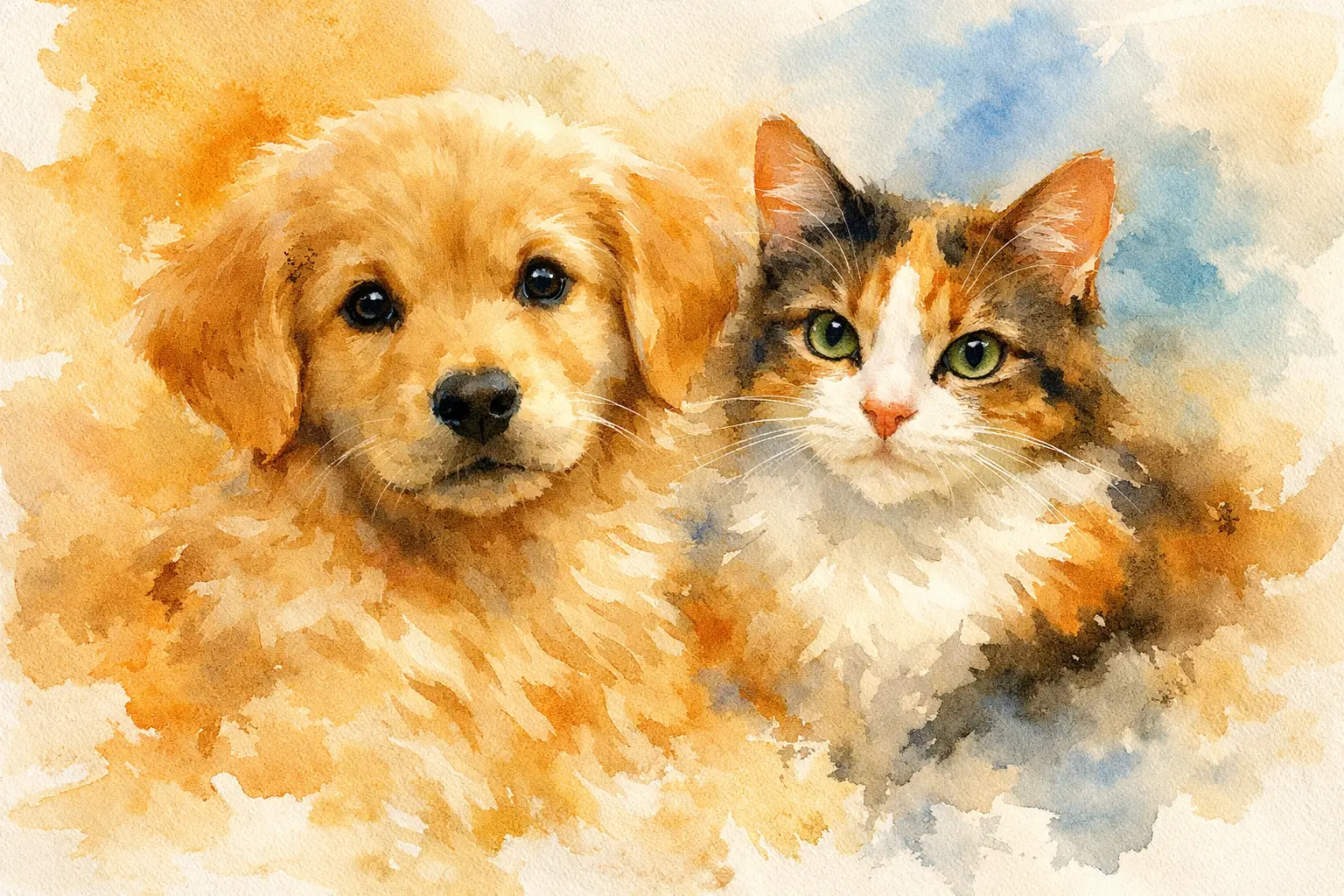
The photograph you return to is rarely the most polished one. It may be the image where one ear is tipped forward, where a familiar gaze meets the camera, or where your pet is resting in the light they always seemed to find. To turn a pet photo into watercolor art is to preserve more than a likeness. It is a chance to hold onto the feeling of who they are, or who they were, in a form made to be kept close.
A meaningful portrait begins with your point of view. You know the small expressions, the markings, the posture, and the stories that made your companion unmistakably theirs. Those details give a watercolor portrait its emotional truth.
Choose a Photo That Feels Like Them
The best source photo is not necessarily the newest or most technically perfect. It is the one that feels immediately familiar. Perhaps it captures your dog’s calm, watchful face after a long walk. Perhaps it shows your cat’s bright eyes and dignified stillness. For a pet being remembered, the right image may bring a moment back into focus with surprising tenderness.
Look first for a clear view of the face. Eyes carry much of a pet’s presence in a portrait, while a visible nose, ears, and natural head shape help preserve their distinctive character. A photo taken in soft daylight often offers gentle detail and natural color, but an indoor image can be equally beautiful when your pet’s features are easy to see.
You do not need a staged photograph. A beloved image taken on a phone can become the foundation for elegant artwork when it shows the details that matter. What counts is recognition: the feeling that someone who loved your pet would know them at once.
What Helps a Watercolor Portrait Feel Personal
Watercolor has a quiet way of making room for memory. Its softened edges and layered color can feel expressive without becoming overly literal. But the effect only works when the portrait remains anchored in the individual pet, rather than reducing them to a general breed or familiar pose.
As you prepare to turn a pet photo watercolor-ready, consider what you want the finished piece to hold. For a living companion, you may want to celebrate a playful spirit, a regal profile, or the comfort of their everyday presence. For a memorial portrait, you may wish to emphasize gentleness, warmth, or the particular look that still feels like home.
A few personal details can guide that intention. Think about your pet’s personality in a handful of honest words: curious, loyal, mischievous, serene, brave, affectionate. Notice their signature features too, such as a freckled muzzle, a single white paw, feathered ears, a broad chest, or a small tilt of the head. These are not minor details. They are often the difference between a pleasant image and a portrait that feels deeply familiar.
Let the Background Support the Memory
A watercolor background should support your pet rather than compete for attention. Soft washes, restrained tones, and open space can give the portrait a sense of calm while keeping the focus where it belongs: on the face you love.
The right choice depends on the feeling you want to create. A light, airy setting can suit a joyful portrait of a living pet. A more muted palette may feel fitting for a memorial piece. Neither approach is more meaningful than the other. The strongest choice is the one that honors your relationship with honesty.
Avoid trying to include every visual detail from the original setting if it distracts from your pet. A portrait is not required to reproduce a room, a yard, or a favorite blanket exactly. It can carry the emotional atmosphere of a place while allowing your companion’s expression to remain central.
Preserve Character, Not Just Appearance
A pet portrait becomes lasting art when it recognizes that appearance and personality are connected. The curve of a mouth can suggest humor. The position of the ears can show alertness or ease. The intensity of the eyes may be the feature you remember most.
This is especially important when honoring a pet in memoriam. Grief often makes us reach for photographs because they offer proof of a beloved life. A carefully considered watercolor portrait can offer something different: a composed, enduring image that reflects the bond itself. It does not replace the photograph. It gives that memory another place to live.
There is no correct timeline for creating a memorial portrait. Some people choose one soon after a loss, while details feel vivid and the act of choosing a photo feels comforting. Others wait until they can look at images with more peace. Both paths are valid. The portrait can be a tribute, a gift, or simply a private reminder of a friendship that continues to matter.
Create a Portrait With Intention
The most meaningful result comes from making a few thoughtful choices before the image is created. Begin with the photograph that feels truest, then name the qualities you hope to see reflected in the final art. A portrait of a spirited puppy may call for brightness and movement. A portrait of an older dog may feel most right when it highlights wisdom in the eyes and softness around the face.
It also helps to consider where you may display or print the finished file. A high-resolution digital portrait gives you the freedom to create a framed piece for a mantel, a place of remembrance, or a room that your pet made warmer simply by being in it. Choose a composition that will still feel balanced when printed at the size you have in mind.
If the image is intended as a gift, let the recipient’s relationship with the pet lead the decision. A memorial gift should be gentle and personal, never performative. A portrait celebrating a living companion can be joyful, but it should still reflect the specific animal they adore. The most powerful artwork says, quietly and clearly, “This is your pet.”
A Guided Way to Turn a Pet Photo Into Watercolor Art
You should not have to become an art expert to create something worthy of your pet. Your role is more meaningful than that: you bring the photograph, the memories, and the knowledge of who they are. The guided portrait process helps translate those choices into an elegant finished piece.
With Pet Legacy Portraits, you submit your chosen photo and the details that make your pet unforgettable. You remain the creative force behind the portrait, shaping its emotional direction through the story only you can tell. The result is a museum-quality, high-resolution digital watercolor portrait prepared for printing and delivered within five business days.
Portraits begin at $47, making it possible to create a lasting piece without treating your pet’s story as an afterthought. The value is not in adding more decoration to a space. It is in giving a cherished companion a place in your home and memory that feels considered, beautiful, and true.
Give Yourself Permission to Choose the Photo You Love
Many pet owners hesitate because they wonder whether their favorite photo is good enough. Usually, that question misses the point. A meaningful image is not defined by perfect lighting or a flawless pose. It is defined by the instant recognition you feel when you see it.
Choose the photo that makes you smile at their expression. Choose the one that brings back the sound of their paws in the hallway, the weight of them beside you, or the way they looked when they knew they were loved. That is where a watercolor portrait begins: not with a perfect image, but with a relationship worth remembering beautifully.