How to Upload a Photo for a Pet Portrait
September 1, 2026
Learn how to upload a photo for a pet portrait that preserves your companion’s character, with simple guidance for living and memorial portraits with care.
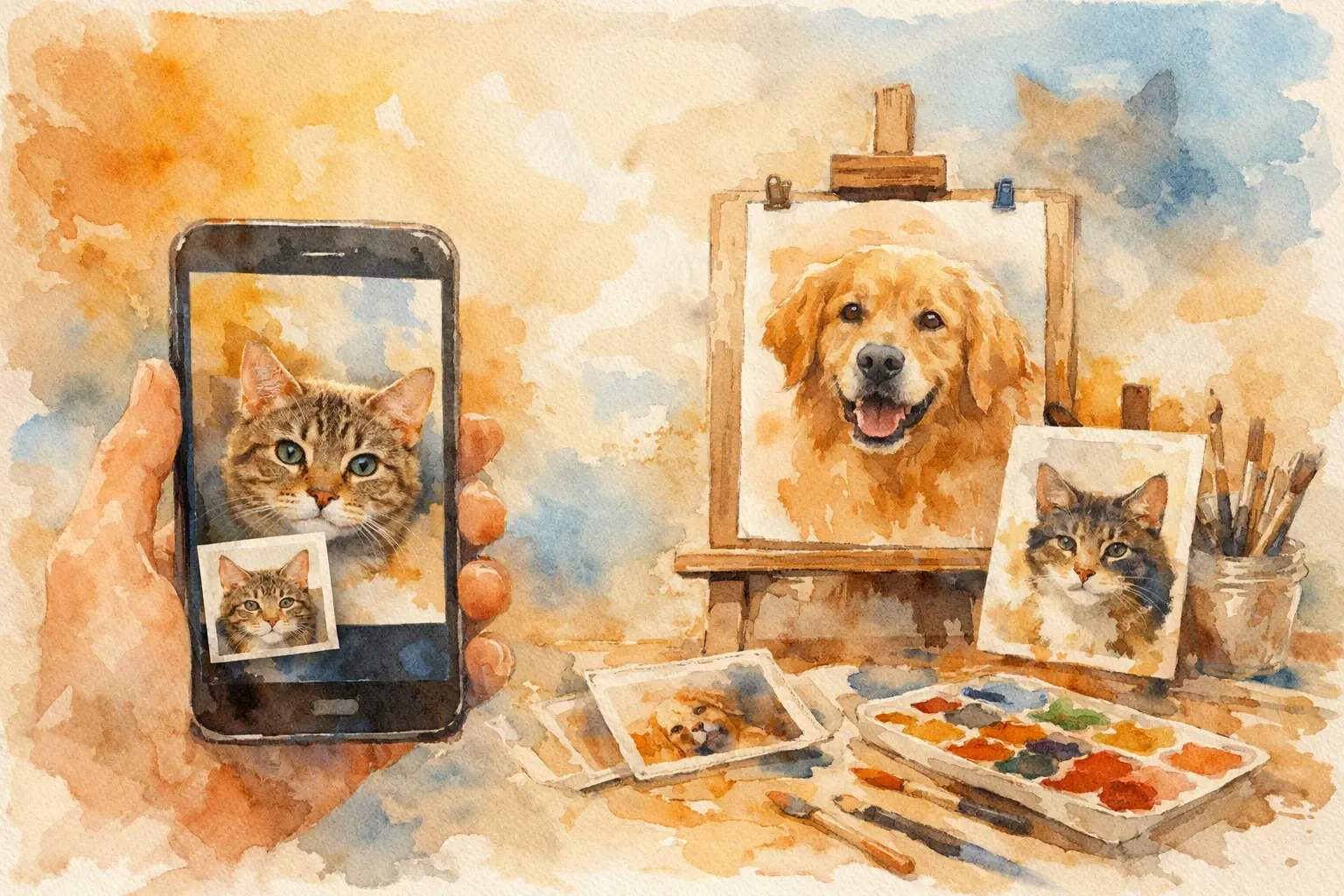
The photograph you choose holds more than your pet’s markings or expression. It holds the familiar tilt of an ear, the thoughtful eyes you knew so well, or the spark of a companion still greeting you at the door. When you upload a photo for a pet portrait, you are choosing the visual memory from which a lasting work of art will grow. A little care at this stage helps your portrait feel unmistakably like them.
A beautiful watercolor portrait does not require a studio-perfect image. It does, however, benefit from a photo that lets your pet’s personality come through clearly. Whether you are celebrating a beloved animal who is beside you now or creating a memorial for one you miss, the right image gives you a meaningful place to begin.
How to Upload a Photo for a Pet Portrait
Start with the photo that makes you pause. Often, it is not the most polished image. It may be the one where your dog has their wonderfully serious look, where your cat’s eyes catch the light, or where your horse seems completely at ease. The strongest choice is usually the image that feels most true to the relationship you share.
Before uploading, look for a clear view of your pet’s face. Their eyes, nose, fur pattern, and overall shape should be visible enough to recognize without guessing. A photograph taken at your pet’s eye level can feel especially intimate, but a well-lit image from slightly above or to the side can also create a lovely result.
Use the original photo whenever possible. Screenshots, heavily compressed images, and photos sent repeatedly through messaging apps can lose the fine details that make a portrait personal. If an original is unavailable, choose the cleanest version you have. A treasured older photo can still be a deeply moving choice, especially for a pet being remembered in memoriam.
Let their expression lead the choice
There is no single “best” pet expression. A bright, open-mouthed smile may be exactly right for an exuberant dog. A calm, observant gaze may better honor a dignified cat. For some pets, their distinctive character lived in a quizzical head tilt, a sleepy stare, or a look of gentle patience.
Choose an image that reflects who they were to you, not what you think a portrait photo is supposed to look like. You know your pet better than anyone. That knowledge is the creative heart of the portrait you are making.
Prioritize natural light and visible details
Natural window light or outdoor shade usually reveals fur color and facial features beautifully. Photos taken in harsh direct sunlight can create strong shadows, while dim indoor images may hide the details around the eyes and muzzle. Neither automatically rules out a photograph, but a clear, evenly lit image gives your finished piece a stronger foundation.
Try to avoid photos where your pet’s face is obscured by a toy, a paw, furniture, long grass, or deep shadow. Sunglasses, costumes, and festive accessories can be charming if they are part of the story you want to preserve. Still, if the goal is a timeless portrait, a clear view of your pet often carries the most emotional weight.
Backgrounds matter less than people expect. A busy room, a backyard, or an imperfect vacation snapshot can work well when your pet is sharp and easy to see. The portrait is centered on the companion you love, not the clutter behind them.
Choosing a Photo for a Memorial Pet Portrait
When you are honoring a pet who has passed, choosing a photo can feel unexpectedly difficult. You may have hundreds of images and still feel that none contains the whole of them. Give yourself permission to choose the one that brings comfort, even if it is not technically perfect.
An older photograph with soft focus or lower resolution can still be meaningful. Look for visible facial features, a recognizable expression, and a pose that feels familiar. If you have several similar photos, select the clearest one rather than trying to combine details from many images. A single, honest moment often makes the most graceful tribute.
Consider the season of life you want to remember. Some people choose a youthful image full of energy. Others prefer the gentle wisdom of a beloved senior pet. Neither choice is more correct. Memorial art is personal, and your portrait can honor the memory that feels most present in your heart.
If you are choosing on behalf of someone else, select an image that reflects the bond they shared. A photo from a favorite walk, a quiet morning at home, or a familiar resting place may carry more meaning than a formal pose. The most enduring portraits are not simply accurate. They feel connected to a life that was loved.
Details That Make the Portrait Feel Personal
Your photograph provides the visual reference, while the details you share provide the emotional direction. Think about the qualities you would want someone to understand if they had never met your pet. Were they brave, gentle, mischievous, watchful, affectionate, or quietly devoted? Did they have a signature habit, an unforgettable presence, or a particular way of looking at you?
A few sincere words can guide the feeling of the finished portrait. You do not need to write a long biography. A short note such as “always waiting by the window,” “the sweetest old soul,” or “our fearless trail companion” can express what matters most.
This is especially valuable when your pet had unusual markings or features. Mention a white blaze on the chest, one ear that folded differently, a favorite collar, or eyes that were a very particular shade. These details help preserve the individuality that made them yours.
At Pet Legacy Portraits, the process is designed to keep you at the center of the creation. Your photo and your words shape a museum-quality watercolor portrait that reflects your companion’s appearance and the place they hold in your life. The final high-resolution digital file is prepared for beautiful printing and delivered within five business days.
Common Photo Questions, Answered Gently
Can I use a photo with more than one pet?
For a portrait centered on one pet, a solo image is usually the clearest choice. If another animal appears in the frame but does not block your pet’s features, the photo may still work well. Choose the image that keeps your intended subject easy to identify.
What if my pet is black, white, or heavily patterned?
These pets can make extraordinary portraits, but clarity is especially helpful. For dark-coated pets, look for a photo where light reveals the eyes and contours of the face. For white pets, avoid images that are overexposed, where the fur loses its texture. For patterned coats, select a photo that clearly shows the markings you most recognize.
Does the photo need to show their whole body?
No. A face-forward or head-and-shoulders image can be deeply expressive and often works beautifully for a watercolor portrait. A full-body photo may be the right choice if your pet’s posture, size, or a favorite setting is central to how you remember them. It depends on the story you want the portrait to hold.
Should I edit the photo before I upload it?
Usually, no. Avoid filters that change fur color, eye color, or contrast dramatically. Simple cropping is fine if it brings attention to your pet, but leave the image otherwise natural. Authentic details give your portrait its lasting sense of recognition.
Take a Moment Before You Choose
The best photo may reveal itself when you stop evaluating it as an image and begin seeing it as a memory. Look for the one that returns you to a particular feeling: laughter, comfort, pride, gratitude, or the quiet love of being known by an animal who was family.
Once you upload a photo for a pet portrait, you are not merely submitting a file. You are preserving a companion’s presence in a form made to be kept, displayed, and returned to over time. Choose the image that feels like them. That is where a beautiful legacy begins.