What Makes a Good Pet Portrait?
June 21, 2026
What makes a good pet portrait? It captures personality, presence, and feeling - turning a favorite photo into a lasting, meaningful keepsake.
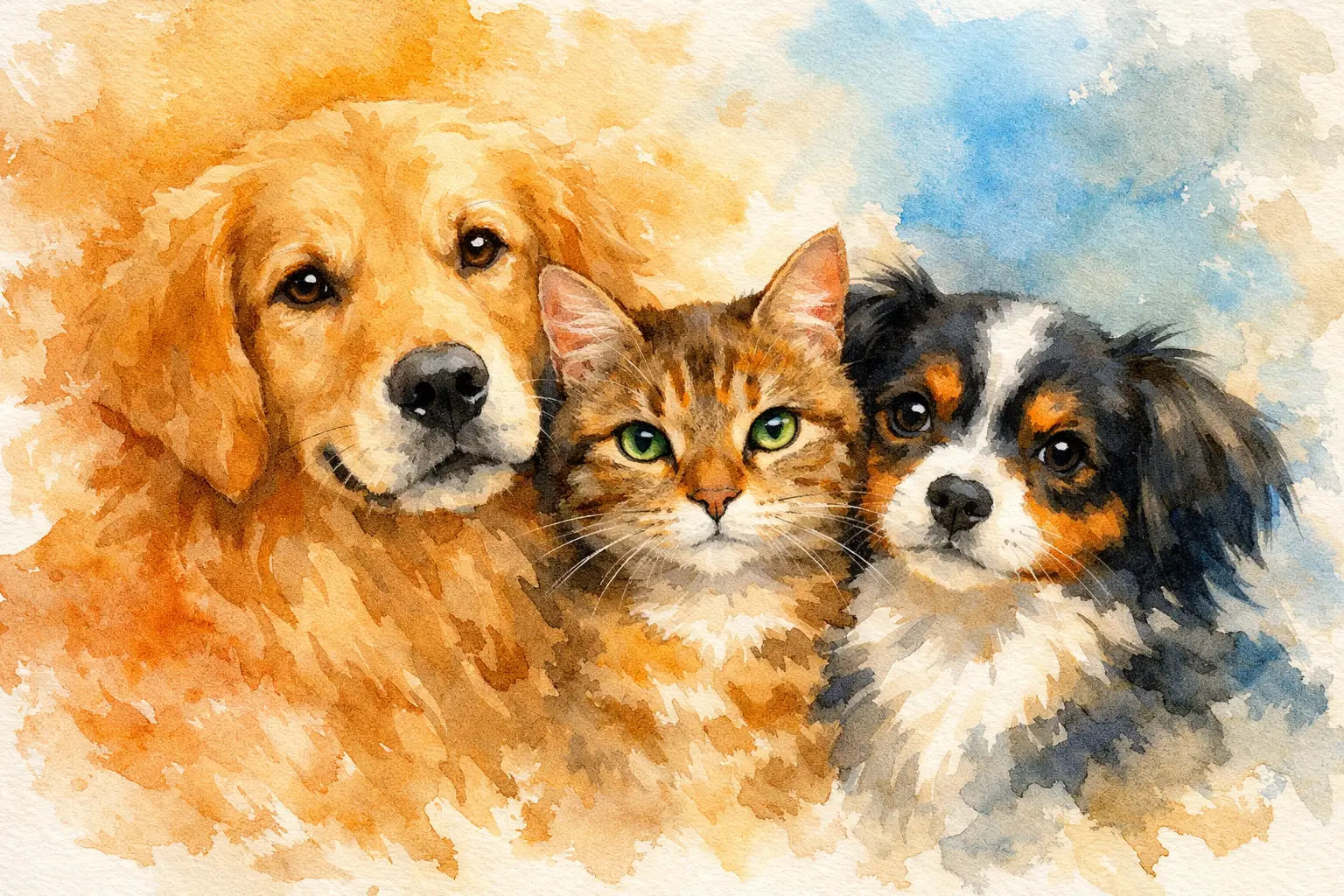
A good pet portrait is rarely about getting every whisker perfectly right. It is about recognition. The moment you see it and think, yes, that is them. Not just their face, but their spirit, their softness, their watchfulness, their mischief, their calm. When people ask what makes a good pet portrait, they are usually asking a deeper question: how does a piece of art feel so personal that it becomes part of a pet’s legacy?
The answer begins with truth. Not photographic perfection, and not a generic idea of a dog or cat, but the specific truth of your companion. The tilt of the head that always meant curiosity. The steady gaze that made the whole room feel quieter. The wild ears, the lopsided grin, the dignified posture on the couch they definitely considered their throne. A meaningful portrait does not flatten those details. It gathers them and gives them form.
What makes a good pet portrait feel personal
The strongest pet portraits start with personality before style. A beautiful watercolor treatment can add softness, grace, and a timeless quality, but style alone is not enough. If the portrait looks polished yet could belong to any pet, it has missed the heart of the piece.
What gives a portrait emotional weight is the sense that someone truly knew this animal. That is why your choices matter so much. The best results often come from a photo that shows expression rather than just appearance. Bright eyes, a relaxed mouth, an alert pose, or a familiar resting look can say more than a technically perfect image taken from too far away.
This is also why context matters. A pet being honored in memoriam may call for a portrait that feels serene, gentle, and dignified. A portrait of a living companion might lean more playful or bright. Neither is better. It depends on what you want to remember and what you want the artwork to hold for you each time you see it.
What makes a good pet portrait visually strong
A portrait can be deeply emotional and still need strong visual foundations. Good pet portraits work because feeling and composition support each other.
Clarity is one of the first things that matters. The eyes should feel alive and present. The face should be easy to read. If the source photo is too shadowed, too distant, or taken at an awkward angle, some of that connection can get lost. You do not need a professional photograph, but you do want one where your pet is unmistakably themselves.
Framing matters too. Close-up portraits often feel more intimate because they bring attention to expression. Wider images can work when posture is part of the story, especially for pets whose elegance, size, or physical habits are part of how you remember them. A curled sleeping pose, a proud seated stance, or that familiar way they waited by the door can all shape a more moving portrait. The trade-off is simple: the more you include, the more careful the composition needs to be to keep the emotional focus clear.
Color also carries meaning. Soft watercolor tones can create tenderness and grace, while richer contrast can give a portrait more presence. There is no universal rule here. Some pets are remembered in warm, glowing shades because that reflects their gentleness. Others feel most true in cleaner, brighter tones that match their energy. A good portrait does not chase intensity for its own sake. It uses color to support memory.
A likeness matters, but so does feeling
People often assume the best portrait is the one that looks most exactly like a photo. Sometimes that is true. A strong likeness helps create immediate recognition and trust. But likeness alone is not the whole standard.
Think about the difference between a sharp image and a meaningful one. A portrait can mirror markings and proportions very accurately and still feel emotionally flat. Another can be slightly softened by watercolor interpretation and somehow feel more present, more tender, more like the pet you loved. That is because portraits are not only records. They are interpretations of relationship.
This is especially important for memorial portraits. When a pet has passed, most people are not looking for something clinical. They want something beautiful enough to live with. Something that honors without overwhelming the room. Something that brings comfort as much as remembrance. In those cases, restraint can be part of what makes a portrait good. Not too dramatic. Not overly staged. Just honest, graceful, and deeply felt.
The photo you choose shapes everything
If you want to know what makes a good pet portrait from the start, look at the source image. The best portraits usually begin with a photo that captures both detail and character.
A good photo does not need expensive equipment. It needs presence. Natural light helps. A clear view of the face helps. A photo taken at your pet’s eye level often feels more intimate than one taken from above. Images where your pet looks relaxed or alert usually translate better than ones where they seem distracted, blurry, or caught mid-motion unless that movement is part of their personality.
It also helps to choose a photo that means something to you. Not every technically strong image carries emotional value. Sometimes the best choice is the one where their expression feels most familiar, even if it is not the most dramatic shot. A portrait becomes more powerful when it is rooted in recognition rather than novelty.
Why style should serve memory
A pet portrait should feel elevated, but it should not become so stylized that it loses the pet at the center of it. This is where many portraits succeed or fail. The art style should deepen the emotional effect, not compete with it.
Watercolor works beautifully for pet portraits because it softens edges without erasing identity. It can make the image feel timeless, gentle, and display-worthy while still preserving the details that matter most. For many pet owners, that balance is exactly the point. They want art that feels refined enough to keep for years and personal enough to stop them in their tracks.
The best guided portrait experiences understand that style is not a separate decision from meaning. It is part of how memory is shaped. When you create your own portrait through a guided process, you are not handing over a generic request. You are making choices about mood, presence, and how your pet should be remembered. That is what makes the result feel personal in a deeper way.
A good pet portrait honors the bond, not just the animal
This may be the clearest answer to what makes a good pet portrait. It reflects relationship.
A beloved pet is never just a subject. They are part of the daily rhythm of a home, part of a family’s language, part of how love looked in ordinary life. The portrait becomes meaningful because it carries some of that bond forward. You see loyalty in the eyes. Warmth in the expression. Familiarity in the posture. The image becomes more than representation. It becomes a way of keeping closeness visible.
For living pets, that can feel joyful and celebratory. For pets being honored in memoriam, it can feel grounding. In both cases, the portrait matters because it gives shape to something deeply felt. Not in a loud way. In a lasting one.
That is why the creation process matters as much as the final image. When you are guided to choose the photo, describe the personality, and shape the result yourself, the portrait carries your understanding of who they are. At Pet Legacy Portraits, that is the heart of the experience. You are not buying a portrait. You are making one. And for $47, you can create a museum-quality watercolor portrait with instant delivery, two downloads, and unlimited regenerations until it feels right.
A good pet portrait does not need to say everything. It only needs to say the truest thing. That this animal was loved, known, and worthy of being remembered beautifully.