What Makes Tabby Cat Art So Lasting?
May 31, 2026
Tabby cat art captures pattern, personality, and memory in one refined piece, making it a timeless choice for gifts, home display, or tribute.
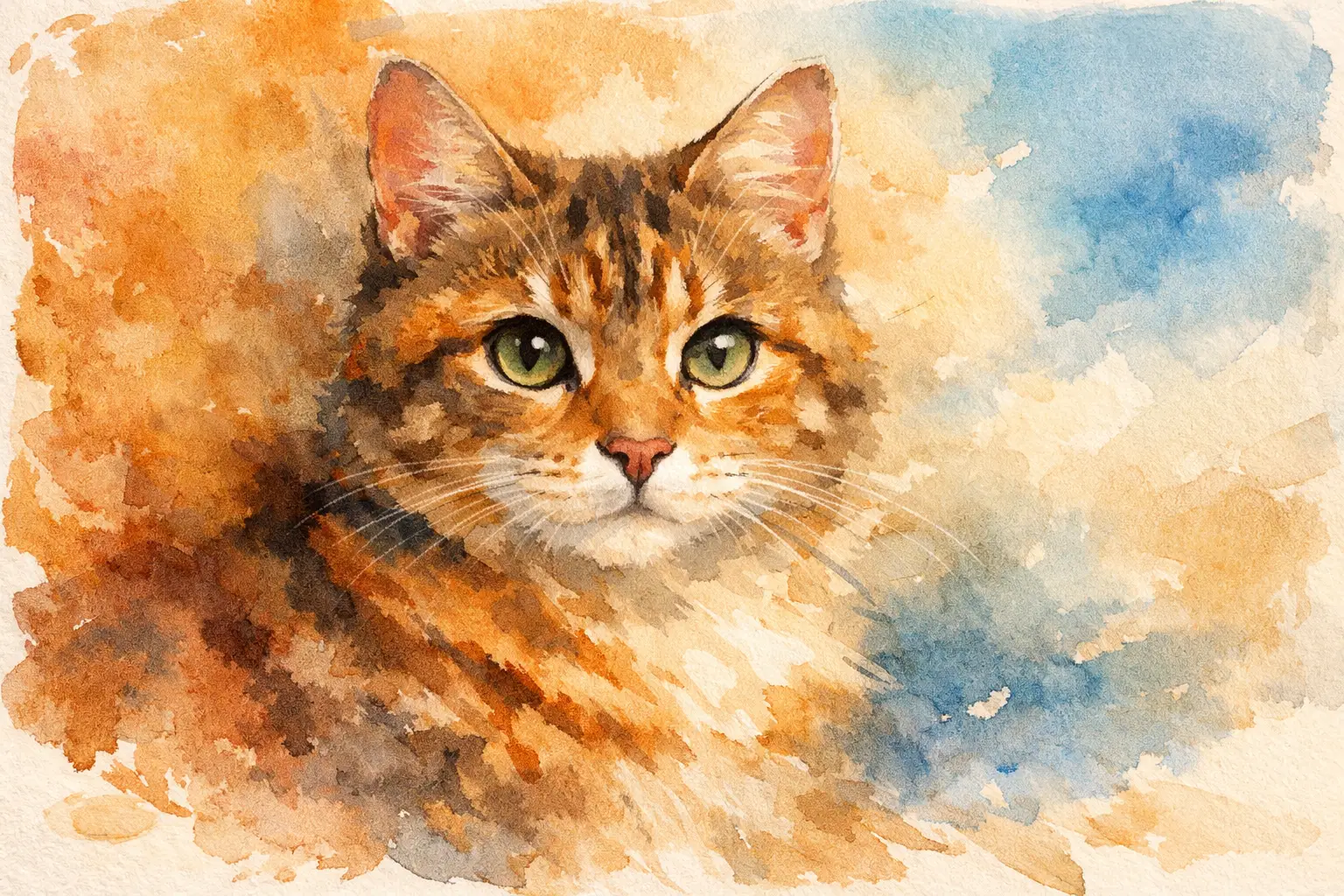
A tabby is never just a color pattern. Anyone who has lived with one knows that tabby cat art works best when it captures the little distinctions people remember instantly - the M marking on the forehead, the dark eyeliner around alert eyes, the neat striping on the legs, the softer swirl along the ribs, the particular expression that seems equal parts intelligence and mischief.
That is why tabby portraits hold such lasting appeal. They feel familiar at a glance, but deeply personal up close. Whether the goal is to celebrate a cat who still curls up in a sunny window or to honor one whose absence is felt every day, tabby cat art can preserve more than appearance. It can preserve presence.
Why tabby cat art feels so personal
Tabbies are common in the broadest sense, but no beloved tabby ever feels generic. The category includes mackerel, classic, spotted, and ticked patterns, and each carries a different visual rhythm. Some cats have bold charcoal striping over warm brown fur. Others lean silver, gray, orange, or cream, with markings that look delicate from a distance and intricate up close.
That complexity gives artists a lot to work with, but it also creates a challenge. If the stripes are simplified too much, the portrait loses identity. If every line is rendered too literally, the piece can feel stiff. The strongest tabby artwork finds balance between recognizable pattern and emotional expression.
This matters even more for keepsake art. People are rarely looking for a decorative cat image alone. They want the shape of the face they kissed every morning, the posture they saw on the arm of the sofa, and the gaze that made the room feel occupied even in silence. Good tabby art respects those details without feeling clinical.
The visual details that define a tabby portrait
Pattern is the first thing most people notice, but it is not the only thing that gives a tabby portrait depth. The most convincing pieces usually pay close attention to contrast, posture, and softness.
The forehead marking is often essential. That signature M can anchor the entire face, especially when paired with clean facial striping around the cheeks and eyes. The eyes matter just as much. Green, amber, or gold eyes set against tabby markings create a natural focal point, and slight changes in the angle of the eyelids can shift the portrait from serene to playful to regal.
Then there is coat texture. Tabby coats often have layered color rather than flat blocks, with warmer undertones on the chest and sides and darker definition on the spine, legs, and tail. In a refined portrait style, this variation gives the piece life. Watercolor is especially effective here because it softens transitions while still allowing darker markings to hold structure.
Pose also changes the emotional tone. A front-facing portrait can feel dignified and direct. A profile can feel contemplative. A curled pose often feels intimate and domestic. There is no single right approach. It depends on what the owner wants to remember most.
Why watercolor suits tabby cat art
Some mediums emphasize precision above all else. Others are better at mood. For tabbies, watercolor sits in a very compelling middle ground.
It handles layered fur beautifully. Instead of reducing a tabby coat to hard stripes on a flat base, watercolor can suggest depth and softness at the same time. Markings stay recognizable, but the portrait remains graceful rather than harsh. That is especially important for memorial pieces, where the goal is often tenderness, not photoreal intensity.
Watercolor also helps elevate the artwork beyond novelty. A tabby rendered in a polished watercolor style feels considered and display-worthy, whether it is framed in a hallway, placed on a bedside table, or given as a gift. The result can feel timeless in a way trend-based pet illustrations often do not.
There is a trade-off, of course. If someone wants every whisker reproduced with exact photographic realism, watercolor may not be the ideal fit. But for many pet owners, that is not the point. They want a portrait that feels true, elegant, and emotionally resonant. Watercolor is often where those priorities meet.
Tabby cat art as celebration and memorial
The reason people commission cat portraits is not always the same, even when the love behind them is. Some want to mark a happy season - a new home, a milestone birthday, a first pet shared as a couple, or simply the daily joy of a cat who has become the center of the household. In these cases, tabby art becomes part of the home while the story is still unfolding.
For others, the portrait arrives after loss. That changes the role of the artwork. It becomes a place to put affection that no longer has a physical routine. It offers something steady to look at when photographs feel too casual and memories feel too fragile.
Tabbies are often remembered in tactile ways - the weight of them on a lap, the visible striping across a sleeping back, the familiar silhouette at the foot of the bed. A portrait can hold those impressions with dignity. Not by replacing grief, but by giving love a form.
That is why memorial cat art should never feel rushed in spirit, even when the process is efficient. The piece needs to be polished enough for lasting display and personal enough to feel worthy of the bond it represents.
Choosing the right photo for tabby cat art
A strong portrait usually begins with a strong reference image, and this is especially true for tabbies. Their markings carry so much of their identity that lighting and clarity matter.
The best photos show the face clearly and preserve natural coat contrast. Soft natural light is ideal because it reveals striping without flattening the fur. Images taken too far away can lose the subtleties around the eyes, forehead, and muzzle. Very dark photos can also obscure what makes one tabby distinct from another.
Expression matters as much as sharpness. A technically perfect image is not always the best choice if it does not feel like the cat. Many owners know immediately which photo has the right presence. It may be the one where the ears are slightly forward, the eyes are attentive, or the posture feels unmistakably familiar.
If the artwork is meant as a memorial, people sometimes worry that they need a flawless professional image. They do not. What matters most is having a photo that genuinely reflects the pet's character. An elegant portrait can refine the source material, but it still depends on a recognizable emotional starting point.
What makes custom tabby cat art worth it
There is no shortage of mass-produced pet decor. But custom work serves a different purpose. It reflects one specific animal and one specific bond.
That difference is visible in the result. A personalized tabby portrait is not just "a tabby." It is your tabby's narrower face, wider eyes, softer chin, stronger stripes, or sleepy expression. It becomes part of the emotional architecture of a home because it points to a real life shared.
It also tends to hold value longer than trend-driven gifts. A custom portrait remains meaningful through moves, seasons, and changing interiors because the subject does not lose relevance. If anything, the piece often gains emotional weight over time.
For many people, the practical side matters too. A high-resolution, print-ready digital portrait offers flexibility. It can be printed in the size and format that suits the space, displayed immediately, or gifted across distance without the limitations of a traditional commission process. That blend of beauty and ease is part of what makes modern custom pet art so appealing.
Pet Legacy Portraits, for example, pairs museum-quality AI watercolor styling with a clear, streamlined process, making it possible to create a polished tribute or celebration piece without the long wait often associated with hand-painted commissions. For pet owners who want both emotional meaning and practical clarity, that combination matters.
Where tabby cat art belongs in a home
The best placement is usually the one that feels natural, not ceremonial. A framed portrait in an entryway can set the tone for a home shaped by animal companionship. A bedroom placement can feel quieter and more private. A living room display often works well for a cat whose presence defined the household.
Memorial pieces sometimes feel most appropriate in personal spaces, but that depends entirely on the owner. Some want a daily, visible reminder. Others prefer a gentler setting where the portrait can be visited rather than passed constantly. Neither choice is more loving.
What matters is that the artwork feels integrated into life rather than set apart from it. The strongest pet portraits do not ask for attention through novelty. They hold attention through meaning.
A beautiful tabby portrait does something simple and lasting. It keeps a familiar face close, with enough artistry to honor the bond and enough accuracy to feel unmistakably true. That is often all people want from art that matters.