What Size Should a Pet Portrait Be?
July 3, 2026
What size should pet portrait art be? Learn how to choose the right dimensions for walls, gifts, memorials, and print-ready watercolor keepsakes.
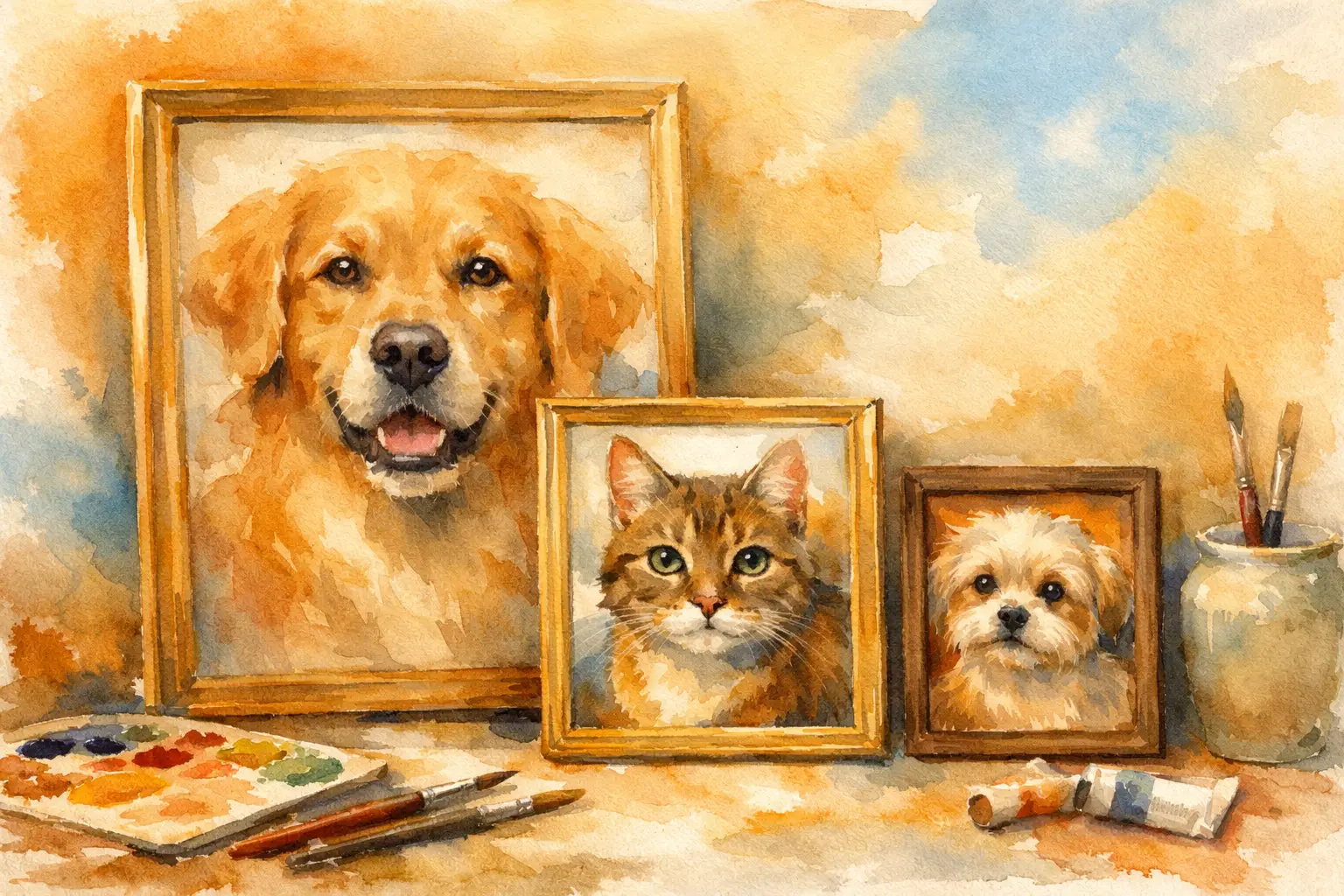
A pet portrait can feel perfect on screen and somehow too small, too imposing, or slightly off once it is printed and placed in a real room. If you are wondering what size should pet portrait art be, the answer usually starts with one thing: what role you want the portrait to play in your life. Some portraits are meant to quietly live on a bedside table. Others are meant to hold a whole wall with grace.
Choosing size is not only a decorating decision. It shapes how your pet is remembered, how their expression is noticed, and how often the portrait draws you in. A sleeping cat rendered in delicate watercolor can feel intimate at a smaller size. A beloved dog with bright eyes and a strong profile may deserve more presence. The right scale helps the artwork match the feeling.
What size should a pet portrait be for your space?
The most useful way to choose size is to begin with placement, not print specs. Think about where you want to see your pet each day. A portrait for a hallway has a different job than one created for a living room or memorial corner.
For a desk, shelf, nightstand, or small table, a smaller portrait often feels more personal. It invites a closer look. It can be especially fitting for memorial artwork, where the experience is quieter and more reflective. In these spaces, the portrait becomes something you return to privately.
For a mantel, entry table, or console, a medium size tends to feel balanced. It gives your pet enough visual presence without competing with the room. This is often the sweet spot for people who want the portrait to be noticed immediately but still feel elegant and restrained.
For a main wall, above a sofa, or in a room where the portrait is meant to anchor the space, larger is usually better. Fine detail in the eyes, fur, ears, and posture has room to breathe at a bigger size. The portrait can hold emotion from across the room instead of only up close.
If the wall is wide or the room has high ceilings, a too-small portrait can disappear. If the space is intimate, a very large portrait may feel formal in a way you did not intend. Scale should serve the bond, not overpower it.
Standard pet portrait sizes that usually work
Most pet owners do well choosing among a few classic sizes. An 8x10 portrait works beautifully for shelves, desks, and gift giving. It feels personal and polished. An 11x14 gives you a bit more presence and is often a comfortable middle ground for a single pet portrait. A 16x20 begins to feel like a true statement piece, especially for a main room or a memorial display with visual importance.
Larger sizes can be stunning, particularly when your pet had an expressive face or a posture you want to preserve in a more dramatic way. But bigger is not automatically better. A large portrait asks for wall space, viewing distance, and a room that can support it.
If you are unsure, medium is often the safest choice. It gives the artwork enough impact while staying flexible for different rooms over time.
What size should a pet portrait be for one pet vs. multiple pets?
The number of pets in the portrait changes the size decision more than many people expect. A single pet portrait can hold detail beautifully at smaller or medium sizes because the face and body have room to remain clear and expressive.
With two pets, the composition becomes more important. You want both animals to feel equally seen, not crowded together or reduced in detail. In most cases, moving up in size helps preserve balance. The portrait has space for each pet's features, posture, and personality.
For three pets or more, choosing a larger format usually makes the artwork feel more intentional. Otherwise, faces can appear too small, especially if you want subtle watercolor softness rather than a tightly cropped look. If honoring several beloved companions together, give the portrait room to breathe. The emotional weight deserves that clarity.
Vertical or horizontal matters too
Size is only part of the decision. Orientation also affects how the portrait feels.
A vertical portrait often suits a single pet well, especially when the focus is on the head, chest, and expression. It feels classic, composed, and elegant. This is a strong choice for memorial portraits and formal keepsakes.
A horizontal portrait tends to work better for two pets, a reclining pose, or a scene with more visual space. It can feel softer and more relaxed. If the portrait is going above furniture with width, a horizontal format may sit more naturally in the room.
Square formats can be beautiful for modern spaces or close-up compositions, but they are slightly more style-specific. If your goal is timelessness, vertical and horizontal standards are usually easier to live with long term.
The emotional purpose should guide the size
Some people choose size based only on wall measurements and regret it later because the portrait does not match the reason they created it.
If the portrait is a celebration of a living pet who fills your home with presence, going slightly larger can feel right. It allows that joyful, familiar energy to carry into the room. You are not just displaying a likeness. You are giving their presence a place.
If the portrait is in memoriam, the choice may be more nuanced. Some people want a larger piece because it becomes a meaningful focal point, almost ceremonial in its place within the home. Others prefer a smaller portrait that feels deeply personal and quietly sacred. Neither is more correct. It depends on whether you want the artwork to speak softly or stand with greater visual weight.
That is why the best size is often the one that matches your relationship to the portrait. Daily companion. Gift. Memorial. Centerpiece. Keepsake. Each purpose calls for a different kind of presence.
How detail and art style affect size
Watercolor pet portraits have a particular kind of beauty. They are expressive, refined, and often more atmospheric than sharply literal. That means size should support the feeling of the artwork.
If your portrait has soft edges, gentle washes of color, and emotional focus around the face, it can look beautiful at medium and large sizes because the subtle transitions remain visible. The portrait feels elevated rather than busy.
At very small sizes, expressive watercolor can still work well, but only if the composition is simple and clear. A close-up of one pet usually reproduces better than a more complex scene. If there are multiple pets or a lot of visual nuance, a larger size protects that beauty.
This is one reason many people create their portrait first, then decide where and how they want to print it. Once you see your pet's expression rendered with care, the right scale becomes much easier to recognize.
When a gift calls for a different size
A pet portrait given as a gift should fit the recipient's life, not only your own taste. Smaller and medium sizes are usually the safest choice because they are easier to place in a home and still feel substantial.
If the gift is for someone grieving, a modest but elegant size often feels thoughtful and respectful. It gives the portrait emotional intimacy. If the gift is for a pet birthday, adoption anniversary, or holiday surprise, you may choose a size with a little more presence, especially if you know exactly where it will go.
Practicality matters here. A gift should arrive feeling immediately welcome, not like something the recipient must rearrange a room to accommodate.
A simple way to decide without overthinking it
If you keep going back and forth, ask yourself three questions. Where will the portrait live? How many pets are included? Do you want the piece to feel intimate or prominent?
If the portrait is for a small surface and one pet, smaller can be perfect. If it is for a visible room and one or two pets, medium is often the right balance. If it is for a feature wall, a memorial display with presence, or multiple pets together, larger usually serves the artwork best.
For many pet owners, the real mistake is not choosing the wrong size. It is choosing too cautiously for a portrait that means so much. When a piece is created with love and intention, a little more presence often feels right.
At Pet Legacy Portraits, you create the artwork yourself - guided by a professional portrait experience designed to help you honor your pet with beauty, clarity, and heart. And because your final portrait is delivered as a print-ready digital file, you have the freedom to choose the size that suits your space and your story.
The right size is the one that lets you feel your pet's presence the moment you see it.