Can Blurry Pet Photos Work for a Lasting Portrait?
October 17, 2026
Can blurry pet photos work for a meaningful portrait? Learn what details matter most, when a soft image can succeed, and how to choose the best reference.
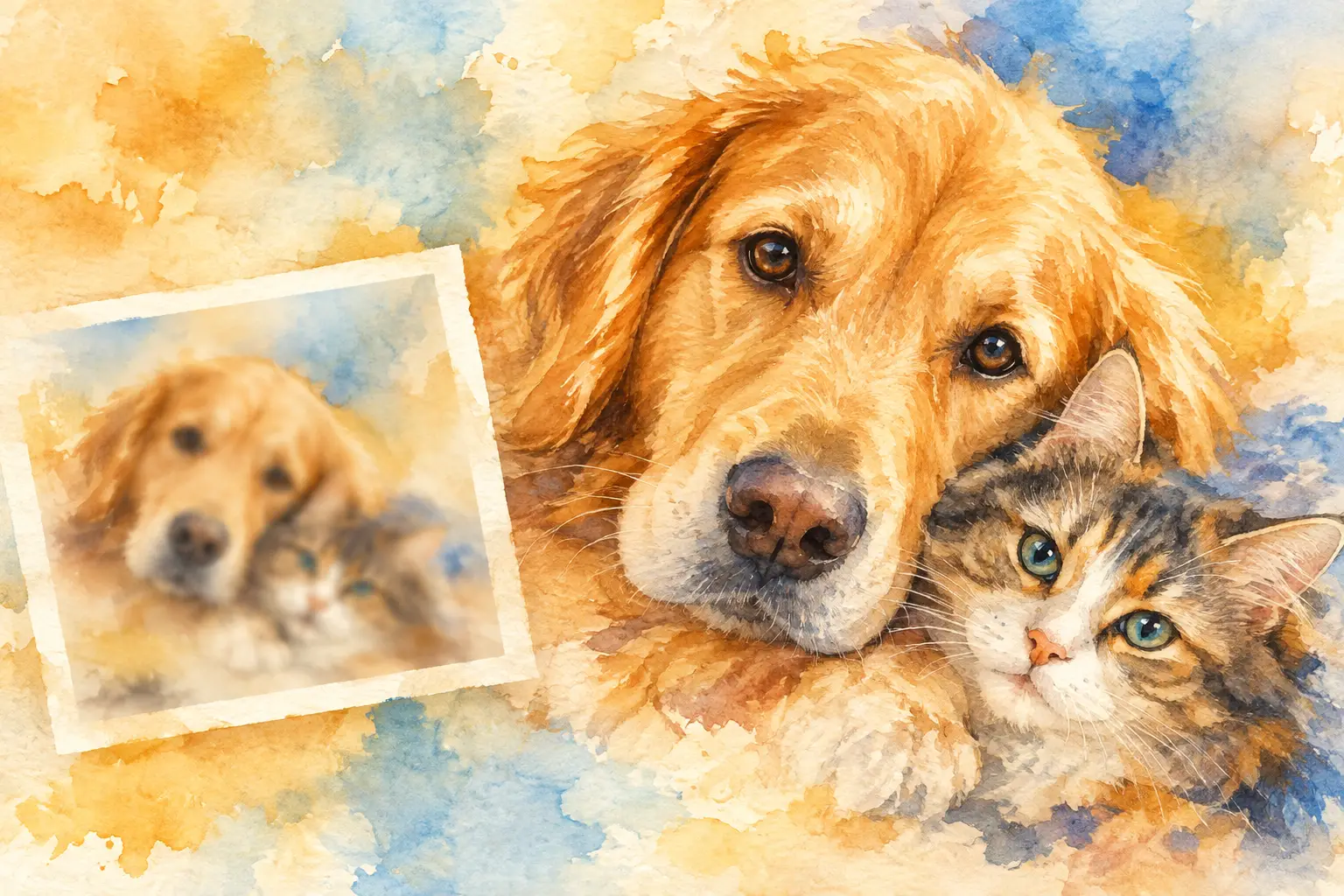
A favorite photo is not always a perfect photo. It may be the one where your dog is racing toward you with joyful, softened edges, or the last quiet image of your cat curled in a familiar patch of light. So, can blurry pet photos work for a portrait? Often, yes. What matters most is whether the image still carries the features, expression, and feeling that make your pet unmistakably theirs.
A beautiful portrait is not a reward reserved for people who happened to take flawless photographs. It is a way to hold onto character: the tipped ear, the amber eyes, the dignified muzzle, the slight tilt of a head when they heard their name. With thoughtful photo selection and your own memories to guide the process, even an imperfect image can become a meaningful reference.
Can Blurry Pet Photos Work? What Makes the Difference
Blur is not all the same. A photo can be softly focused yet still show a pet's face, coat markings, proportions, and expression clearly enough to support a beautiful watercolor portrait. In fact, a little softness can sometimes lend an image a gentle, painterly quality that feels especially fitting for a memorial or a quiet celebration of a beloved companion.
The question is less about whether every whisker is sharp and more about whether the photograph preserves identity. If you can recognize the shape of your pet's eyes, the color and placement of their markings, the length of their ears, and the character in their face, the image may have what it needs.
Motion blur is usually the more difficult kind. A fast-moving pet can become a lovely streak of energy, but if both the face and body have lost their definition, it becomes harder to faithfully reflect their individual appearance. A dimly lit photo may also be challenging when it hides coat color or facial details. These images still matter deeply, but they may work best as emotional inspiration alongside a clearer reference.
A portrait does not need to copy a photograph line for line. Its purpose is to preserve the pet you knew. Your knowledge of their personality helps shape that result in ways a camera never could.
The Details That Matter More Than Perfect Focus
When you look through your camera roll, begin with the details that would make someone who loved your pet say, “That is them.” For some pets, it is a distinct white blaze between the eyes or a single dark spot on the nose. For others, it is their long, feathered tail, their broad smile, or the thoughtful expression that appeared whenever they were listening.
A useful reference photo usually reveals the face from a clear enough angle to see the eyes, nose, muzzle, and ear shape. Natural light helps because it shows true coat color, but a treasured indoor image can still be valuable if the features remain visible. A seated or standing pose often gives a stronger sense of proportions than a photo taken from directly above.
The best images also leave room for the emotion you want the portrait to carry. A peaceful sleeping photo may be right for a companion remembered in memoriam. A bright, open-mouthed image may better celebrate a living dog who greets every day with enthusiasm. There is no universally correct expression. There is only the version of your pet that feels most true to your bond.
If one photo has the best expression but another shows the markings more clearly, keep both. A small collection of references can offer a fuller picture than one technically perfect image. It is especially helpful for pets with subtle coloring, long fur, or a feature that may be hidden in a favorite candid shot.
When a Soft Photo Is Enough
A blurry photo can be enough when its softness is limited and the essentials remain readable. Perhaps the background is out of focus while your pet's face is clear. Perhaps the fur is slightly soft, but the eyes, ears, and markings are still distinct. Perhaps the photo has a touch of motion, yet captures the exact happy posture you remember.
These are often excellent starting points because they contain something harder to recreate than sharpness: presence. The way a pet stood at the door, rested a paw on your knee, or looked back during a walk can say more about their spirit than a formal pose ever could.
Softness can also work beautifully for older photos. Many of the images we treasure most were taken years ago, before every phone camera made crisp detail feel effortless. A slightly grainy or unfocused picture is not a lesser memory. When the defining features can still be seen, it can hold all the warmth needed for a lasting portrait.
For a pet being honored after loss, the pressure to find “the one perfect photo” can be surprisingly heavy. Give yourself permission to choose the image that feels like home. If it is slightly blurry but immediately brings back their voice, habits, and companionship, that feeling has real value.
When to Choose Another Reference Photo
There are times when a different image will provide a stronger foundation. If the eyes are completely obscured, the face is turned away, or bright shadows erase the coat markings, it may be difficult to create a close likeness from that photo alone. The same is true when a pet is so small in the frame that their features cannot be seen.
This does not mean you need to abandon the image. Treat it as a companion reference. It might show a treasured pose, a favorite bandana, or the setting that captures your pet's life with you. Pair it with a closer image that reveals their face and coloring.
Try not to judge a photo only by its polish. A perfectly lit image that feels unfamiliar may be less meaningful than a candid one with a little softness. The ideal choice balances visual information with emotional recognition. You want enough detail to honor your pet accurately, and enough feeling to make the finished piece yours.
How to Select Photos With Confidence
Start by saving three to five images that make you pause. You are not looking for proof that you are a skilled photographer. You are looking for evidence of your pet's life: their gaze, their coloring, their posture, and the small traits you would miss most.
Then compare those photos with a few simple questions in mind. Can you see the eyes and face? Are the ears, muzzle, and markings recognizable? Does at least one image show the coat color in reasonable light? And, perhaps most importantly, does the photo feel like the pet you love?
A front-facing image is often helpful, but it is not required. Many pets have an unmistakable profile, especially those with expressive noses, elegant ears, or a familiar head shape. A side view can be deeply personal when it reflects the way you most often saw them beside you.
If you are creating a portrait through Pet Legacy Portraits, your personal details matter alongside the photos. Share the qualities that may not be visible in a single image: the quiet dignity of an old soul, the mischief behind a watchful stare, the gentle ritual of waiting by the window. You remain the creative force because no one knows your pet's story more intimately than you do.
Let the Memory Lead
The clearest photograph is not always the truest one. A slightly blurry image can still hold the spark of recognition that matters most, especially when it is supported by a clearer companion photo and the details only you can provide.
Choose the images that bring your pet close again. Whether you are celebrating the life still unfolding beside you or honoring a companion whose presence remains in the quiet corners of home, that recognition is where a meaningful portrait begins.