Can Old Pet Photos Work for a Lasting Portrait?
October 6, 2026
Can old pet photos work for a meaningful portrait? Learn what makes an older image suitable and how to preserve your pet's spirit in lasting watercolor art.
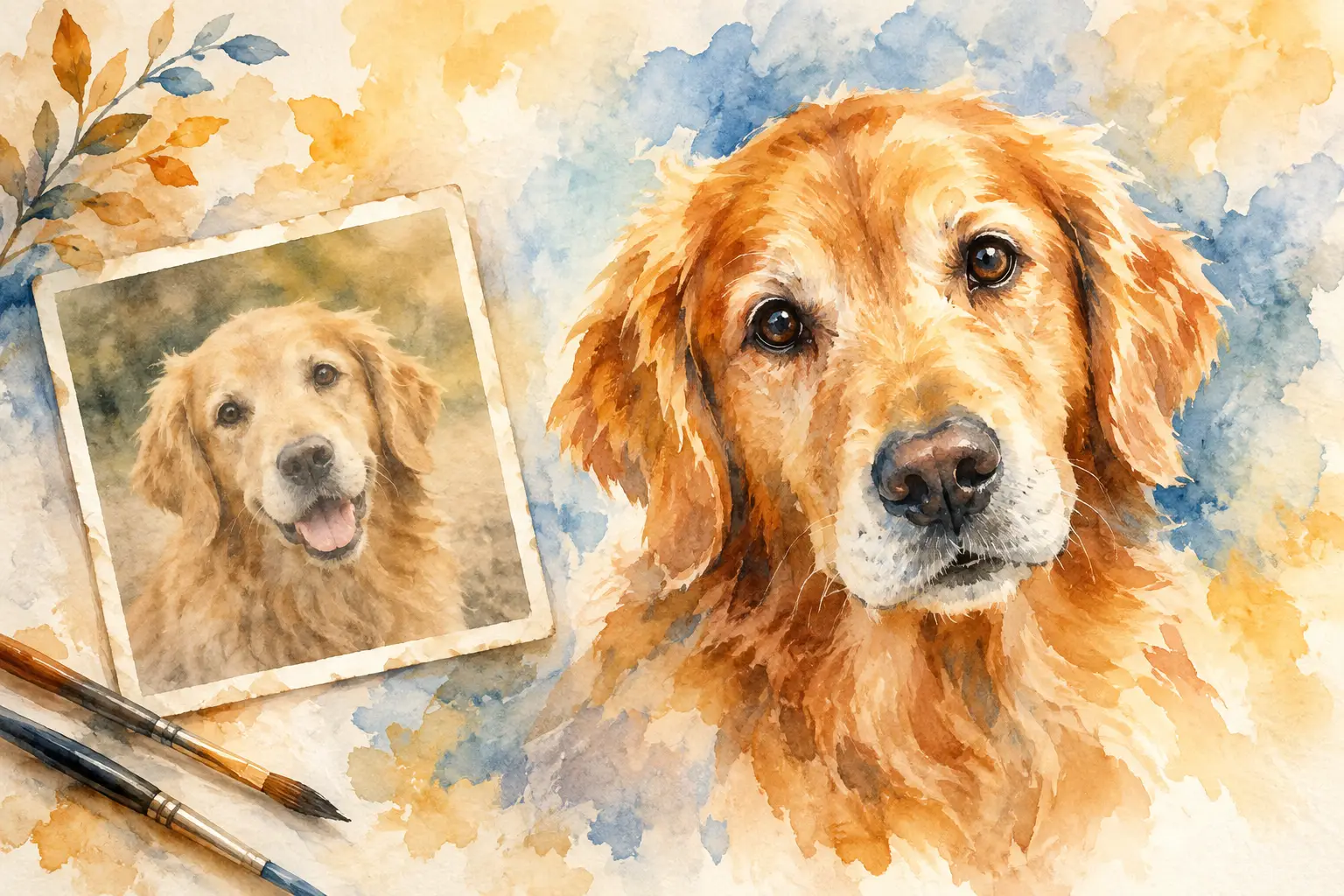
A beloved pet’s most treasured photograph is not always a recent one. It may be a faded print from the kitchen drawer, a favorite snapshot from an old phone, or the only image that truly captures the expression you remember. So, can old pet photos work for a meaningful portrait? Very often, yes. What matters most is not the age of the image, but what it still reveals about the pet you love.
For a living companion, an older photograph can preserve the bright-eyed puppy, the first gray whiskers, or a familiar pose that feels especially true to them. For a pet being remembered, it may hold a moment you cannot recreate. A carefully made watercolor portrait can give that moment a permanent, beautiful place in your home.
Can Old Pet Photos Work for a Portrait?
Old pet photos can work beautifully when they provide enough visual information to recognize your pet’s features and enough emotional information to recognize their character. A professional portrait does not need a studio-perfect photograph to feel personal. It needs a clear sense of who your pet was.
The strongest older images usually show the face reasonably well, even if the background is imperfect or the photo has softened with time. Distinctive markings, ear shape, coat color, eye color, and the curve of a muzzle all help create a faithful result. A relaxed sitting pose, a favorite sleeping position, or that unmistakable look they gave you can be just as valuable as technical sharpness.
There are limits, of course. If a photo is extremely dark, heavily blurred, very small, or obscured by glare, it may not show enough detail for a portrait to honor your pet accurately. But an imperfect image is not automatically unusable. Many treasured photos have a little grain, fading, or motion, and still carry the details that matter most.
What Makes an Older Photo a Good Choice?
Begin with the question only you can answer: does this look like your pet? Not simply their coloring or breed, but their presence. The best reference image often has an immediate emotional pull. You see it and recognize the tilt of the head, the gentle alertness, the proud stance, or the quiet comfort that made them uniquely yours.
A useful photo will generally have a visible face, natural light or clear contrast, and enough size to make out the eyes and markings. If your pet had a distinctive patch of fur, a freckled nose, one ear that folded differently, or a particular expression, choose an image where those details can be seen.
For older printed photographs, scan the original at the highest quality available rather than taking a picture of it under room lighting. A clean scan keeps the edges, colors, and facial details more intact. If scanning is not possible, photograph the print in even daylight, without flash, and place it flat to avoid shadows and reflections.
The photo does not need to be perfect
A meaningful portrait is not a forensic copy of a photograph. It is a refined interpretation of the pet in it. Slight fading can often be part of the photograph’s tenderness, particularly when the image belongs to an earlier chapter of your life together.
What cannot be guessed with confidence should be shared in your pet’s story. If their eyes were a warmer brown than the picture suggests, if their coat was more golden in sunlight, or if a beloved collar is missing from the image, those details help guide the finished portrait toward a truer remembrance.
When One Photo Is Not Enough
Sometimes the most emotionally important photo is not the clearest one. That is completely understandable. A last photograph, a childhood snapshot, or an image from a favorite day may be the one you most want to preserve, even if it does not reveal every feature.
In that case, use the cherished image as the heart of the portrait and provide a few supporting photos if available. A second photo may show the coat color more accurately. Another may reveal the shape of the ears or the markings around the eyes. Together, they can create a more complete picture while keeping the portrait rooted in the moment that matters most.
This is especially helpful for pets with changing appearances. A senior dog may have developed a silver muzzle. A rescue cat may look markedly different from their first months at home. There is no wrong version to honor. You may wish to preserve the pet you first met, the companion who grew old beside you, or a likeness that brings together the details you hold closest.
Choosing Between a Younger and More Recent Image
The right photo depends on the feeling you want the portrait to carry. A younger image can be full of energy and beginnings. It may remind you of muddy paws, long walks, playful chaos, or the day your pet first became family. A more recent image may feel quieter and more intimate, reflecting years of trust and shared routine.
For memorial portraits, some people choose the final photo taken together because it feels honest and close. Others prefer an image from a healthy, joyful season. Neither choice is more loving. Remembrance does not need to follow a rule. It can hold the pet at the age and in the moment that feels most like home to you.
For portraits of living pets, an older image can be a beautiful way to celebrate the full arc of your bond. You might preserve the small face that first stole your heart while your companion is still beside you, creating a keepsake that honors both the past and the present.
Share the Details the Photo Cannot Say
A photograph shows appearance, but you know the life behind it. The most resonant portrait choices often come from pairing the image with a few personal details: the name your pet always answered to, their affectionate habits, the place they loved to rest, or the quality that defined them.
Perhaps your dog greeted every visitor as if they had returned from a long journey. Perhaps your cat claimed the warmest patch of sunlight each afternoon. Maybe your pet was dignified, mischievous, gentle, watchful, or gloriously stubborn. These memories shape the emotional direction of a portrait in ways a photograph alone cannot.
This is why older photos can be so powerful. They invite you to remember more than what was in the frame. They bring back the sound of paws in the hallway, the weight of a head in your lap, the routines that once seemed ordinary and now feel precious.
Preparing an Older Image With Care
Before submitting a photo, take a moment to select the best available version. Keep the full image rather than cropping tightly around the face unless the pet is very small in the frame. Avoid filters that dramatically change the colors, and choose an image that is as bright and clear as possible.
If you are deciding among several favorites, trust the one that makes you pause. A technically cleaner image is useful, but a portrait should begin with affection. The photo that carries the strongest sense of recognition is often the right place to start.
At Pet Legacy Portraits, your chosen photo and the memories you share can become a museum-quality watercolor portrait created around the pet only you knew. The resulting high-resolution digital file is designed to be print-ready, giving you the freedom to display it in the way that feels most personal.
An old photograph may be worn at the corners, softened by time, or far from perfect. Yet if it brings your pet vividly back to you, it still has work to do. Let it become something lasting: a beautiful reminder that love does not fade simply because a photograph has aged.