Can One Portrait Include Pets You Love Most?
September 21, 2026
Can one portrait include pets who share your heart? Learn how to create a balanced, personal watercolor keepsake that honors every companion beautifully.
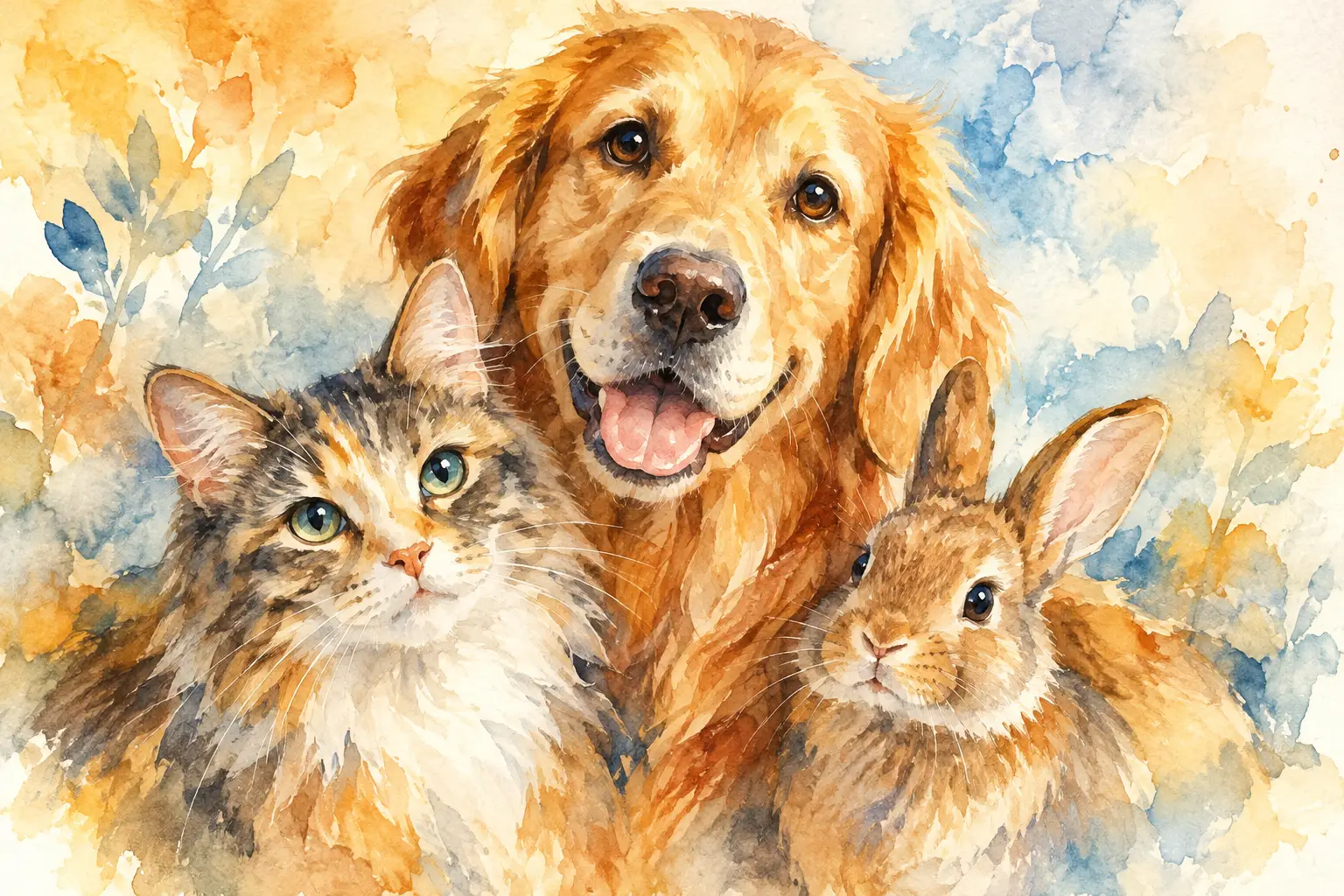
When a household has been shaped by more than one beloved animal, choosing only one face can feel impossible. Can one portrait include pets with different sizes, personalities, and even different places in your family's story? It can - and, when thoughtfully composed, the result can feel less like a collection of animals and more like a true portrait of the love they shared with you.
A multi-pet watercolor portrait is especially meaningful when your companions belong together in memory: the dog and cat who claimed the same sunny window, the pair of littermates who grew older side by side, or the pets whose lives overlapped only through your care. The goal is not to make every detail identical in importance. It is to give each pet a recognizable, dignified place in one lasting piece.
Can One Portrait Include Pets With Different Stories?
Yes. One portrait can celebrate living pets, honor pets in memoriam, or hold both together. What matters most is the intention you bring to it. A portrait of two current companions may be full of movement, warmth, and the everyday character that makes your home feel alive. A memorial portrait may be quieter, centered on recognition and remembrance.
When one pet is still beside you and another is being remembered, a shared portrait can be deeply comforting. It acknowledges that love does not disappear when a pet is gone. At the same time, there is no single right emotional tone. Some people want a gentle image that places their pets peacefully together. Others prefer to preserve each animal's individual era, choosing a composition that feels symbolic rather than like a literal moment that occurred.
Give yourself permission to decide what feels honest. This is your keepsake. You know the bond, the small habits, and the meaning behind every familiar expression better than anyone else.
Start With the Relationship, Not the Photo Count
The strongest group portraits begin with a simple question: what do you want to feel when you see it? Perhaps you want to celebrate the spirited little group that greets you at the door. Perhaps you want a calm reminder of a dog and cat who made a difficult chapter gentler. That feeling can guide every choice that follows.
Two pets often suit a close, balanced composition. Three can create a lovely sense of family, especially when their heights and poses naturally vary. With four or more pets, clarity becomes more important than symmetry. Each additional face needs enough visual space for its markings, ears, eyes, and expression to remain recognizable.
A single portrait does not require every pet to be posed in the same way or photographed together. In fact, separate reference photos often tell a more complete story. One may show a dignified older dog at rest, while another captures a young cat's bright, curious gaze. Together, those individual details can create a portrait that feels faithful to both.
Choose Reference Photos That Preserve Personality
A clear photo helps retain the details that make a pet unmistakably yours. Look for an image with good natural light, visible eyes, and a face that is not hidden by shadows, hands, furniture, or motion. Photos taken at your pet's eye level often make it easier to preserve their expression.
For a shared portrait, consistency is helpful but not mandatory. Your pets do not need matching backgrounds, matching collars, or matching camera angles. What matters is that each reference clearly shows coat color, markings, facial shape, and the particular look you recognize immediately.
If you are choosing a photo for a pet in memoriam, do not feel pressured to select the most technically perfect image. The photograph where their ears tilt in that familiar way, or where their eyes have the softness you remember, may hold more value than a sharper but less personal picture. A meaningful portrait begins with the details that bring them back to you.
Give Each Pet a Clear Place in the Composition
A beautiful multi-pet portrait needs visual breathing room. The eye should be able to move naturally from one companion to the next without losing the individuality of either. Size, posture, and placement all help create that balance.
A large dog beside a small cat, for example, can feel especially harmonious when their scale is respected rather than forced into sameness. A pet with a calm expression may create a natural center, while a more playful companion brings life from the side. You can also use a subtle overlap to suggest closeness, provided no pet's defining features are obscured.
Consider how you would like their personalities to meet on the page. Do you picture them facing forward as a formal family portrait? Would a slight turn toward one another feel more affectionate? For pets who never met, a side-by-side composition can still express connection without pretending their stories were identical.
Background choices should support the animals rather than compete with them. A soft watercolor wash, an understated garden tone, or an airy neutral setting can add atmosphere while keeping each face central. If a favorite place carries special meaning, a hint of its colors may be enough. The portrait does not need to recreate every object in a room to evoke the feeling of home.
Honor Memorial Pets With Care
Including a pet in memoriam alongside living companions can be a gentle way to recognize the full family you hold in your heart. It may also bring complicated feelings. A portrait can make grief feel close for a moment, and that is not a sign that you chose wrongly. It is a reflection of how much the relationship mattered.
You may wish to create the portrait soon after a loss, when memories feel vivid, or wait until you can approach the process with more steadiness. Both choices are valid. There is no timetable for remembrance, and there is no obligation to make a memorial portrait look solemn. Some pets are best remembered through a peaceful gaze; others through the bright, mischievous energy that defined them.
Small choices can carry a great deal of meaning. A familiar bandana, a favorite collar, or a gentle expression may be all that is needed. Often, restraint is what makes a memorial piece feel elegant. Let the pet's likeness and the bond behind it do the speaking.
What to Expect From a Multi-Pet Watercolor Portrait
More pets bring more detail, which is why thoughtful preparation matters. Clear references and a clear emotional direction give your portrait the best foundation. The result should not feel crowded or generic. It should let each animal remain distinct while creating one coherent, museum-quality watercolor image.
At Pet Legacy Portraits, you remain the creative force behind that outcome. You choose the pets, the photos, and the details that matter most, while a guided portrait experience helps shape those choices into a print-ready digital artwork. This makes it possible to create a meaningful piece without needing to explain your pets to a stranger in a long, uncertain commission process.
Before finalizing your submission, take one quiet look at the images you selected. Ask whether each one shows the pet you know, not simply a pet who looks similar. A bright-eyed expression, a unique patch of fur, or the gentle angle of a head can be the difference between a pretty picture and a portrait that feels like home.
One portrait can hold many pets, but it can also hold the tenderness of their separate stories. Choose the companions whose presence belongs together in your heart, and let the finished piece give each of them a place to be remembered beautifully.