How to Create a Pet Legacy Portrait That Feels True
September 24, 2026
Learn how to create a pet legacy portrait that honors your pet’s spirit, preserves a cherished bond, and becomes a print-ready keepsake for years ahead.
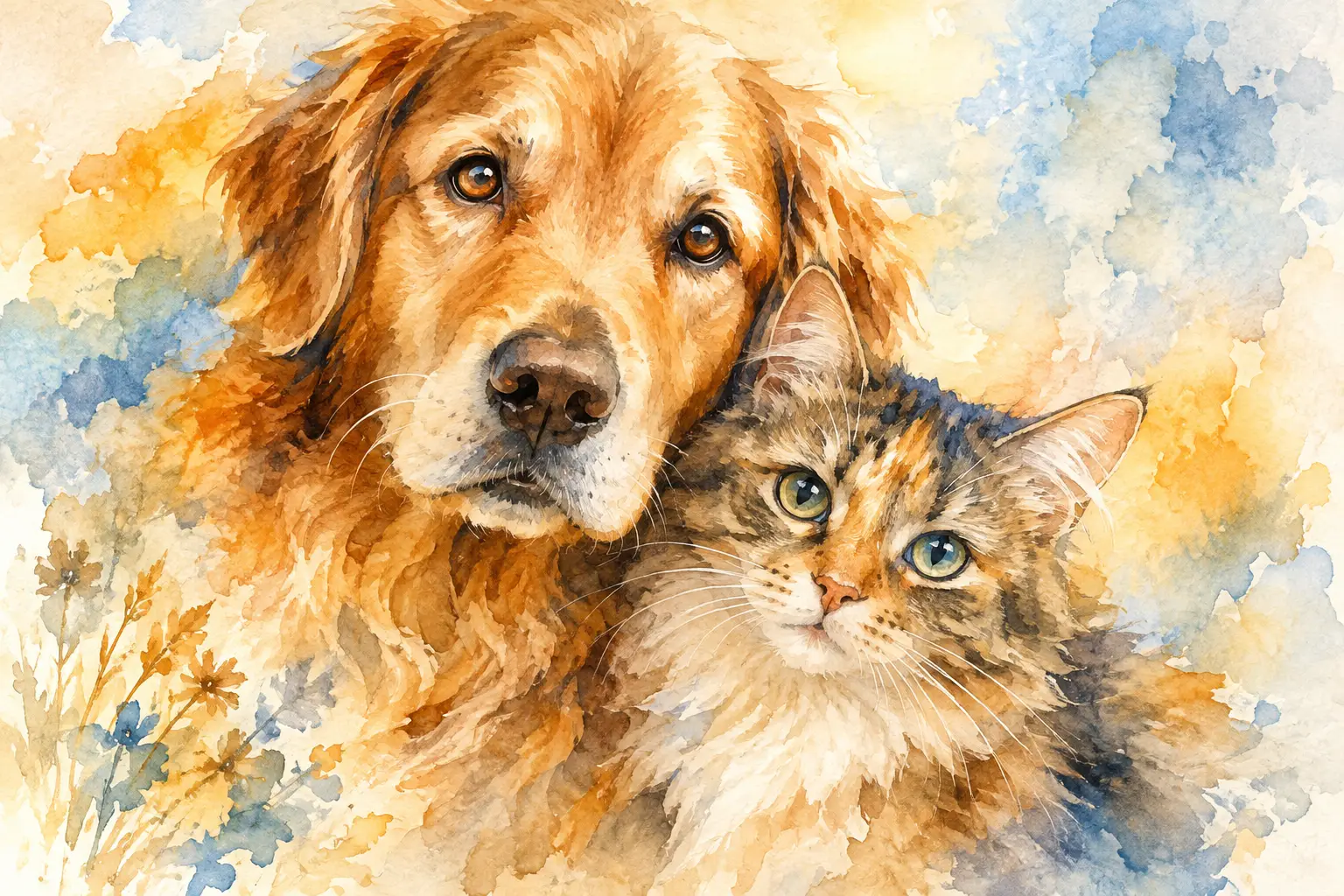
The best way to create a pet legacy portrait is to begin with the details only you could know: the tilt of your dog’s head when they heard their name, the watchful calm in your cat’s eyes, the favorite place they claimed as their own. A meaningful portrait is not simply about getting the markings right. It is about preserving the presence that made your pet family.
For some, this is a celebration of a companion still filling the home with life. For others, it is a tender way to keep a beloved pet close after goodbye. Both deserve the same care: a portrait that feels personal, beautiful, and worthy of the bond you share.
Start With the Feeling You Want to Preserve
Before choosing a photo, take a quiet moment to think about what you hope to feel when you see the finished artwork. You may want to remember a joyful puppyhood, a dignified older dog, a cat’s mischievous confidence, or the peaceful expression that always made you feel at home.
This intention gives the portrait its emotional center. A pet legacy portrait can celebrate a living companion’s personality just as naturally as it can honor a pet in memoriam. The difference is not in the quality of love behind it. It is simply in the moment you are choosing to hold onto.
Try to describe your pet in a few honest words. Perhaps they were gentle, brave, curious, devoted, elegant, playful, or quietly protective. These details help shape an image that feels like a remembrance rather than a generic likeness.
Choose a Photo That Shows Your Pet Clearly
A favorite photo is often the right place to start, especially if it instantly brings your pet’s personality to mind. Still, the most emotionally significant picture is not always the clearest one. When you have a choice, look for an image where your pet’s face is visible, their eyes are open or expressive, and their features are not hidden by deep shadow.
Natural light usually offers the most flattering detail. A photo taken near a window, outside in soft daylight, or in a well-lit room can make it easier to preserve the subtle features that distinguish your pet: a white whisker, an uneven ear, a distinctive spot on the nose, or the texture of a beloved coat.
The photo does not need to be professionally taken. A phone photo can be a wonderful foundation when it captures your pet clearly. What matters most is that it feels true to them.
If you are creating a memorial portrait and have only a few photos available, choose the one that gives you the strongest sense of connection. Technical perfection matters less than recognition. The right image may be the one that lets you say, immediately and quietly, “Yes, that is them.”
Keep the Face in Focus
For a portrait intended for printing, a close or medium-close image generally works best. Your pet’s eyes, facial shape, and coloring should be easy to see. Photos that are heavily filtered, blurry, distant, or taken in very low light may not preserve enough detail for the most refined result.
That said, there is room for character. A slightly lopsided expression, one ear standing up, or a familiar sleepy gaze may be exactly what makes the image meaningful. The goal is not a posed version of your pet. It is their unmistakable self.
Add the Details That Make It Personal
The portrait becomes more than an image when you share the story behind it. Think of the small things that would not appear in a photograph alone. Was your pet known for greeting everyone at the door? Did they carry a particular toy from room to room? Did they have a regal manner, a silly habit, or a calm way of staying close when you needed comfort?
These details matter because you know your pet better than anyone. You are the creative force behind the portrait, choosing the memory, the expression, and the qualities that deserve to be seen. A guided portrait experience turns that knowledge into art without asking you to become an artist yourself.
When you describe your pet, be specific but natural. A simple note such as “She was small but fearless,” “He had the softest eyes,” or “She always looked thoughtful, even as a kitten” can help preserve the emotional truth of the portrait.
For a pet being remembered in memoriam, you may also wish to reflect on the role they played in your life. They may have been your first pet, your child’s best friend, your constant companion through a difficult season, or the familiar presence that made a house feel like home. There is no need to make the story elaborate. A few sincere words can carry great meaning.
Choose an Art Style With Lasting Presence
A legacy portrait should feel at home wherever you choose to display it. Watercolor is especially suited to this purpose because it balances softness with detail. It can feel expressive and refined without becoming overly formal, allowing your pet’s individuality to remain at the center.
Museum-quality watercolor artwork offers a sense of permanence that a casual snapshot may not. It gives an everyday moment the space it deserves. The result can feel equally fitting in a living room, bedroom, hallway, or a quiet place reserved for remembrance.
Consider where the finished portrait may live. A bright, playful expression can bring warmth to a shared family space. A gentler, more contemplative image may be especially meaningful near a favorite chair, bedside table, or memorial shelf. There is no single correct choice. The right portrait is the one that feels right in your life.
Create a Pet Legacy Portrait With Care, Not Pressure
The act of creating a pet legacy portrait can be surprisingly emotional. That is true whether your pet is sleeping beside you as you choose a photo or whether you are returning to old images after a loss. Give yourself permission to take your time.
You do not need to find the one perfect photograph on the first try. Compare a few choices. Notice which image makes you smile, which one brings a familiar ache, and which one feels most like your pet’s presence. Often, your instincts know before you can explain why.
A thoughtful, guided process helps remove the pressure of making every artistic decision alone. With Pet Legacy Portraits, you provide the image and the personal details that matter most, then receive a high-resolution digital portrait file within five business days. The finished artwork is designed to be print-ready, so you can choose the size, paper, and place that feel most meaningful to you.
That flexibility is part of what makes a digital portrait valuable. You may print one for yourself, create a framed gift for a family member, or keep the file safely stored as part of your pet’s story. The portrait belongs to the memory you are preserving.
Let the Portrait Become Part of the Story
A pet’s legacy is rarely contained in one moment. It lives in routines, photographs, favorite nicknames, empty spaces on the couch, and the stories that still surface years later. A portrait gives those memories a visible place to gather.
For a living pet, it can be a way to honor the joy that is happening now. Do not wait for a milestone or a goodbye to celebrate a companion who has already changed your life. The ordinary years are often the ones we miss most, and they deserve to be remembered beautifully.
For a pet who has passed, a portrait can offer a gentler way to keep the connection present. It does not replace them, nor should it. Instead, it acknowledges that love remains part of your home and your history. Seeing their face in a form created with care can make remembrance feel less like holding on to loss and more like honoring a life that mattered.
Choose the photo that makes you pause for a moment, because that pause is often where the truest portrait begins.