Guided Portrait Tools Compared for Pet Families
October 3, 2026
Guided portrait tools compared for pet families: see how direction, artistic care, and print-ready files shape a portrait worthy of their story alone.
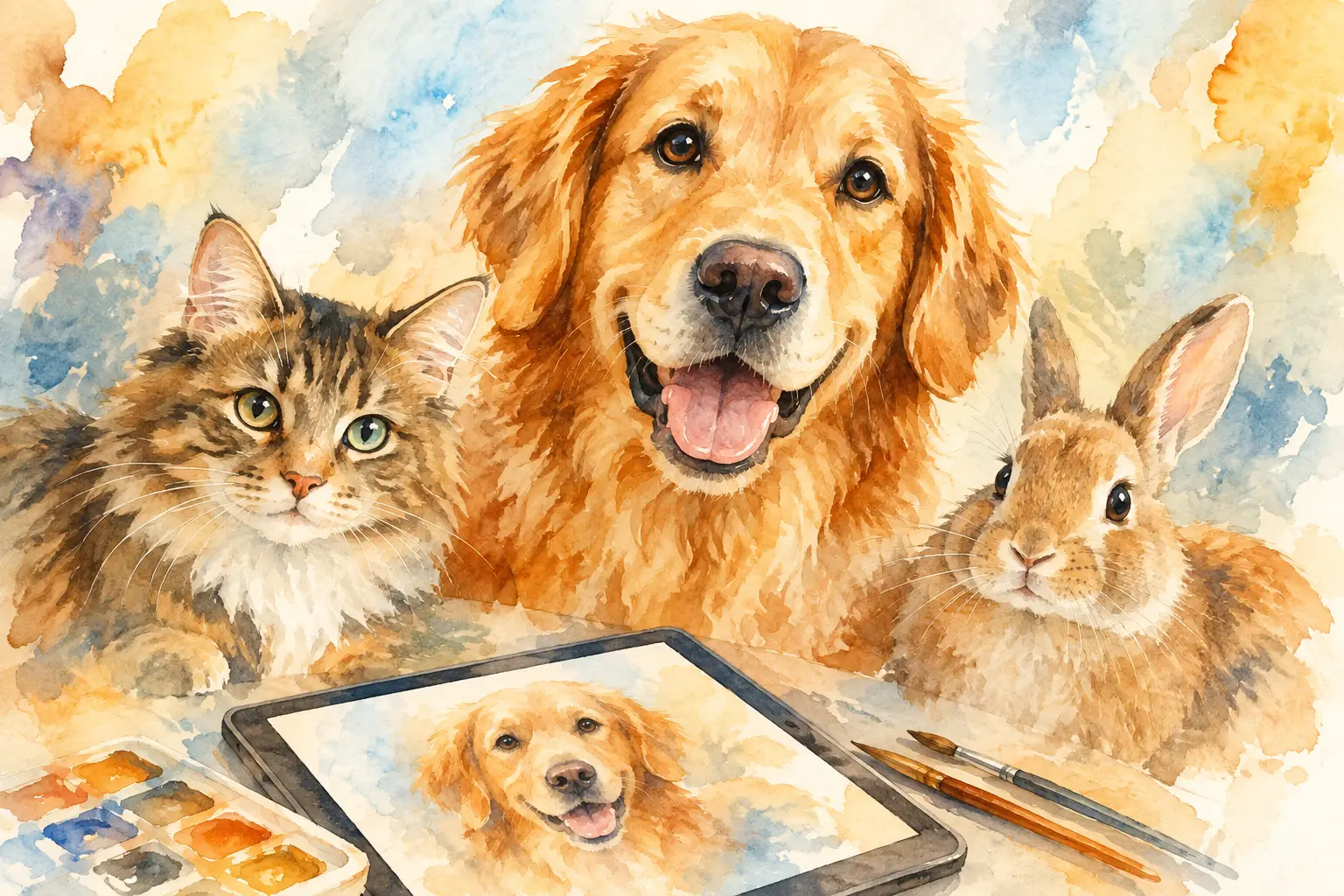
A pet portrait can be more than a beautiful image. It can hold the alert tilt of an ear, the familiar softness around the eyes, or the quiet dignity of a companion deeply missed. When guided portrait tools are compared, the real question is not which option produces an image fastest. It is which one gives you enough care, direction, and creative control to preserve the pet you know by heart.
Guided Portrait Tools Compared: What Actually Matters
Portrait tools vary widely in how much they ask of you and how much they help you express. Some put every creative choice in your hands. Others offer a fast, preset result with little room for personality. Guided portrait experiences sit in the meaningful middle: you bring the photo, memories, and details that matter, while the process helps translate them into a finished work of art.
For a living pet, that may mean capturing the bright confidence of a terrier who greets every visitor or the calm presence of an older cat who always finds the sunniest spot in the room. For a pet being honored in memoriam, it may mean choosing a gentler expression, a favorite color palette, or a feeling that reflects the bond you shared. Those distinctions are not small. They are the difference between a likeness and a legacy.
The best choice depends on what you want the portrait to carry. If you simply need a quick visual experiment, a basic image tool may be enough. If you want an elegant, print-ready piece that feels personal and lasting, guidance becomes far more valuable.
Open-Ended Image Tools Offer Freedom, but Demand Direction
Open-ended portrait tools can be appealing because they give you broad creative freedom. You can test different styles, revise descriptions, and explore a range of visual possibilities. For someone who enjoys spending time shaping every instruction and reviewing many variations, that flexibility can feel rewarding.
But freedom can also place a great deal of responsibility on the pet parent. You may know exactly that your dog had a white marking shaped like a crescent on her chest, or that your cat's expression was more curious than serious. Turning those intimate observations into a coherent artistic direction takes time and confidence. A result may be visually pleasing while still missing the details that made your pet unmistakably themselves.
This approach can also make consistency difficult. A portrait intended for a memorial space or a special gift often deserves more than an interesting first attempt. It should feel composed, intentional, and worthy of being printed and displayed for years.
Preset Portrait Options Are Simple, but Often Limited
Preset portrait options reduce the number of decisions. You upload a photo, select from a small set of styles, and receive a result built around a standard format. This can work well when speed matters more than interpretation.
The trade-off is that presets tend to make many different pets fit the same visual mold. They may recognize fur color and general features, yet leave little space for the story behind the image. A portrait of a spirited puppy and a portrait honoring a beloved companion after loss should not necessarily be guided by the same emotional cues.
A preset can be a pleasant surprise. It is less dependable when you have a clear hope for the finished piece: a museum-quality watercolor feeling, an expression that feels true to your pet, or a refined file you can print at the size and quality your home deserves.
A Guided Experience Makes Your Memories Part of the Portrait
A guided portrait experience is designed for pet parents who want to be involved without having to become art directors. You remain the creative force because you know your pet's character, history, and presence better than anyone else. The tool gives that knowledge a clear path forward.
Rather than asking you to solve every artistic decision alone, a guided process invites the details that change a portrait from familiar to deeply personal. A favorite expression, a distinctive feature, a beloved memory, or the feeling you want the artwork to hold can all shape the final direction.
This matters especially when a photo is imperfect. The image you treasure most may be slightly dim, taken from an unusual angle, or full of the movement that made your pet so recognizable. Guidance helps keep the focus on what the photo reveals about your companion, not only on whether it looks like a formal studio image.
Pet Legacy Portraits is built around this kind of experience. You guide the portrait with your pet's photo and personal details, then receive a high-resolution watercolor portrait created to reflect the personality and emotional story you want to preserve. The finished digital file is prepared for printing, so your remembrance or celebration can take its place in your home on your terms.
Compare the Details That Shape a Lasting Result
When considering guided portrait tools, look beyond the preview image. Start with the input process. Does it make room for the qualities that matter to you, or does it only ask for a photo? A thoughtful process recognizes that a pet's appearance is only one part of their identity.
Next, consider the artistic outcome. A strong watercolor portrait should feel soft without becoming vague, expressive without exaggerating features, and polished enough to stand on its own as artwork. It should honor a pet's natural coloring and character rather than flattening them into a standard look.
File quality is equally practical. A portrait can feel extraordinary on a phone screen and disappoint when printed if the file is not prepared with care. A high-resolution digital file gives you the freedom to choose a frame, create a meaningful gift, or place the portrait in the room where their presence is still felt most strongly.
Finally, consider the emotional fit. Some tools are made for novelty. Others are made for remembrance, celebration, and the quiet significance of a relationship that deserves to be seen. Neither purpose is wrong, but they are not interchangeable.
The Right Amount of Control Feels Personal, Not Complicated
The most meaningful portrait process does not require you to know artistic terminology or make dozens of technical choices. It asks for the things only you can provide. Was your pet gentle with children? Did they have an irrepressible, mischievous streak? Was there a look they gave you that no one else would recognize in quite the same way?
Those are the details that give a portrait its emotional center. They help ensure the finished work reflects not just a pet's face, but the relationship behind it. For families creating a memorial portrait, that care can offer a gentle way to honor love while making room for grief. For those celebrating a pet who is still by their side, it becomes a joyful record of this chapter of life together.
There is no single correct choice among portrait tools. An open-ended option may suit someone who wants to experiment extensively. A preset may suit a casual moment. But when you want a work that is personal, polished, and ready to keep, a guided experience offers a more considered path.
Choose the tool that leaves room for the details you would never want forgotten. Your pet's story already lives in you. A thoughtfully guided portrait helps you give that story a beautiful place to remain.