What Makes a Good Pet Photo for a Portrait?
September 17, 2026
Learn what makes a good pet photo for a portrait, from clear light and true color to the small expressions that hold your companion close in lasting art.
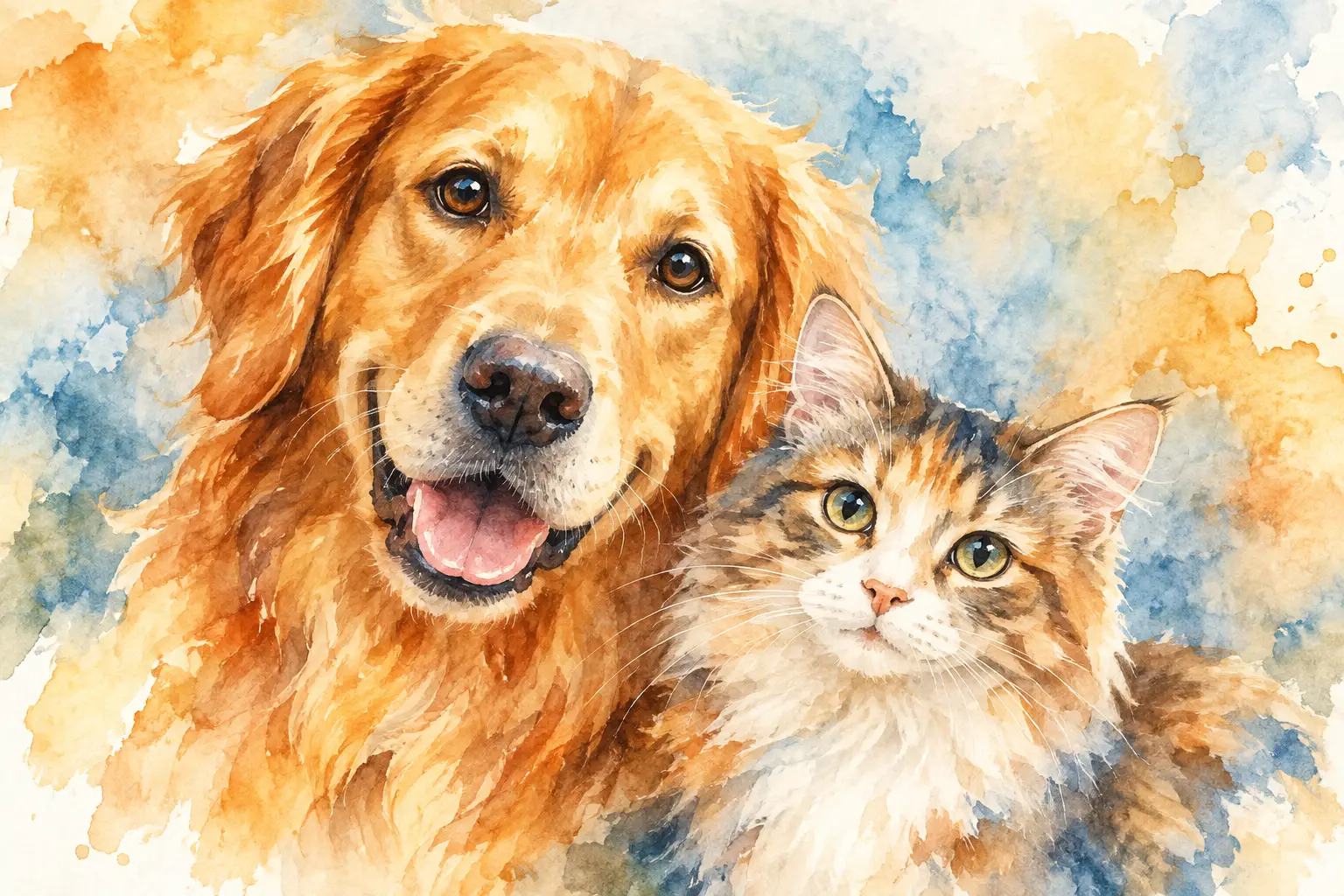
The photograph you choose may hold a familiar head tilt, the softness around your pet’s eyes, or the alert expression that always made you smile. That is what makes a good pet photo: not perfection, but an honest, clear glimpse of the companion you know by heart. For a portrait that feels deeply personal, the best image preserves both their appearance and their presence.
Whether you are celebrating a pet beside you now or creating a loving memorial, choosing the right photo is a meaningful part of the process. You are the person who recognizes their truest expression. A few thoughtful details can help that recognition shine through in the finished artwork.
What Makes a Good Pet Photo for a Portrait?
A good portrait photo gives your pet room to be seen. Their face should be clear, their features recognizable, and their natural coloring visible. It does not need to look professionally staged. Often, the most moving images are taken at home, on a favorite walk, or in the quiet moment before a nap.
What matters most is that the photo feels like them. Perhaps your dog’s ears lift when they hear your voice. Perhaps your cat has a calm, knowing gaze from a favorite windowsill. Perhaps the photograph captures the little patch of white on their chest, the curve of a floppy ear, or the expression that greeted you at the door. These are the details that turn an image into a remembrance.
Clarity helps preserve those details. Choose a photo that is in focus around the eyes and face, with enough light to distinguish markings, fur texture, and eye color. A larger original image is usually preferable because it contains more visual information, but a treasured photo does not have to be technically flawless to be meaningful. If it is the image that feels most like your pet, it may still be the right choice.
Begin With Their Expression
When people look at a pet portrait, they tend to look at the eyes first. The eyes carry attention, gentleness, curiosity, mischief, and the quiet sense of connection that makes each animal unforgettable. A photo where your pet is looking toward the camera, or slightly to one side with their eyes visible, often creates a particularly engaging portrait.
That said, direct eye contact is not the only beautiful option. Some pets are best remembered in profile, with a noble nose, a distinctive whisker line, or ears turned toward a sound just outside the frame. Others seem most themselves while relaxed on a sofa or watching the world from a familiar place. Choose the pose that reflects their spirit rather than forcing every pet into the same ideal.
Try to avoid photos where the face is heavily obscured by shadow, a toy, a hand, grass, or another animal. A partially hidden face can make it harder to preserve the features you love. If you have several similar images, select the one where the eyes, nose, and ears are most clearly defined.
Let personality lead
The strongest choice is rarely the most formal one. Think of the qualities you would want someone to recognize immediately: their gentle patience, bold curiosity, dignified calm, joyful energy, or irresistible habit of looking slightly unimpressed. A good photo carries one of those qualities naturally.
For a living companion, you may have the gift of choice. Take a few fresh photos over several days, especially during a calm, happy part of their routine. For a pet being honored in memoriam, look through your favorites slowly. The right image is often the one that brings their personality back into the room.
Use Natural, Even Light
Light reveals the subtle things: a brindle coat, a gray muzzle, the warm amber in an eye, or the individual texture of long fur. Soft daylight near a window or outdoors in open shade is often the most flattering choice. It gives the face gentle definition without creating stark shadows.
Bright direct sun can be beautiful, but it may cause squinting or wash out light-colored fur. Very dim rooms can make images look grainy or leave one side of the face in darkness. If you are taking a new photo, turn off a harsh flash when possible. Flash can create glowing eyes, flatten features, and change the natural color of a coat.
Indoor photos can work wonderfully when your pet is near a window. Position them so the light falls across their face rather than coming from directly behind them. Backlighting can create a lovely outline, but it often leaves the face too dark to see clearly. A small adjustment in where you stand can make all the difference.
Keep Color and Markings True
Your pet’s coloring is part of their identity. The black fur that turns chocolate in the sun, the speckles on a nose, the pale blaze between the eyes, or the soft silver that arrived with age all deserve to be visible. Select an image with natural color and minimal filters.
Filters can shift fur tones, smooth away markings, or alter eye color. Portrait art can be expressive, but it begins with an accurate understanding of the pet in the photograph. If a favorite photo has an unusual color cast from indoor lighting, it may still be useful, especially if you have another image that shows their true coloring more clearly.
For pets with very dark or very light fur, exposure deserves extra attention. Dark-coated pets often benefit from gentle side light that reveals the shape of the face without losing detail. White or pale-coated pets look best when the light is soft enough to preserve texture rather than turning their fur into a bright blur.
Choose a Simple Frame, Not a Perfect Setting
A clean background keeps attention where it belongs: on your pet. A plain wall, a quiet patch of garden, a bedspread, or a softly blurred room can all work beautifully. The setting does not need to be empty, but it should not compete with the face.
Busy backgrounds can make it difficult to see the outline of ears, whiskers, and fur. Watch for objects that seem to grow out of your pet’s head, such as furniture edges, plants, or people standing behind them. If the photo includes a favorite blanket or a familiar chair, that can add emotional context, provided your pet remains the clear focus.
Cropping matters, too. A head-and-shoulders image is often especially effective because it gives space to the expression and defining features. Full-body photos can be excellent when posture is a beloved part of your pet’s character, such as a proud stance, a curled sleeping shape, or a signature seated pose. Avoid images where the pet is tiny in a large scene unless you also have a closer reference photo.
Small Details Can Make a Portrait Feel Like Home
A technically strong image is helpful, but the details you share are what make the portrait unmistakably personal. Consider the things a photograph alone may not fully explain. Was your pet fearless around waves but cautious around vacuum cleaners? Did they carry a toy everywhere? Did they have an old-soul gaze, an energetic bounce, or a habit of claiming one particular sunbeam?
Those memories help guide the feeling you want the artwork to hold. They are especially valuable when you are creating a memorial portrait. The purpose is not to recreate a moment with clinical precision. It is to honor the animal who made ordinary days feel fuller.
If you are selecting among several photos, trust the one that makes you pause. It may not be the newest, brightest, or most polished image. But if it immediately brings back the sound of their paws, the warmth of their presence, or the comfort of having them nearby, it has already done something remarkable.
When Your Favorite Photo Is Not Perfect
Many of the photos we treasure most were taken quickly: a slightly soft phone image, an older snapshot, or a moment captured before anyone thought it would become so important. Do not dismiss it too soon. A photo with a clear face and visible features may be enough, even if the composition is imperfect.
When possible, pair a sentimental image with one or two additional photos that show important details more clearly. One may reveal coat color, another a distinctive marking, and another the expression you most want to preserve. Together, they can offer a fuller picture of the pet you love.
With Pet Legacy Portraits, your chosen photo and the personal details you provide work together to shape a museum-quality watercolor portrait that reflects your pet’s individual story. You remain the creative force because you know which expression, memory, and feature matter most.
A good pet photo does not ask your companion to be anyone other than themselves. Choose the image that lets you recognize them at once, then let that familiar face become something you can keep close for years to come.