What Makes Memorial Art Meaningful for Pets?
October 16, 2026
Learn what makes memorial art meaningful: personal details, honest presence, and a lasting way to honor the pet who shaped your life with care and beauty.
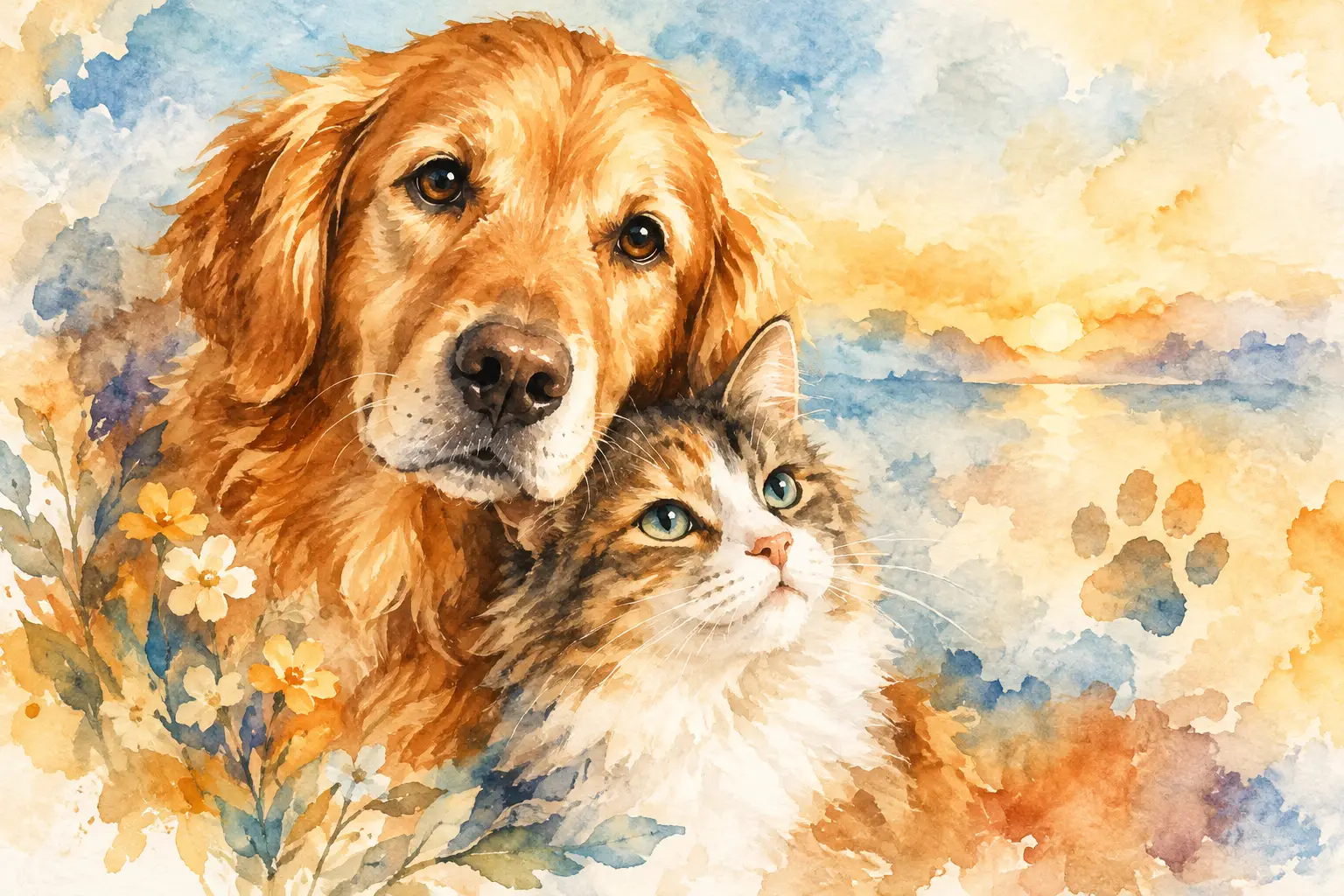
The photograph may show your pet’s face, but it is the small things that bring them back to you: the patient tilt of an ear, a favorite sleeping spot, the bright expression that greeted you at the door. What makes memorial art meaningful is its ability to hold those details with care, transforming a likeness into a personal remembrance of the life you shared.
For many pet parents, choosing memorial art is not about looking back perfectly. It is about creating a place for love to remain visible. A thoughtfully made portrait can acknowledge loss while honoring the joy, companionship, humor, and comfort that made one animal entirely irreplaceable.
Meaning Begins With a Pet’s Individual Presence
Every beloved pet has a presence that cannot be reduced to breed, coloring, or a polished pose. Perhaps your dog had one ear that stood higher than the other. Perhaps your cat always sat with their paws tucked beneath their chest, watching the room as if they owned it. These are not minor visual details. They are often the things that make a portrait feel true.
Meaningful memorial art recognizes that a pet was a family member with a distinct spirit. It makes room for the features you noticed every day, including the ones no one else might immediately understand. A portrait of a senior dog does not need to erase the gentle gray around their muzzle. A portrait of a cat does not need to make their curious, slightly serious expression look conventionally cheerful. Faithfulness has its own beauty.
The most resonant artwork does not ask, “What would look best on a wall?” first. It asks, “What feels most like them?” That question changes every creative choice, from the photo you choose to the mood and color of the finished piece.
What Makes Memorial Art Meaningful Is the Story Behind It
A beautiful image alone can be moving, but a personal story gives it lasting depth. Your memories guide the portrait toward something more intimate than a generic likeness. Think about the qualities you would want someone to know if they had never met your pet: their gentleness, boldness, loyalty, mischief, or quiet devotion.
Sometimes the story is found in a single season of life. You may remember the puppy who grew into your shadow, the rescue pet who slowly learned to feel safe, or the old companion who stayed close through a difficult chapter. Memorial art can carry that larger story without needing to illustrate every moment. A meaningful expression, familiar posture, or carefully chosen atmosphere can say a great deal.
This is why the pet parent’s role matters so much. You know which photo captures the spark in their eyes. You know whether they belonged in a sunlit garden, on a favorite blanket, or simply against a soft, timeless backdrop that keeps the attention on them. Your memories provide the emotional direction. The portrait becomes meaningful because it is shaped by love that is specific, not generalized.
Honest Details Create a Stronger Connection
There can be a temptation to select only the most perfect photo or to soften every sign of age. Sometimes that is exactly right. At other times, the image that moves you most may be slightly imperfect: a tongue peeking out, a sleepy gaze, a windblown coat, or a familiar spot on the nose.
There is no single right way to remember a pet. The right choice is the one that helps you recognize them immediately. Honest details can bring a sense of closeness because they reflect the pet you loved in real life, not an idealized version that feels distant.
Beauty and Grief Can Share the Same Space
Memorial art does not need to be solemn to be respectful. A watercolor portrait can feel light-filled, graceful, and full of warmth while still honoring a profound absence. In fact, many people find that beauty gives grief a gentler place to rest.
The goal is not to make sadness disappear. It is to give love a form you can return to. A portrait may bring tears at first, then become a quiet source of comfort over time. Both responses are valid. Remembrance is not static, and the meaning of a piece can deepen as the years pass.
Choosing Details That Feel Personal
The most meaningful memorial portrait often begins with a few thoughtful decisions. Start with a photo in which your pet feels unmistakably themselves. It does not need to be a professional image. What matters is clear visibility, natural expression, and the emotional recognition you feel when you see it.
Next, consider what you want the portrait to preserve. For some people, it is a favorite facial expression. For others, it is a dignified full-body pose, a distinctive coat pattern, or the tender look of an older pet. You might want the image to feel peaceful and refined, or lively enough to reflect a pet who filled every room with energy. Neither approach is more meaningful. It depends on the memory you want to keep close.
Color also carries emotion. Soft watercolor tones can create a calm, museum-quality presence that feels at home among treasured photographs and family keepsakes. A restrained background may be best when your pet’s face and personality should hold the focus. A gentle touch of color can be especially powerful when it recalls the warmth they brought into your home without turning the portrait into a scene that competes with them.
Personal details should serve the feeling of the portrait, not overwhelm it. The most enduring artwork is often edited with intention. It leaves enough space for your own memories to meet the image.
A Memorial Can Honor a Life, Not Only a Loss
People sometimes wait until after a pet has passed to create a meaningful portrait. Yet memorial art can also be a way to celebrate a living companion and preserve the season you are in together. There is tenderness in choosing to honor a pet now, while their habits, sounds, and daily rituals are still part of ordinary life.
That does not lessen the significance of a portrait created after loss. It simply reflects a larger truth: the bond deserves to be celebrated at every stage. A pet’s legacy is built in daily moments long before it is held in memory.
For a pet being honored in memoriam, the finished artwork can become a gentle point of connection. It may sit in a room where they once slept, be shared with a family member who misses them, or become part of a private ritual of remembrance. For a living pet, it can serve as a declaration of love in the present tense. Both are acts of appreciation.
The Lasting Value of a Portrait You Help Shape
A meaningful portrait is not simply something you receive. It is something you help create through the choices only you can make. The image you select, the memories you share, and the qualities you choose to emphasize all become part of the final work.
Pet Legacy Portraits offers a guided way to bring those personal choices into a refined, print-ready watercolor portrait. The experience keeps the focus where it belongs: on your pet’s individual personality and the relationship you shared, expressed with beauty and care.
Its value may not be measured in how often you look at it, although you may look often. Sometimes its value is in knowing it is there: a lasting, visible reminder that a beloved life mattered deeply. Choose the details that make you pause and say, without hesitation, “Yes, that is them.”