Choosing Digital Pet Artwork That Feels Like Them
September 22, 2026
Choosing digital pet artwork is a chance to preserve the spirit you know best. Learn what makes a portrait personal, print-ready, and lasting for years.
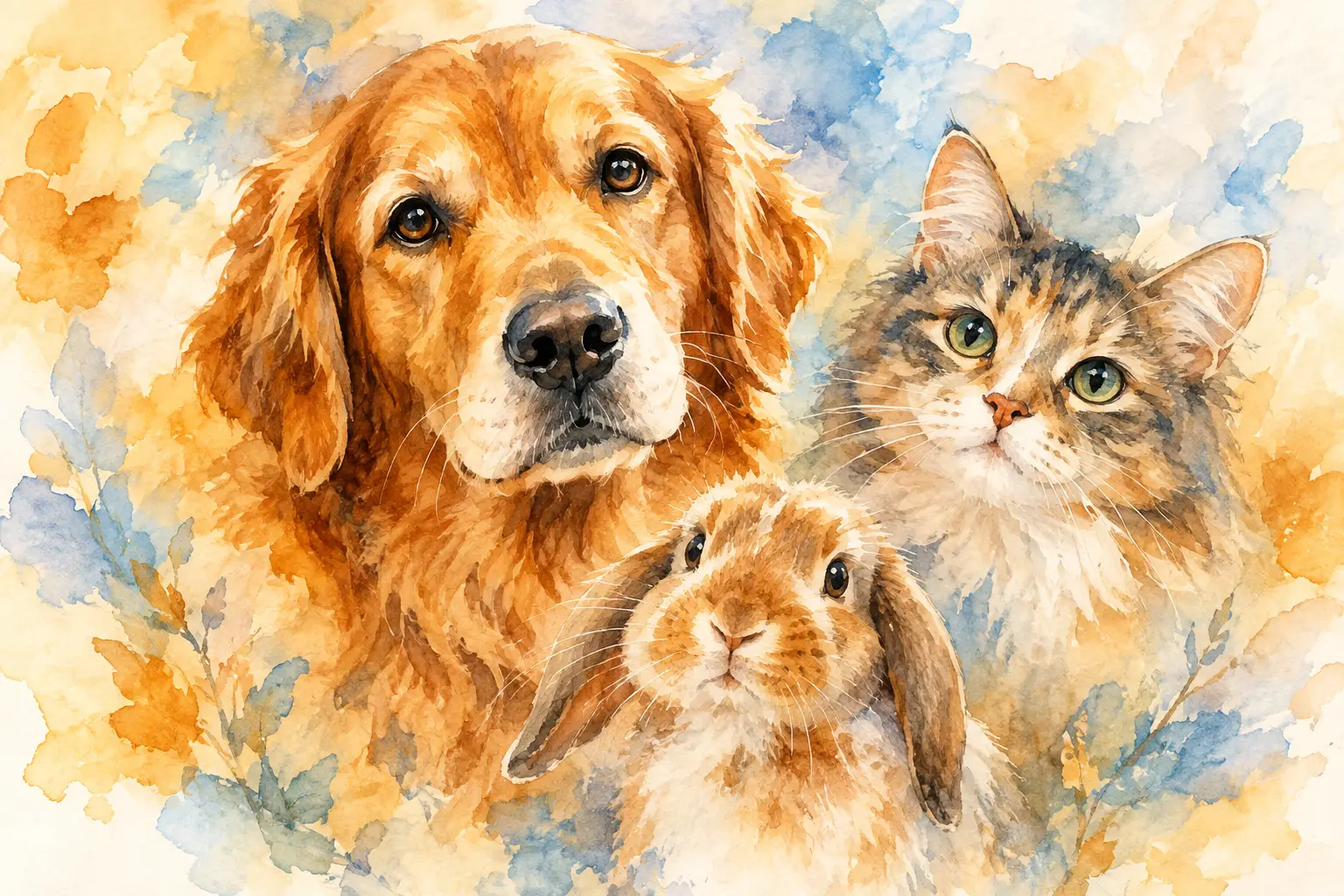
A portrait can capture the alert tilt of a dog's ears, the particular green in a cat's eyes, or the calm presence that made a small companion feel like home. That is why choosing digital pet artwork deserves more thought than simply selecting a style you like. The right piece should feel recognizable at a glance, while holding the story only you can tell.
For some, that story is joyful and current: muddy paws by the door, a familiar spot on the sofa, a face that still greets them every morning. For others, it is a tender act of remembrance. In either case, beautiful pet artwork is not about making a pet look perfect. It is about preserving the character that made them irreplaceable.
Begin With the Feeling You Want to Keep
Before comparing portrait styles, pause with the reason you want this piece. A portrait for a living pet may celebrate their bright, playful energy or their quiet devotion. A memorial portrait may offer a gentle place for love and memory to rest. Neither purpose is more meaningful than the other, but each can guide your choices.
Think of a few words you would use to describe your pet. Perhaps they were dignified, mischievous, watchful, soft-hearted, fearless, or wonderfully strange. These details help you choose artwork with emotional clarity rather than settling for a likeness that could belong to any animal.
Watercolor is especially suited to this kind of portrait because it balances detail with atmosphere. It can honor the markings, posture, and expression you recognize while allowing the image to feel soft, timeless, and intimate. A highly dramatic treatment may suit an exuberant pet, while a restrained palette can feel more fitting for a quiet memorial. There is no universal right answer. The best choice is the one that feels true when you look at it.
Choosing Digital Pet Artwork Starts With the Photo
The photo you submit is the foundation of a meaningful portrait. It does not need to be professionally staged. In fact, the most cherished photos are often the ones that show a pet as they really were. What matters is that their face, coloring, and expression are visible enough to be understood.
Choose an image with clear natural light when possible. A photo taken near a window or outdoors in soft daylight usually reveals fur texture and eye color more faithfully than a dim indoor snapshot. Avoid heavy filters, strong shadows across the face, or photos where the pet is very far away. If their eyes are partly hidden, another photo may better convey their presence.
Still, technical quality is only one part of the decision. A slightly imperfect photo can be the right choice if it carries the expression you love most. Maybe your senior dog has their familiar sleepy gaze. Maybe your cat is sitting in the exact sunlit chair they claimed as their own. When you have several good options, let emotional recognition be the deciding factor.
If the portrait service welcomes personal notes, use them. Mention the small visual details that matter: a white toe, a freckle on the nose, one ear that never stood up quite straight. Share the personality behind the image, too. Your knowledge is what gives the final work its emotional depth. You are not just providing a reference photo. You are shaping how your pet is remembered.
Look for More Than a Resemblance
A pet portrait should do more than reproduce fur color and facial features. It should make you feel that the artistically rendered pet has a presence. This is where thoughtful interpretation matters.
When evaluating a digital portrait experience, consider whether it asks about your pet beyond their breed or appearance. A guided process that invites you to share a name, story, or personality trait has room for something more personal than a surface-level image. The aim is not to add unnecessary embellishment. It is to give the artwork a sense of who your pet was in your life.
Pay attention to examples with pets of different ages, coat types, and coloring. A pale dog against a pale background, a black cat with subtle features, or a pet with a distinctive pattern each requires care. Museum-quality artwork should retain these differences rather than smoothing them away. A portrait may be painterly, but it should never lose the details that make your companion unmistakable.
This distinction matters deeply for memorial pieces. Memory is often attached to specifics: the curve of a muzzle, a beloved collar, the gentle cloudiness of older eyes. The most moving artwork does not turn those details into something else. It treats them with dignity.
Choose a Style You Will Want to Live With
Digital artwork is versatile because it can become part of your home in the way that feels most natural to you. You may print it as a framed portrait, create a keepsake for family, or hold onto the file until the right moment arrives. That flexibility is valuable, but it also means selecting a style with lasting appeal.
Ask yourself whether you are drawn to artwork because it is fashionable right now or because it reflects your pet. Trends change quickly. A classic watercolor portrait often endures because it places the subject at the center. It feels at home in a formal room, a sunlit hallway, or beside the photographs that tell your family's story.
Backgrounds deserve the same consideration. A minimal background can keep attention on expression and markings. A softer wash of color can add warmth without competing with the subject. If the pet's story is tied to a particular place, a subtle environmental touch may feel appropriate, though less is often more. You want the setting to support the memory, not overtake it.
For a memorial portrait, restraint can be especially powerful. You do not need symbols or elaborate visual cues for a piece to communicate love. Sometimes a calm portrait, beautifully rendered and carefully printed, says everything that needs saying.
Make Sure the File Is Ready for What Comes Next
The emotional experience comes first, but practical quality protects it. A digital pet portrait should arrive as a high-resolution file suitable for printing, so you can choose the size, paper, and frame that work in your space. If you hope to make a larger print, confirm that the file is prepared for that purpose rather than intended only for a small screen.
Turnaround time matters, too, particularly when the portrait is a gift or a memorial piece you want to have close. A clear delivery expectation lets you plan without uncertainty. A thoughtful portrait service should make the process feel considered while still respecting the moment that brought you there.
It is also worth checking what is included before you begin. Look for clear guidance on photo submission, personal details, file delivery, and any opportunity to review or clarify important features. A polished experience should feel simple without making your choices feel rushed.
At Pet Legacy Portraits, you remain the creative force behind the portrait: the photo, the details, and the memories you share guide a professionally crafted watercolor image designed to honor your pet. The result is delivered as a high-resolution digital file within five business days, ready for you to preserve in the form that feels right.
Let the Portrait Be Honest
The most meaningful pet artwork is not always the most polished-looking image. It is the one that brings your pet back to mind with an immediacy that surprises you. You see the eyes, the posture, the tiny familiar details, and for a moment, the bond feels close enough to touch.
Give yourself permission to choose the photo with the story in it. Choose the style that feels peaceful, joyful, devoted, or quietly true. Whether your pet is still curled up beside you or held in memory, their portrait can become a lasting reminder that they were loved exactly as they were.