Pet Photo Storytelling Guide for Lasting Portraits
September 27, 2026
Use this pet photo storytelling guide to choose meaningful images that preserve your pet's personality in a beautiful, lasting portrait for your home today.
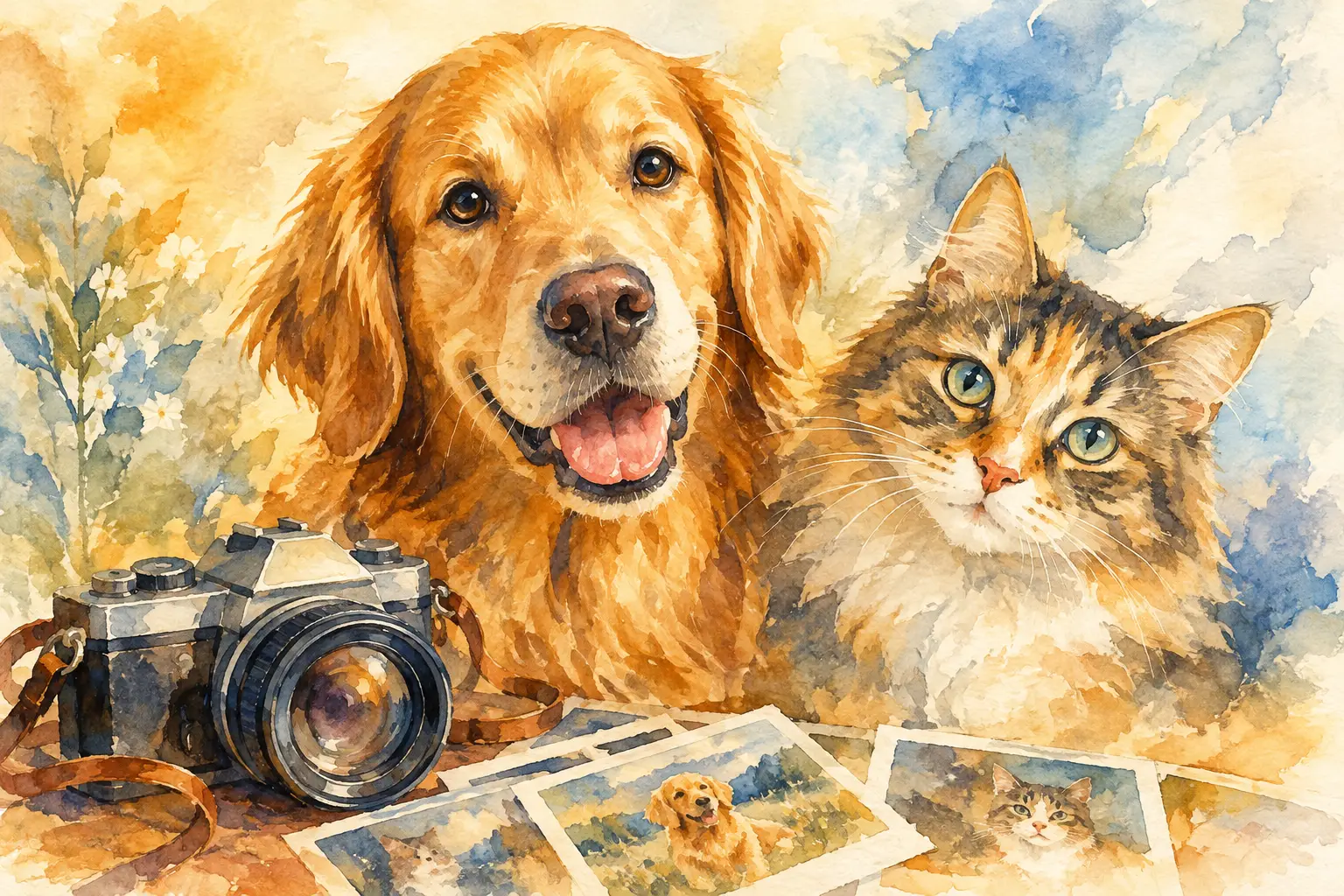
A favorite pet photo is rarely the one with the most perfect lighting. It is the one that brings them back: the familiar tilt of a head, the soft weight of a nap on the sofa, the bright attention in their eyes when you said their name. This pet photo storytelling guide will help you choose images that hold more than a likeness. They can preserve the character, rituals, and love that made your pet unmistakably yours.
Whether you are celebrating the companion still at your feet or honoring one you miss every day, the best starting point is the same. Choose a photo that feels true. A portrait becomes more meaningful when it is rooted in the memories only you can recognize.
A Pet Photo Storytelling Guide Begins With Feeling
Before looking for the sharpest photo in your camera roll, pause with a simpler question: what do you want to remember?
For a living pet, perhaps it is their joyful welcome at the door, their watchful place by the window, or the calm they bring to an ordinary afternoon. For a pet being remembered in memoriam, it may be the expression that still feels most like home. There is no requirement to choose a final photo or a formally posed image. Often, a picture from a beloved everyday moment carries the deepest truth.
Try to name the quality that made your pet themselves. They may have been dignified, mischievous, gentle, brave, endlessly curious, or quietly devoted. That word can guide every choice that follows, from the photo you select to the feeling you want the finished portrait to carry.
A dog with a grand, patient presence may be best represented in a calm seated photograph. A cat whose personality lived in one skeptical glance may need nothing more than that unmistakable expression. The goal is not to make your pet look like someone else at their most polished. It is to recognize them at their most familiar.
Choose the Photo That Reveals Their Character
A strong reference photo gives a portrait the detail it needs while keeping your pet's presence intact. Look first for a clear view of the face. The eyes should be visible when possible, because they carry so much of the connection people feel when they look at a portrait.
Good natural light is helpful, especially light from a window or a bright outdoor setting without harsh shadows. It makes the color and markings of your pet easier to see. A photo does not need to be professionally taken, though. The small imperfections of real life are often part of its emotional power.
When comparing several images, favor the one that shows these essentials:
- A recognizable expression, posture, or gaze
- Clear details around the eyes, ears, muzzle, and coat
- Colors and markings that feel accurate to your memory
- A moment that immediately brings a story to mind
A close-up can be especially moving because it invites attention to your pet's face. A wider photo can be right when their posture tells the story, such as a long-legged stretch, a curled sleeping shape, or a proud stance in a favorite place. There is no universal best angle. The best photo is the one that protects the memory you do not want time to soften.
If your favorite picture is slightly dark, a little blurry, or imperfectly framed, do not dismiss it too quickly. Consider whether you have another image that captures the same features more clearly. If you do, it can help support the visual details while the beloved photo remains the emotional reference. What matters most is preserving the essence of the pet you knew.
Let Everyday Details Carry Meaning
The setting in a photo can say as much as the expression. A sunlit rug may recall their favorite sleeping spot. A worn blue blanket may remind you of the place they claimed from puppyhood. A garden path, a porch step, or the corner of a family room can quietly locate a pet inside the life you shared.
Not every meaningful detail needs to appear visibly in the final artwork. Sometimes it is enough to know the story behind the image. Still, recording those details while they are fresh helps you describe your pet with greater confidence. You might write down a few memories: the toy they carried everywhere, the sound of their paws in the hall, the way they waited for dinner, or the person they followed from room to room.
These are not minor observations. They are the texture of a relationship. A portrait is more personal when it reflects the difference between a pet who loved adventure and one who preferred the quiet safety of your lap.
Build a Story Around One Honest Moment
Many people feel pressure to represent every part of a pet's life in a single portrait. That is a tender instinct, but one honest moment is often more powerful than trying to include everything.
Choose a central feeling. It could be celebration, gratitude, companionship, peace, or remembrance. Let that feeling clarify the image. A portrait of a lively young dog racing through grass and a portrait of the same dog resting in the late afternoon tell different stories. Neither is more correct. They honor different chapters.
For memorial portraits, gentleness matters more than grandeur. You may want an image that recalls your pet in full health and familiar comfort, rather than one tied to a difficult final season. Or you may find that a quiet later-life photograph holds the tenderness you most wish to keep. It depends entirely on your relationship and what feels supportive now.
There is no proper timeline for creating a memorial piece. Some families choose one soon after a loss, while the details feel close. Others wait until grief has made room for reflection. Both choices are valid. The portrait can be a way to keep love visible, not a demand to move on.
Give the Portrait the Details Only You Know
The person who knew your pet best is you. Your memories provide the context a photograph cannot always contain.
When preparing to create a portrait, describe your pet in a few sincere phrases. Focus on what another person might not see right away. Perhaps your cat looked regal but chirped at birds like a tiny comedian. Perhaps your rescue dog was shy with strangers but greeted family with a whole-body wag. Perhaps your old companion had one bent ear, a silvering muzzle, and a devotion that shaped your home for years.
Specific details create emotional accuracy. Mention distinctive markings, eye color, coat texture, and the traits that mattered to you. If a particular expression feels essential, say so. If your pet's elegant stillness or irrepressible energy is the point of the portrait, make that clear.
This is where a guided portrait experience can be especially reassuring. Pet Legacy Portraits gives you room to bring your pet's photo and personal story together in a museum-quality watercolor portrait, so the finished piece reflects more than an outline or a breed. Your role is not to become an artist. It is to be the keeper of your pet's story.
Think About Where the Memory Will Live
A portrait changes the feeling of a room because it makes remembrance part of daily life. Consider where you would most want to see your pet's face: near a favorite chair, among family photographs, in a peaceful bedroom, or in a space that once belonged to them.
This can help you choose the right emotional tone. A bright, spirited image may suit a living companion whose presence fills the home with energy. A softer, quieter portrait may feel right for a beloved pet being honored with reflection. Neither approach is less loving. The decision is about the feeling you want to return to each time you pass by.
It is also worth thinking beyond the present moment. A high-resolution digital portrait file can be printed when and how you choose, allowing the memory to remain adaptable as homes, family spaces, and seasons of life change. What begins as a personal act of love can become a lasting part of your family's visual history.
Keep the Story Close
The most meaningful pet photos do not need to prove that your pet was extraordinary. They simply show the extraordinary place your pet held in your life. Choose the image that makes you pause, smile, or feel their familiar presence near you. That response is the story worth preserving.