A Senior Cat Portrait Example Worth Keeping
October 5, 2026
See how a senior cat portrait example can preserve the quiet rituals, wise gaze, and unmistakable presence of the companion who shaped your home so deeply.
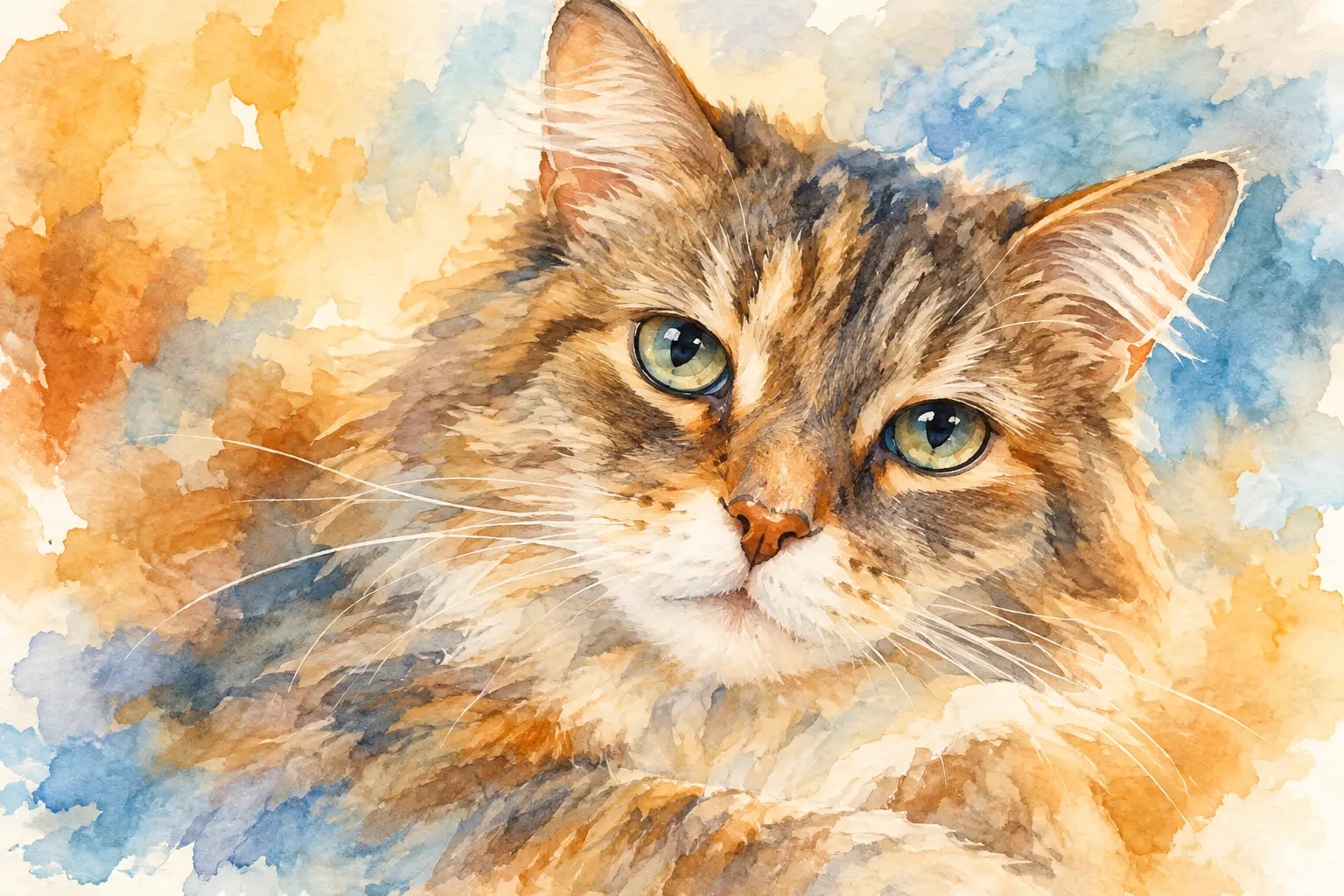
The most moving senior cat portrait example is rarely the one with the brightest colors or most dramatic pose. It is the one that recognizes what years together actually look like: a softened muzzle, a familiar place by the window, the calm authority of a cat who has watched a household change and remained at its center.
A portrait of an older cat can be a celebration while they are still here, a way to honor the companion whose routines have become part of your own. It can also become a tender memorial after loss. In either moment, the goal is not to make your cat look younger or more polished than life. It is to preserve the presence you know by heart.
What a Senior Cat Portrait Example Can Hold
Consider a fourteen-year-old gray tabby named Mabel. Her photo was taken in late afternoon, resting on the blue armchair she had claimed for nearly a decade. One ear tipped slightly forward, a small white patch appeared beneath her chin, and her once-dark stripes had softened around her face. Her eyes were half open, not sleepy exactly, but peacefully observant.
A meaningful watercolor portrait of Mabel would not need an elaborate scene to tell her story. The blue chair could appear as a gentle wash behind her. Her fur could be rendered with soft silver, charcoal, and warm cream tones, leaving room for the bright, knowing green of her eyes. The composition might keep her close to the viewer, because Mabel was never simply in the room. She was the room's quiet witness.
That is what makes this senior cat portrait example feel true. It does not turn age into sadness, nor does it disguise it. The faint cloudiness in her gaze, the beloved chair, and the deliberate stillness of her pose become part of her beauty. They say: this cat has been loved for a long time, and she has loved in her own unmistakable way.
For a cat remembered in memoriam, those same details can carry a different tenderness. The portrait becomes a place to return to the face that greeted you each morning, the paws that pressed into the blanket, and the peaceful expression that made a house feel inhabited by someone irreplaceable.
Choose the Details That Feel Like Them
Older cats often have features that make a portrait especially personal. A slight notch in an ear, a changing coat pattern, a thinner frame, or a white whisker that seems to have appeared overnight can be more meaningful than a perfect studio pose. These are not imperfections to correct. They are the marks of a life shared.
Start with a photograph that lets your cat's expression come through. Window light is often beautiful because it reveals the texture and color of their coat without creating harsh shadows. A photograph from eye level can feel intimate, while a photo of your cat in a favorite resting place may tell more of their story. There is no single right choice. The best image is the one that makes you immediately say, “Yes, that is them.”
Then consider what you want the portrait to remember. Perhaps it is the dignified way your cat sat on the back of the sofa, surveying the room. Perhaps it is a sunlit nap on the rug, a favorite blanket, or the serious expression they wore before dinner. One or two meaningful elements are usually enough. Too many background details can compete with the face and the feeling you want to preserve.
A close portrait can be especially powerful for a senior cat with expressive eyes, distinctive markings, or a face that has grown more gentle with age. A wider composition may be right when a familiar setting is inseparable from the memory. A cat who spent every afternoon in one particular garden, for example, may feel most like themselves among soft leaves and filtered light.
Why Watercolor Suits a Life Well Lived
Watercolor has a quiet emotional language. It can hold precise details while allowing the edges of a scene to soften, much like memory does. The effect feels graceful rather than overly formal, making room for your cat's personality instead of turning them into a generic decorative image.
For senior cats, this balance matters. A highly literal treatment can sometimes make every small change in fur or posture feel clinical. A watercolor approach can honor those details with warmth. The pale fur around a nose, the silvery shift in a black coat, and the softened shape of an aging face can remain visible without becoming the entire story.
Color also carries memory. A deep amber wash may recall the warm room where your cat slept. Muted blues may echo a favorite windowsill view. Gentle earth tones can reflect a tabby's familiar coat without overwhelming their eyes. These decisions are not merely aesthetic. They help the finished piece feel connected to the life you shared.
A Portrait That Celebrates, Not Just Remembers
It is easy to postpone making a portrait because a beloved cat is still beside you. Yet creating one during their later years can be a profound act of celebration. It says their life deserves to be witnessed now, not only looked back on later.
For many people, the process brings small details into focus. You may notice the elegant curve of a paw, the exact way their ears sit when they are content, or the gaze that has comforted you through difficult seasons. Choosing those details is part of the meaning. You know your cat better than anyone, and the portrait becomes shaped by that knowledge.
There is also no need to wait for a formal occasion. A senior cat portrait can mark an adoption anniversary, a birthday, a recovery, a move to a new home, or simply the gratitude of another ordinary day together. The ordinary is often where the deepest love lives.
When the portrait is created in memorial, the choices may be different but no less personal. Some people prefer a favorite photograph exactly as it was. Others choose a softer setting that reflects the peace their cat brought into the home. Neither approach is more correct. The most meaningful portrait is the one that allows you to recognize your companion immediately and hold their memory with gentleness.
From Beloved Photo to Lasting Portrait
A strong result begins with clarity about what matters most. When sharing your cat's photo and personal details, describe the qualities you want to see reflected: serene, mischievous, watchful, affectionate, dignified, or quietly brave. Mention a treasured feature and, if it matters, a setting or color that feels tied to their life.
At Pet Legacy Portraits, you remain the creative force behind the piece. Your photograph and memories guide a museum-quality watercolor portrait made to reflect your cat's individual appearance and emotional story. The final high-resolution digital file is ready to print and is delivered within five business days, so you can choose how and where it will live in your home.
The process does not ask you to become an artist or explain your love in perfect words. A clear photo, a few honest observations, and the details you cannot imagine forgetting are enough to begin. If your cat was reserved with strangers but devoted to you, say so. If she ruled the kitchen from one particular chair, include it. Those truths are the difference between a likeness and a legacy.
Let Their Age Be Part of the Beauty
Senior cats teach us to see devotion in quieter forms. They may no longer race down the hallway or leap to their favorite high perch, but they still know the sound of your footsteps. They still choose their place beside you. Their presence has become woven into the rhythm of home.
A beautiful portrait gives that presence a lasting form. Let the silver whiskers, softened fur, steady gaze, and familiar resting place remain exactly where they belong: at the heart of the story you are creating for the cat who made your life fuller.