How to Turn Pet Stories Into Art That Lasts
October 4, 2026
Learn how to turn pet stories into art with a meaningful watercolor portrait that celebrates personality, preserves memories, and honors lasting love.
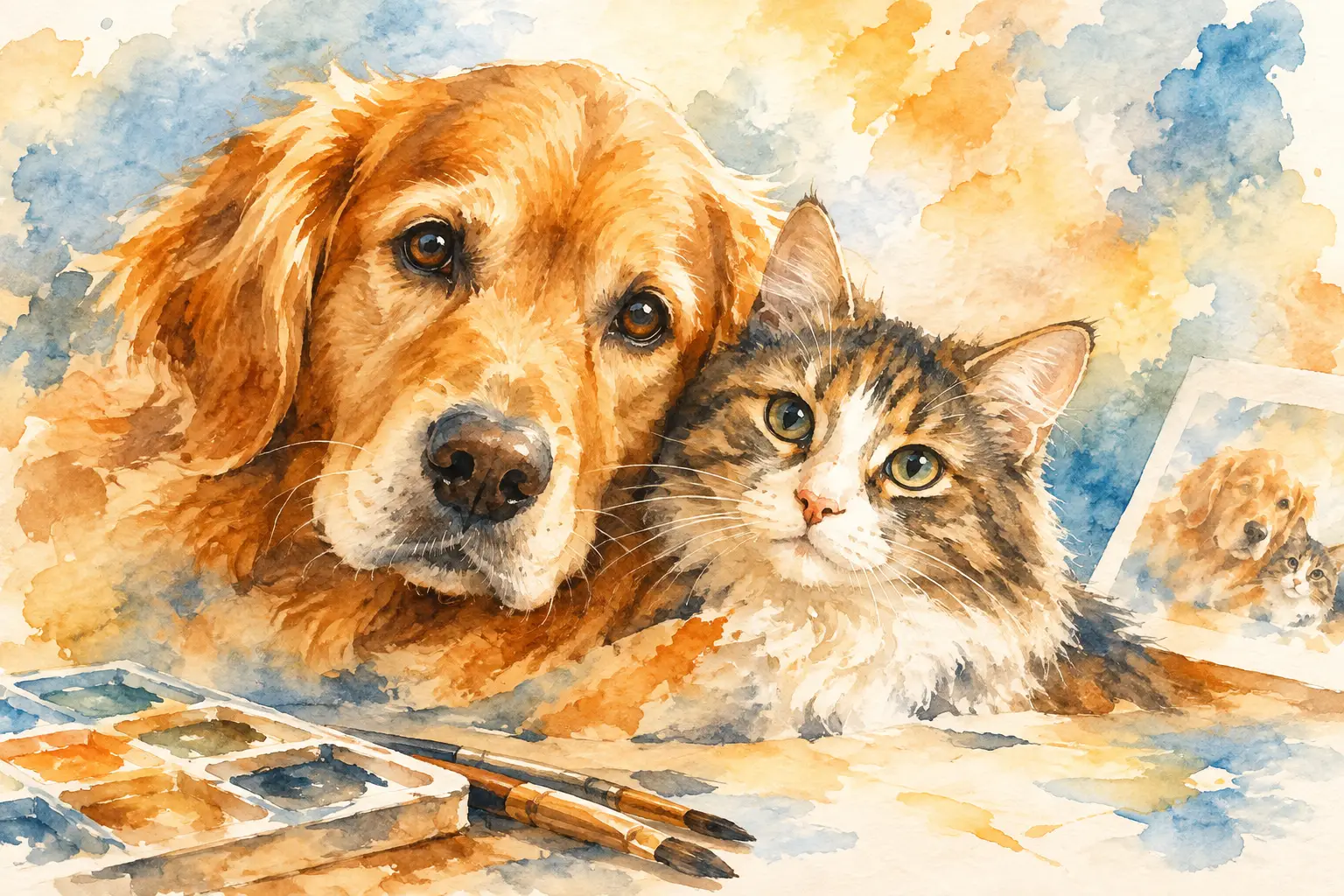
A favorite sleeping spot. The head tilt that appeared whenever you said one particular word. A rabbit’s bright curiosity, a senior dog’s gentle patience, a cat’s unmistakable look of disapproval. These are the details that make a pet’s presence impossible to reduce to a photograph alone.
To turn pet stories into art is to give those details a lasting form. A meaningful portrait does more than preserve markings or eye color. It holds a sense of who your companion is, or was, within the life you shared. Whether you are celebrating a pet beside you now or honoring one you miss deeply, the story you choose becomes part of the portrait’s emotional truth.
Why a Pet’s Story Belongs in Their Portrait
Photos are precious because they capture a moment. Art can hold something broader: the feeling of a relationship. Your pet’s story helps shape an image that feels personal rather than merely recognizable.
Consider the difference between describing a dog as a golden retriever and describing her as the first one to greet every visitor, the shadow at your heels during difficult seasons, and the companion who carried a tennis ball from room to room. The breed and physical features matter. So does the life behind them.
That is why the memories you share during the portrait process are not small details. They are your creative direction. You know the expressions, rituals, and little contradictions that made your pet wholly their own. A museum-quality watercolor portrait can translate that understanding into an image with warmth, character, and quiet presence.
For a living pet, this can be a celebration of the joy already unfolding in your home. For a pet remembered in memoriam, it can become a tender way to acknowledge a bond that continues to matter. Neither purpose is more meaningful than the other. Both begin with love and attention.
How to Turn Pet Stories Into Art With Intention
Creating a personal portrait does not require you to have artistic vocabulary. It asks only that you notice what you already know. Start with a photograph that feels like your pet, then let the memories around it guide the finished piece.
Choose a photo that feels true to them
The clearest photo is not always the most meaningful one. A technically perfect image may show every whisker but miss the expression you recognize most. Look for a photo that brings your pet’s personality forward: the alert ears, relaxed posture, knowing gaze, playful tilt, or peaceful stillness.
Good lighting and a visible face can help preserve important features, especially around the eyes and coat pattern. Still, emotional recognition comes first. If one photograph immediately makes you say, “That is them,” it is often the right place to begin.
If you are choosing an image after a loss, take your time. Some pet parents prefer a joyful outdoor photograph; others choose a quiet image that reflects the intimacy of everyday life. There is no correct mood for a memorial portrait. The right choice is the one that lets you feel close to your companion.
Name the traits no photo can show
A portrait becomes more personal when you describe what sits beyond the frame. You might mention that your cat was fearless with strangers but gentle with children. You might share that your dog waited by the window every afternoon, or that your horse had an unusually calm, observant nature.
These descriptions need not be long. A few honest sentences are enough to establish a direction. Think about the quality you would most want someone to understand if they had never met your pet. Was it their devotion, humor, courage, softness, mischief, or dignity?
A helpful prompt is this: What did my pet make life feel like? The answer often reveals more than a list of physical traits ever could.
Let the portrait carry one clear feeling
The strongest keepsakes do not try to say everything at once. They give one central feeling room to breathe. Perhaps the portrait is about celebration - the lively spirit of a new puppy or the playful confidence of a beloved cat. Perhaps it is about gratitude for years of companionship. Perhaps it is a peaceful remembrance.
This does not mean reducing a complex relationship to a single emotion. It means deciding what you want to feel when you see the finished artwork displayed in your home. That intention can guide every choice, from the photo you submit to the story you tell.
Watercolor is especially suited to this kind of expression. Its softness and layered color can feel refined without becoming distant. The style leaves room for memory, which is often why it feels at home in both celebratory portraits and memorial pieces.
The Details That Make a Portrait Feel Personal
Some details are visually obvious: a distinctive white patch, one folded ear, a freckled nose, or eyes that seem to change color in the light. Others are emotional details, and they matter just as much.
When preparing your story, focus on the particulars that would be missed by anyone who only knew your pet in passing. Their name may hold a family story. Their favorite place may explain a familiar expression. A rescue pet’s journey may be central to what they represent in your life. A longtime companion may be inseparable from a particular chapter of your family’s history.
You do not need to include every memory. In fact, a few specific details tend to create a clearer emotional portrait than a long account. Choose the memories that still make you pause: the first day you met, the habit that made everyone laugh, the comfort they offered without being asked.
There is also value in simplicity. Some pet parents want a portrait that honors nothing more complicated than the steady affection of a companion who was always there. That is a complete story, too.
Making Space for Celebration and Remembrance
People sometimes wait to create meaningful art until after a loss, as though a portrait must be reserved for memorials. But honoring a pet while they are still with you can be a beautiful act of attention. It says that their place in your life is worth recognizing now, in the ordinary days you share.
Memorial portraits carry a different kind of care. They are not meant to replace a pet or make grief disappear. Instead, they can give love somewhere visible to rest. A thoughtfully created image may become a comforting presence in a home, particularly when photographs feel too tied to one moment or one difficult goodbye.
It depends on your relationship with memory. Some people want an artwork that feels bright and alive. Others prefer something quiet and contemplative. You are allowed to choose what feels sustaining. The portrait is for your home, your story, and your own way of loving.
A Lasting Piece, Ready for Your Life
A personal pet portrait should be beautiful enough to live with for years, not just moving in the moment you receive it. A high-resolution digital file gives you the freedom to choose how it becomes part of your space. You may print it for a favorite room, include it in a remembrance display, or save it as a lasting family keepsake.
At Pet Legacy Portraits, your photo and personal details guide a curated watercolor portrait experience designed to reflect the pet you know and love. The finished high-resolution file is delivered within five business days, ready for printing and preserving in the way that feels right to you.
The most meaningful portraits begin before the image is made. They begin when you recognize that the small, familiar things were never small at all. Choose the story you want to hold close, and let it become something you can return to whenever you need it.