Why a Guided Pet Portrait Experience Feels Personal
September 9, 2026
A guided pet portrait experience turns your favorite photo and personal memories into museum-quality watercolor art that honors a pet beautifully today.
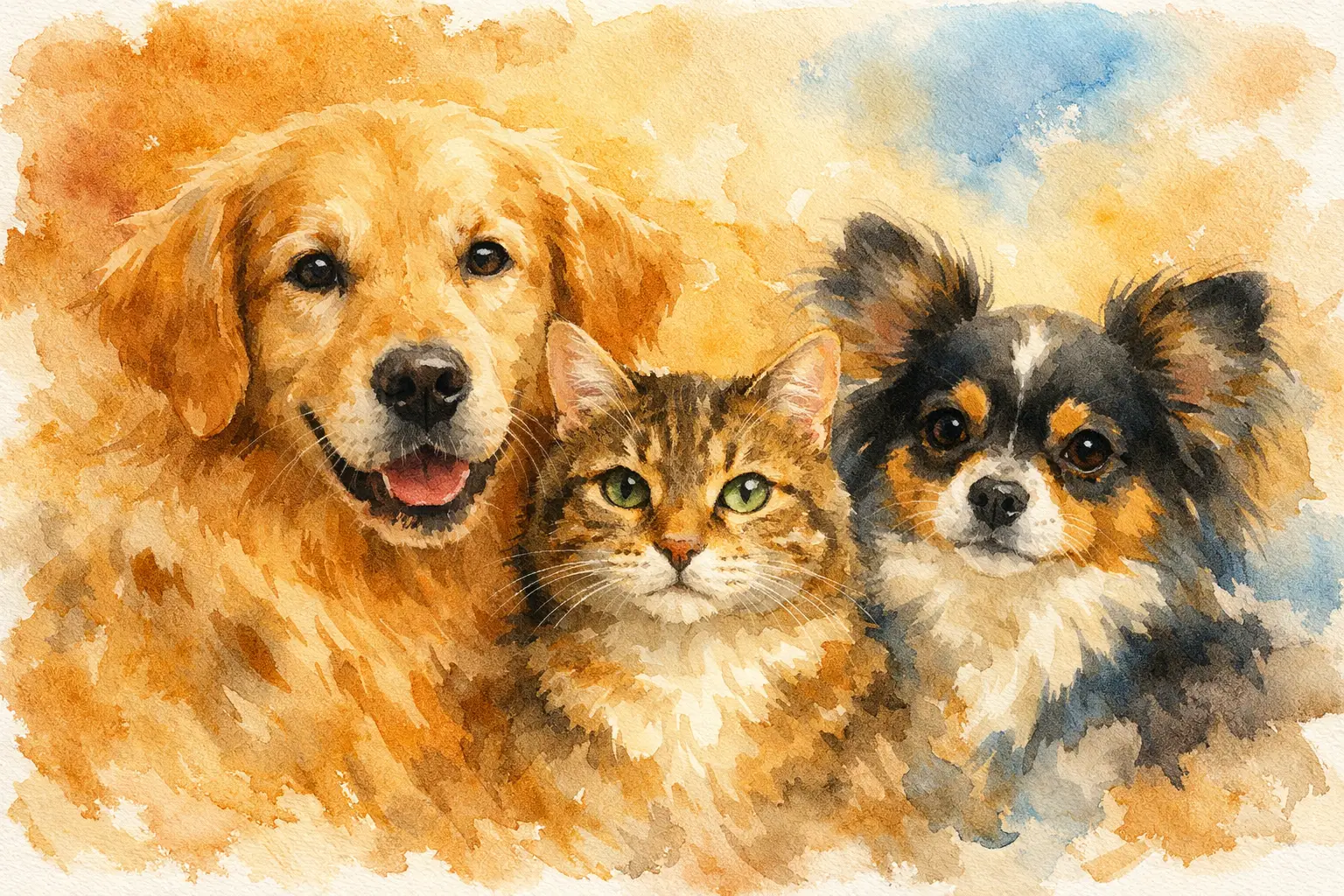
A guided pet portrait experience begins with something no portrait tool can supply on its own: your knowledge of who your pet is. You know the look they gave you when they wanted a walk, the way one ear folded differently from the other, and the quiet habits that made them unmistakably yours. Those details turn a favorite photo into more than a likeness. They shape a piece of art that feels true to the life and love behind it.
For some people, that means celebrating the companion currently asleep at their feet. For others, it means choosing a gentle way to keep a beloved pet present after loss. Both deserve the same care, beauty, and respect.
A Guided Pet Portrait Experience Starts With Your Story
A photograph provides the visual foundation, but a meaningful portrait also carries context. The most memorable pet portraits do not simply repeat every detail in a photo. They reflect the pet's character: bright and playful, watchful and dignified, mischievous, tender, or wonderfully stubborn.
That is why guidance matters. Rather than asking you to settle for a generic result, a guided experience gives you a simple way to share the details that matter most. You might describe the color of your pet's eyes in sunlight, their signature expression, a treasured nickname, or the feeling you hope the portrait will hold. There is no need to write a perfect tribute. A few honest words can say a great deal.
You remain the creative force throughout the process because you are the person who knew your pet best. The portrait becomes personal not because it includes a pet's image, but because it is informed by your memories, your choices, and your affection.
Choose a Photo That Feels Like Them
The best photo is not always the most polished one. A clear image with good natural light is helpful, especially when it shows your pet's face, markings, and expression. Yet personality often matters more than a formally posed shot. A slightly tilted head, relaxed ears, or familiar gaze may reveal more than a technically perfect photograph.
If you are honoring a pet in memoriam, you may be working with older photos, snapshots, or images that carry more meaning than visual precision. That is completely valid. Select the photograph that brings them closest to mind. A guided portrait process can help you focus on what should be preserved, whether that is a distinctive coat pattern, a soulful expression, or the gentle feeling of their presence.
The Details That Give a Portrait Its Emotional Weight
Watercolor has a special ability to feel refined without feeling distant. Its softness can hold a pet's warmth and character while leaving room for memory. The goal is not to make every whisker look mechanical. It is to create a museum-quality image that feels graceful, recognizable, and worthy of being kept.
The smallest details can carry the greatest emotional weight. A black spot beside the nose. The silver fur that appeared with age. A favorite bandana. The alert posture of a dog who believed every delivery deserved an investigation. These are not decorative extras. They are often the details that make someone pause and say, “That is them.”
When sharing information for your portrait, it helps to consider what you would miss most if it were left out. For a living pet, that may be their joyful energy or their wonderfully serious expression. For a pet being remembered, it may be the exact gentleness in their eyes. The answer will be different for every family, and that is precisely the point.
Celebration and Memorial Are Not Opposites
A portrait of a living pet can be a daily celebration of the relationship you share now. It can mark an adoption anniversary, welcome a new companion into a home, or simply honor the animal who makes ordinary days feel more complete. It is a way of saying that this life, as it is being lived, is worth noticing.
A memorial portrait serves a different moment, but not a lesser one. Grief does not follow a schedule, and there is no single right time to create something in remembrance. Some people choose a portrait soon after a loss. Others wait until they can look at photos with more gratitude than pain. The experience should move at your pace.
In either case, the portrait is not meant to replace the pet or reduce a bond to an image. It offers a beautiful place for that bond to rest. It can make a memory visible in a way that feels comforting, composed, and deeply personal.
What to Expect From a Thoughtful Portrait Process
A guided process should feel clear and considered, not demanding. You provide a favorite photo and the personal details that help define your pet. From there, your selections are translated into a polished watercolor portrait designed around the individual animal you love.
With Pet Legacy Portraits, the finished high-resolution digital file is prepared within five business days. That gives you a print-ready keepsake you can choose to display in the way that feels right for your home, your family, or a meaningful gift. A digital file also gives you flexibility. You are not limited to one size, one room, or one moment.
Quality still depends in part on how you choose to print and display your portrait. A professional print on substantial paper will create a more elevated result than a quick home print, while a smaller format may be ideal for a desk or bedside table. There is no universal best choice. The right presentation is the one that suits the place the portrait will hold in your life.
Why Guidance Changes the Result
There is a difference between generating an image and creating a portrait that feels like a tribute. A guided experience brings intention to every stage without asking you to become an expert or make a long series of complicated decisions.
It also protects the emotional center of the process. When you are celebrating a pet, guidance helps you notice the qualities you want to preserve right now. When you are grieving, it offers a calm structure for gathering memories that can otherwise feel difficult to put into words. In both situations, you can participate as much as you wish, knowing the experience is built to honor the relationship rather than rush past it.
The result should feel elevated but approachable: art with a sense of permanence, made from the details that are already meaningful to you. It is not about choosing the most elaborate description or the most dramatic photo. It is about choosing what feels honest.
A Portrait Can Become Part of the Way You Remember
A beloved pet leaves traces everywhere: a worn spot by the window, a familiar sound on the stairs, a habit you still expect to see. Over time, those traces change. A portrait gives one part of that relationship a lasting form without asking you to let go of the rest.
For a current companion, it can be a joyful reminder that the everyday moments are not ordinary at all. For a pet who has passed, it can offer a quiet, dignified way to keep their face and spirit close. The value is not in making a memory feel finished. It is in giving love somewhere beautiful to remain.
Choose the photo that makes you recognize them immediately, then trust the details only you can provide. Your pet's story is already there. A thoughtful portrait simply gives it a place to be seen.