A Living Dog Portrait Customer Example, Explained
September 14, 2026
See how one living dog portrait customer example became a museum-quality watercolor keepsake, shaped by the details that made a beloved dog unmistakable.
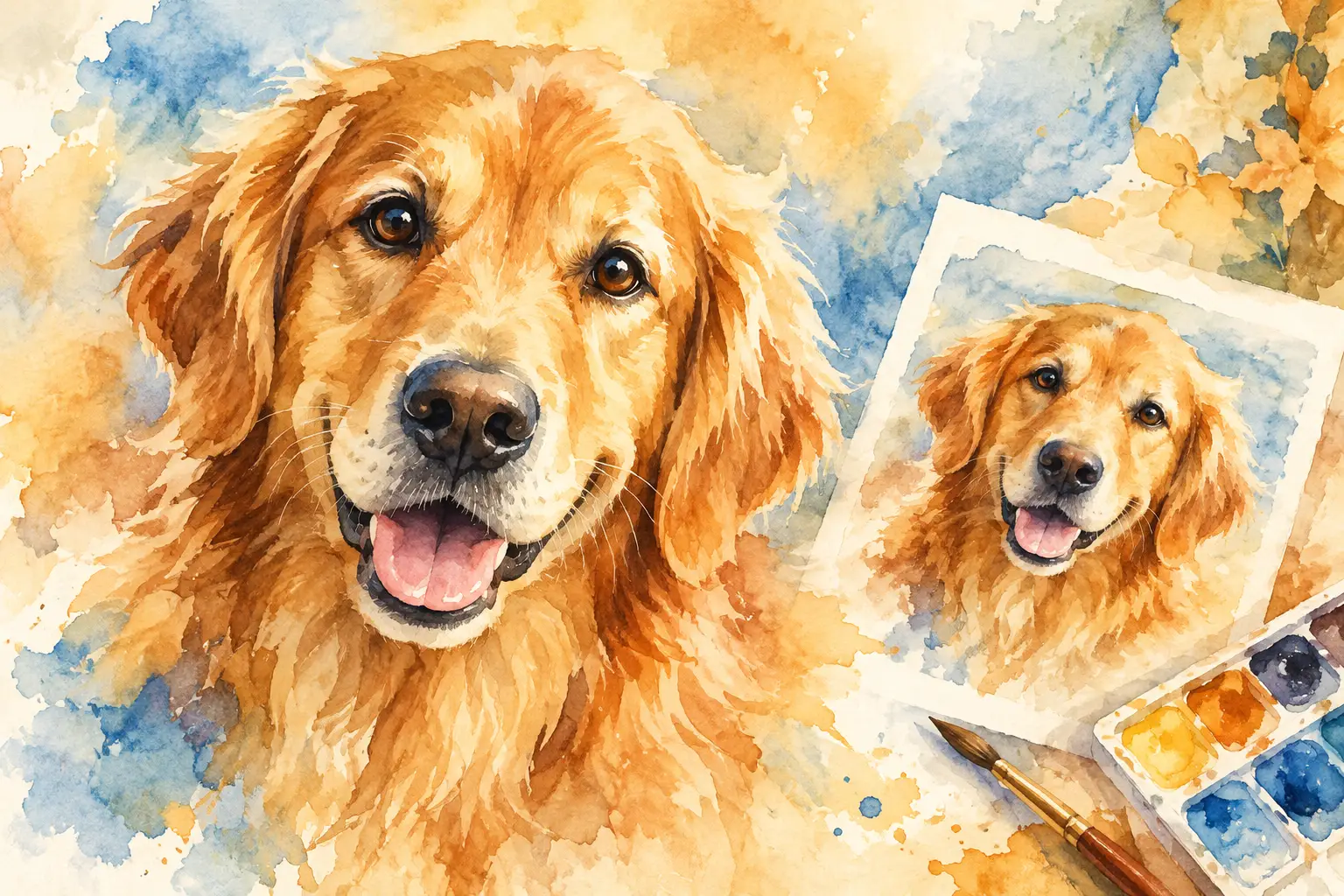
The photo showed a golden retriever resting on a sunlit porch, one ear slightly folded and a tennis ball placed just beyond his paw. For his family, that small scene was not simply a pleasant picture. It was a familiar afternoon, a favorite ritual, and the expression they saw when he was waiting for someone to throw the ball again. This living dog portrait customer example shows how a meaningful portrait begins with details only a devoted pet parent would recognize.
A living dog portrait customer example begins with recognition
The family wanted to celebrate their dog while he was still very much part of daily life: greeting visitors with a toy in his mouth, claiming the warmest spot in the house, and making every ordinary day feel more complete. They were not looking for a generic image of a golden retriever. They wanted a portrait that felt like their golden retriever.
That distinction guided every choice. The selected photo captured his soft amber eyes, feathered coat, relaxed posture, and the gentle alertness that made him instantly recognizable. The family also shared the details behind the image: his love of tennis balls, his patient nature with children, and the porch where he spent countless afternoons watching the yard.
Those personal observations became the emotional center of the portrait. The customer was the creative force because they knew what mattered. The guided process simply gave those memories a beautiful form.
Why the original photo mattered
A strong portrait does not require a studio-perfect photograph. It does require a photo that reveals something true. In this case, the porch light brought out the warmth in the dog's coat, while his resting pose reflected the calm, affectionate personality his family wanted to preserve.
A close-up face photo can be a wonderful choice when a pet's eyes or markings tell the story. A wider photo can work especially well when a favorite chair, garden, blanket, or familiar setting is part of the memory. There is a trade-off: the more visual elements in the original scene, the more important it is to decide what should remain central. For this family, the dog himself came first, while the suggestion of sunlight and a peaceful outdoor setting helped retain the feeling of the moment.
The best choice is rarely the most polished image in a camera roll. It is often the one that makes a pet parent pause and think, “That is exactly him.”
The details that made the portrait personal
The family did not need to write a long biography. A few specific truths carried more meaning than a broad description ever could. They noted the folded ear, the habit of keeping a tennis ball nearby, and the calm, watchful look he had when everyone was together.
These details help move a portrait beyond likeness. A dog may share a breed, coat color, or eye shape with thousands of others. But a particular tilt of the head, a favorite object, or the feeling of a beloved place belongs to one companion and one family alone.
For living pets, this is a chance to celebrate the present tense. The portrait can honor the dog who is still padding down the hallway, waiting by the door, or taking up more than their share of the bed. It does not need a milestone to be worthy of being remembered beautifully.
Turning a familiar moment into watercolor art
The family chose a museum-quality watercolor style because it matched the tenderness of the image without making it feel overly formal. Watercolor can hold softness, movement, and light in a way that feels especially fitting for a dog whose presence is woven into everyday life.
Their finished portrait retained the warm gold of his coat and the intelligent gentleness in his eyes. The composition gave quiet attention to his folded ear and resting paw, while the surrounding light echoed the porch photograph without competing with him. The tennis ball was included as a subtle personal touch rather than the focus of the piece.
That balance matters. Some customers want a portrait centered entirely on their pet's face. Others want a hint of a meaningful setting or signature object. Neither approach is more heartfelt. It depends on what the customer hopes to feel each time they see the finished work.
The goal is not to reproduce every background detail exactly. It is to preserve the qualities that make the memory feel alive: a certain expression, a familiar color palette, a sense of place, or the quiet happiness of a shared routine.
What the family received and how they used it
Within five business days, the family received a high-resolution digital portrait file ready for printing. They chose a simple, substantial print for the room where their dog spent most of his evenings. The result became less about decorating a wall and more about giving a cherished daily relationship a visible place in their home.
A high-resolution file offers room for personal choice. One customer may select a framed print for a living room, while another may create a smaller piece for a desk, hallway, or bedside table. Some may keep the file close until the right moment or format feels clear. The portrait remains theirs to place, print, and revisit in the way that feels most natural.
For this family, the finished work became a gentle reminder to notice the days they were still living with their dog. It marked no ending. It simply said that this companion, this season, and this ordinary porch moment were worth honoring now.
How to shape your own living dog portrait
If you are considering a portrait for a dog who is beside you today, begin with the memory rather than the image. Think about the scene you would miss if it disappeared from daily life. Perhaps it is the way your dog curls up under a window, waits by the leash, rides in the passenger seat, or looks at you after hearing the treat jar open.
Then choose a photo that holds some part of that truth. Look for clear features, natural light when possible, and an expression that feels familiar. Most of all, trust the details you notice. The crooked whisker, weathered collar, floppy ear, favorite blanket, or joyful stance may seem small to anyone else. To you, they are the whole story.
When you share those details, you are not asking someone else to invent meaning for your pet. You are bringing forward the meaning that already exists. Pet Legacy Portraits helps translate that knowledge into an elegant watercolor portrait created around the bond only you can describe.
A celebration does not need to wait
Many people think of portraiture only after a loss, when remembrance takes on a different kind of urgency. Memorial portraits hold a sacred place, but living dogs deserve celebration, too. Creating a portrait now can be an act of gratitude for the companion who is still here to make you laugh, comfort you, and turn familiar rooms into home.
The golden retriever on the porch did not need to do anything extraordinary to deserve his portrait. He only had to be loved deeply and known well. That is enough reason to preserve the way he looks in the light, the way he rests near his tennis ball, and the feeling of having him close.