A Multiple Pets Portrait Example That Feels Like Home
October 12, 2026
See a multiple pets portrait example that honors every companion with balanced composition, watercolor warmth, and room for each distinct personality too
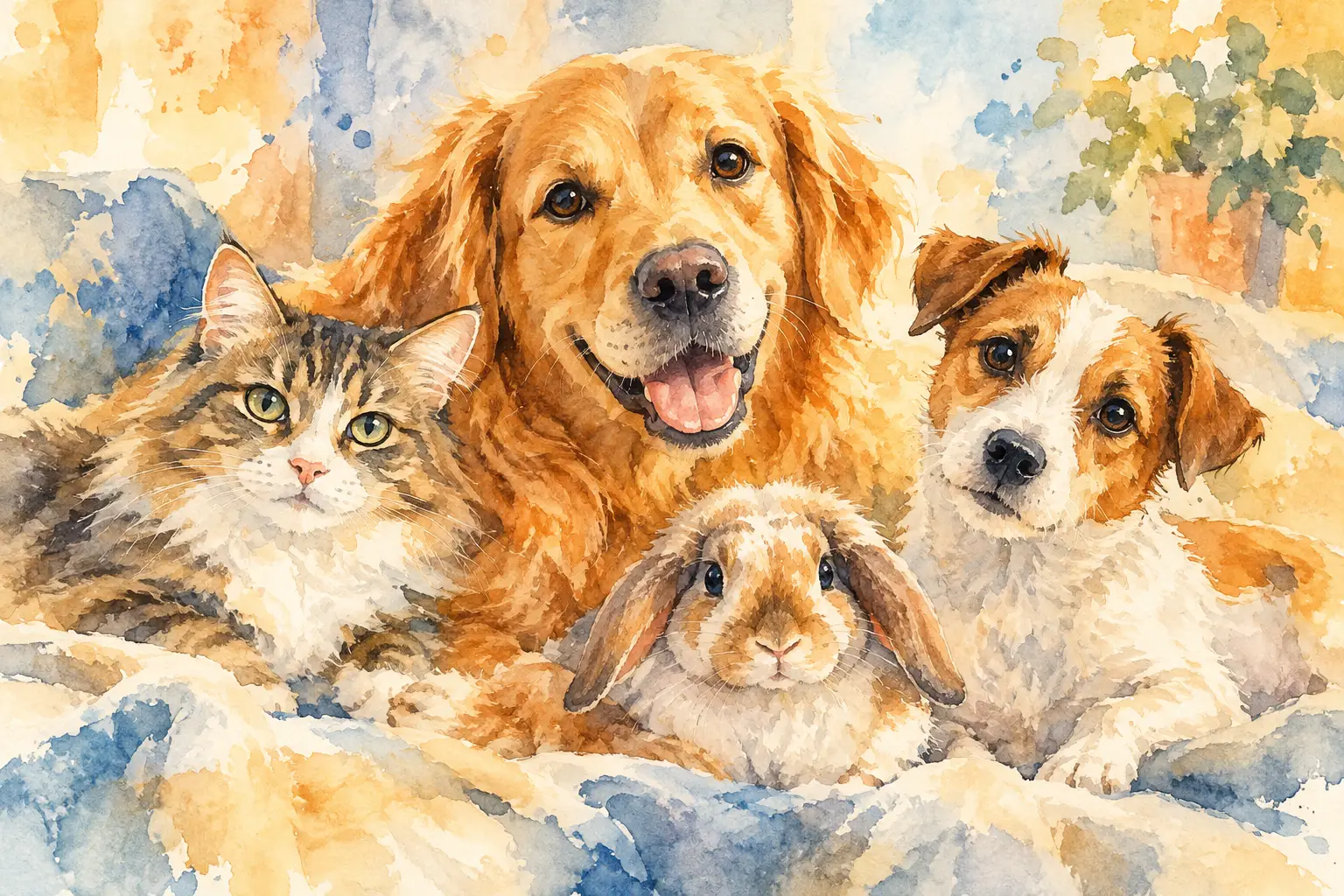
A multiple pets portrait example should feel less like a lineup and more like a shared memory. Perhaps it is two dogs who greeted every visitor at the door, a watchful cat and a gentle rabbit who quietly shared a home, or siblings whose personalities could not be more different. The most meaningful portrait makes room for each pet while preserving the feeling that they belong together.
For many pet parents, choosing one portrait for several companions is not simply a matter of fitting everyone into the frame. It is a way to honor the little family they created: the routines, the affection, the mischief, and the quiet companionship that shaped a home. Whether every pet is still beside you or one is being remembered with love, the portrait can hold that connection with grace.
What a Multiple Pets Portrait Example Can Show
Imagine a watercolor portrait of three beloved companions. A golden retriever sits at the center with an open, patient expression. Beside her, a black-and-white cat rests with the composed confidence that made him unforgettable. A smaller terrier leans forward at the edge of the composition, ears alert and full of curiosity. They are arranged naturally rather than rigidly, with soft space between them and a warm, understated background.
Nothing about this scene needs to announce who was the leader, who claimed the sunniest chair, or who followed their person from room to room. Yet those qualities can be felt. The retriever’s gentle presence anchors the group. The cat’s gaze adds calm. The terrier’s posture brings energy and charm. Together, they tell a fuller story than any single portrait could tell alone.
That is the standard worth looking for in a multi-pet portrait: each companion remains recognizable as an individual, while the finished piece feels unified. A beautiful result does not flatten distinct personalities to make the composition easier. It lets contrast become part of the story.
Start With the Relationship, Not Just the Photos
The strongest portraits begin with a simple question: what did these pets mean to one another, and to you? Your answer can guide every choice that follows.
Some pairs were inseparable. They slept curled together, waited at the window together, and seemed to understand each other without needing attention. In that case, a close composition with gentle overlap can feel true to their bond. Other pets shared a household but held very different roles. One may have been playful and social while the other was quiet, observant, and happiest at a respectful distance. Giving them a little more visual space may better reflect the relationship you knew.
This matters especially when creating a memorial portrait that includes both living and departed pets. There is no single correct way to represent a loss. You may want every companion gathered in a peaceful, timeless arrangement. Or you may wish for a softer sense of space around the pet being honored, allowing their presence to feel tender and distinct. The right choice is the one that feels honest to your memory.
Your personal details carry real weight here. A favorite expression, a recognizable tilt of the head, an unusually long ear, a tiny white patch on the chest, or the way one pet always looked toward another can help shape a portrait that feels deeply familiar. You know these details better than anyone. Sharing them turns a lovely image into a personal legacy.
Choosing Photos That Work Together
You do not need a perfect group photograph to create a cohesive group portrait. In fact, individual photos are often the better choice because they allow each pet’s face, coloring, and expression to be clearly seen.
Choose photos where each pet is well lit and facing the camera or turned at a flattering angle. Natural daylight tends to reveal fur color and eye detail beautifully. A clear image of the face is particularly valuable, since expression is often what makes a portrait immediately feel like your companion.
Try to select photos from a similar season of life when possible. If one image shows a puppy and another shows a senior pet, the contrast may be meaningful, but it should be intentional. For pets being remembered in memoriam, choose the photo that brings them closest to mind. It may not be the most technically polished image. Sometimes the photo that carries the most love is the one with the truest expression.
Consider how much of each pet should appear. A close portrait can emphasize the intimacy of their faces and work especially well for two or three pets. A fuller view may suit a group whose body language was part of their personality, such as a tall dog who always sat proudly beside a tiny companion. Neither approach is better. The choice depends on the story you want the portrait to hold.
Balance Does Not Mean Everyone Looks the Same
A common concern with several pets is fairness. Pet parents want every companion to feel equally loved in the finished artwork. That does not require identical size, identical placement, or identical expressions.
Visual balance comes from care, not symmetry. A larger pet may naturally take up more space, while a smaller pet can remain just as memorable through a bright expression or a position near the center. A dark-coated pet may benefit from a lighter surrounding area so their features remain clear. A pet with vivid eyes or distinctive markings may become a quiet focal point without taking attention away from the others.
Watercolor is especially suited to this kind of balance. Its softness can bring different fur textures and colors into one harmonious composition without making the portrait feel overly formal. Delicate transitions create warmth, while carefully defined facial details keep each pet present and recognizable.
The goal is not to make every pet compete for attention. It is to let the eye move naturally from one beloved face to the next, much as you would when remembering them together.
A Meaningful Multiple Pets Portrait Example for Memorials
When one pet has passed and another remains, a shared portrait can be an especially gentle form of remembrance. It acknowledges that the bond did not disappear simply because time changed the household. The pets may have been companions, rivals, playmates, or simply familiar presences in one another’s daily lives. All of those connections deserve tenderness.
A memorial portrait does not have to feel solemn. It can be peaceful, affectionate, and full of life. You might choose an image that recalls their happiest years together, with soft color and a composition that lets both personalities shine. For some families, this becomes a comforting way to keep a beloved pet visibly included in the home while celebrating the companion who is still there.
There is also room for a portrait that includes pets who never met. A dog who shaped your early adult years and a cat who arrived later can still belong together in your personal story. Their shared place is not limited by time. It is defined by the love they gave and the mark they left on your life.
Creating a Portrait That You Will Want to Keep Close
Before submitting your photos, pause over the emotional center of the piece. Is this a celebration of a lively present-day pack? A remembrance of animals who grew up together? A tribute that brings past and present companions into one enduring image? Naming that intention can make your choices clearer.
Pet Legacy Portraits gives you a guided way to transform those choices into a museum-quality watercolor portrait, with a high-resolution digital file delivered within five business days and ready for the way you wish to preserve it. The experience begins with your memories, your photos, and your sense of who these pets were. That is what gives the final artwork its meaning.
A multi-pet portrait asks you to see the whole story at once: every bright-eyed greeting, every familiar nap spot, every season when your home was made fuller by more than one set of paws. Choose the details that feel most true, and let the portrait become a place where each beloved companion still has room to belong.